


| Date: | 27 September 2025 |
| Location: | Whalan Reserve, Australia |
| Conditions: | Mostly sunny, 27C, wind 10-20km/h |
| Members: | GK, Paul K and PK |
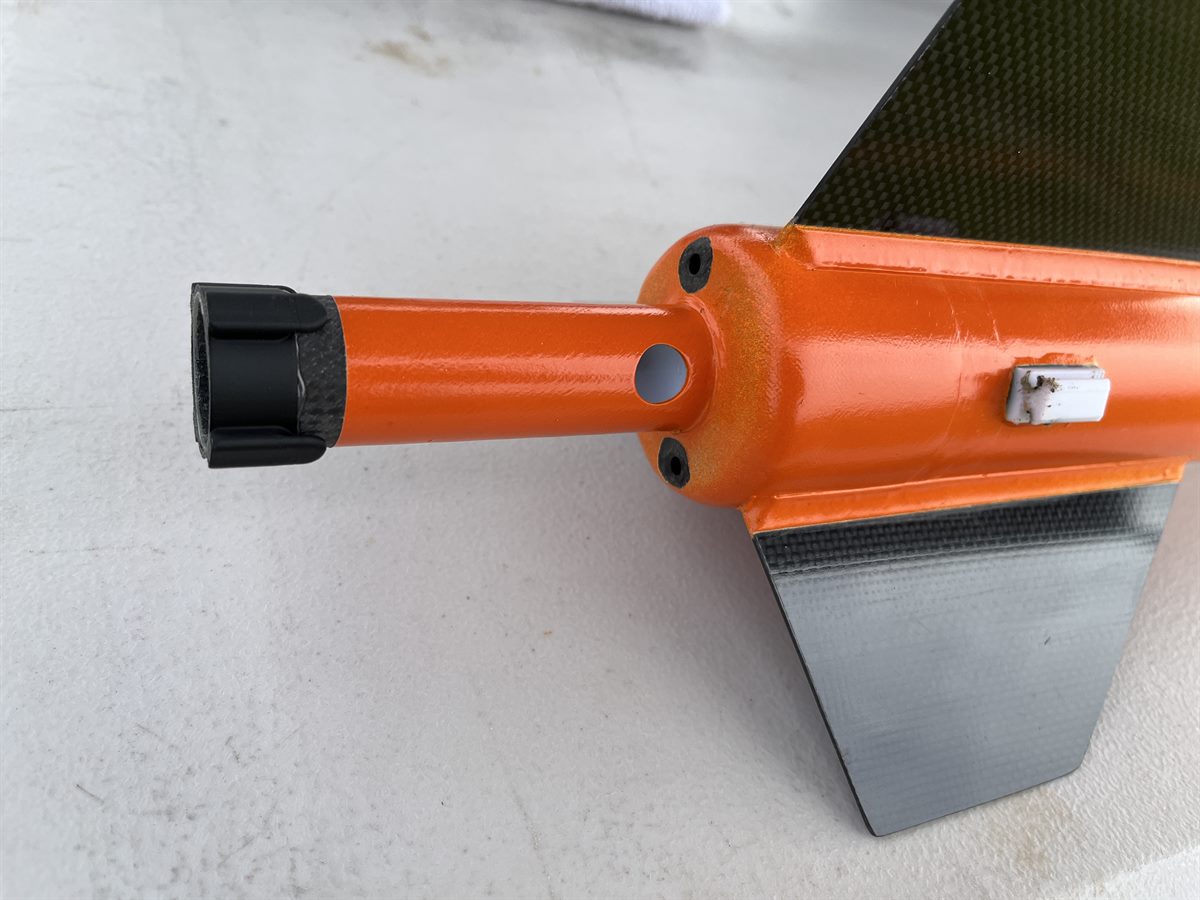
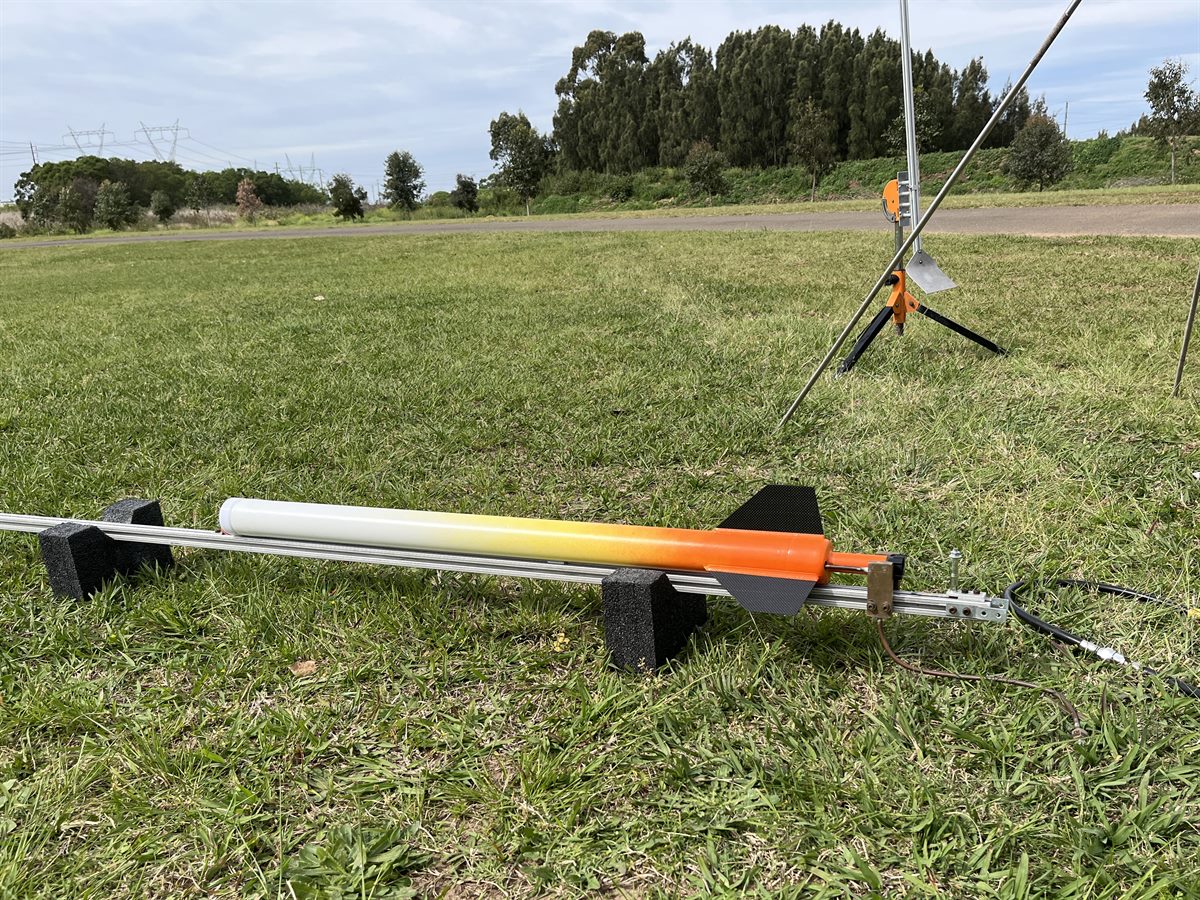
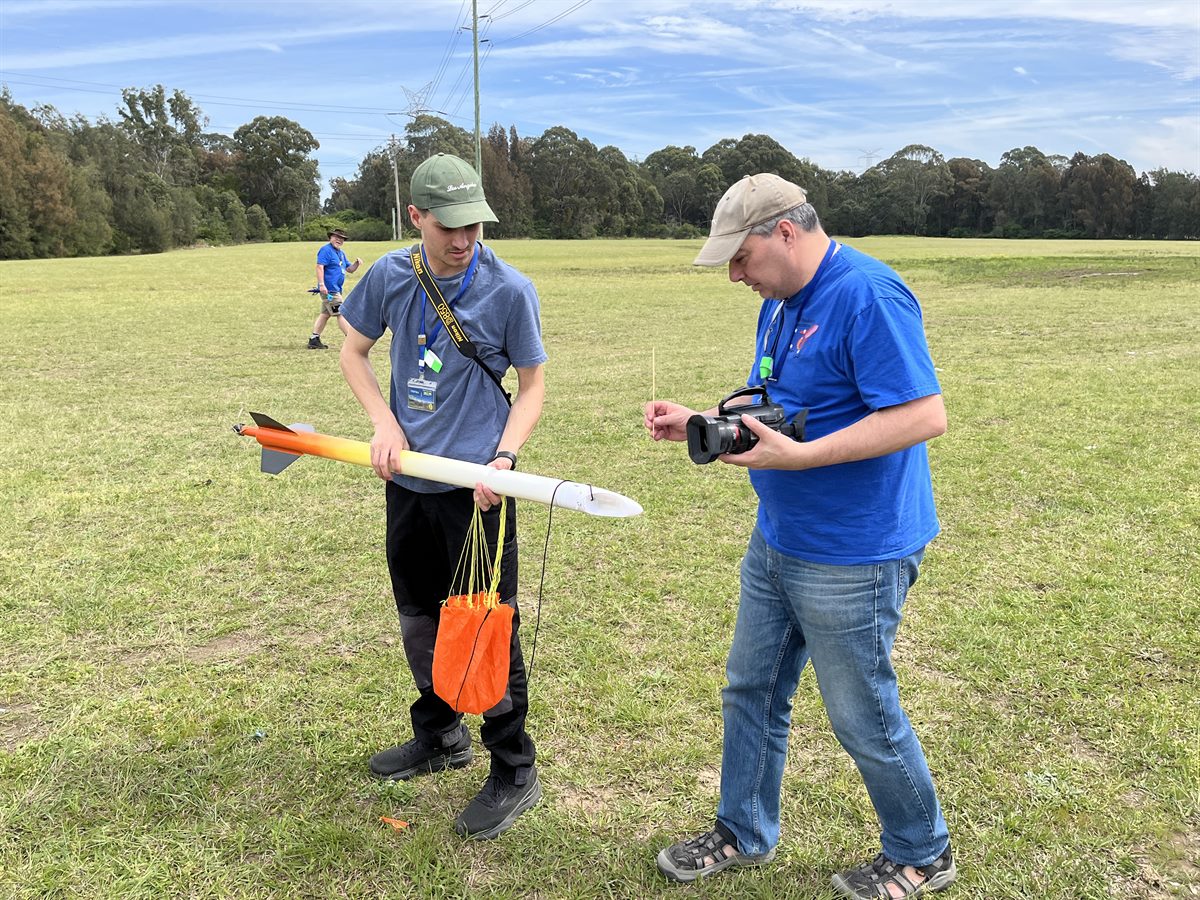
The Air Hawk 2 is the upgraded version of the prototype flown at the last launch. This rocket was designed to fly on an E motor and be pressurised to 300psi. The construction technique for the pressure chamber was almost identical to what we used for the Nova rocket. The big difference being the nozzle end of the rocket. The deployment mechanism for this rocket was the exact same one as we used for Nova, but the parachute ejection spring was upgraded. We also decided to minimize tangles to not attach the parachute door to the rest of the shock cord. The parachute door was just going to drop away by itself. We weren't concerned about not finding it as it just meant we had to print a new one.
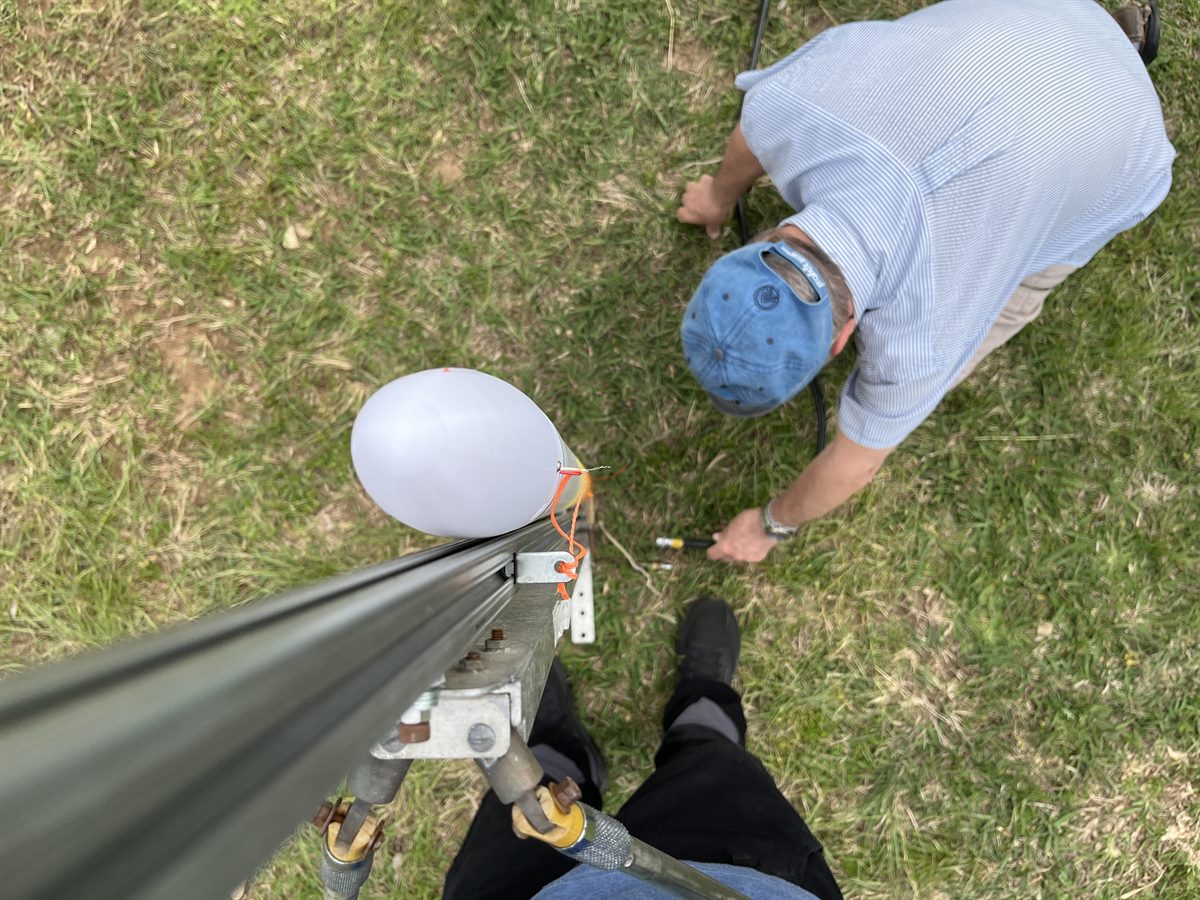
We also attached 3D printed rail buttons to the rocket so we didn't need a tower to launch it.
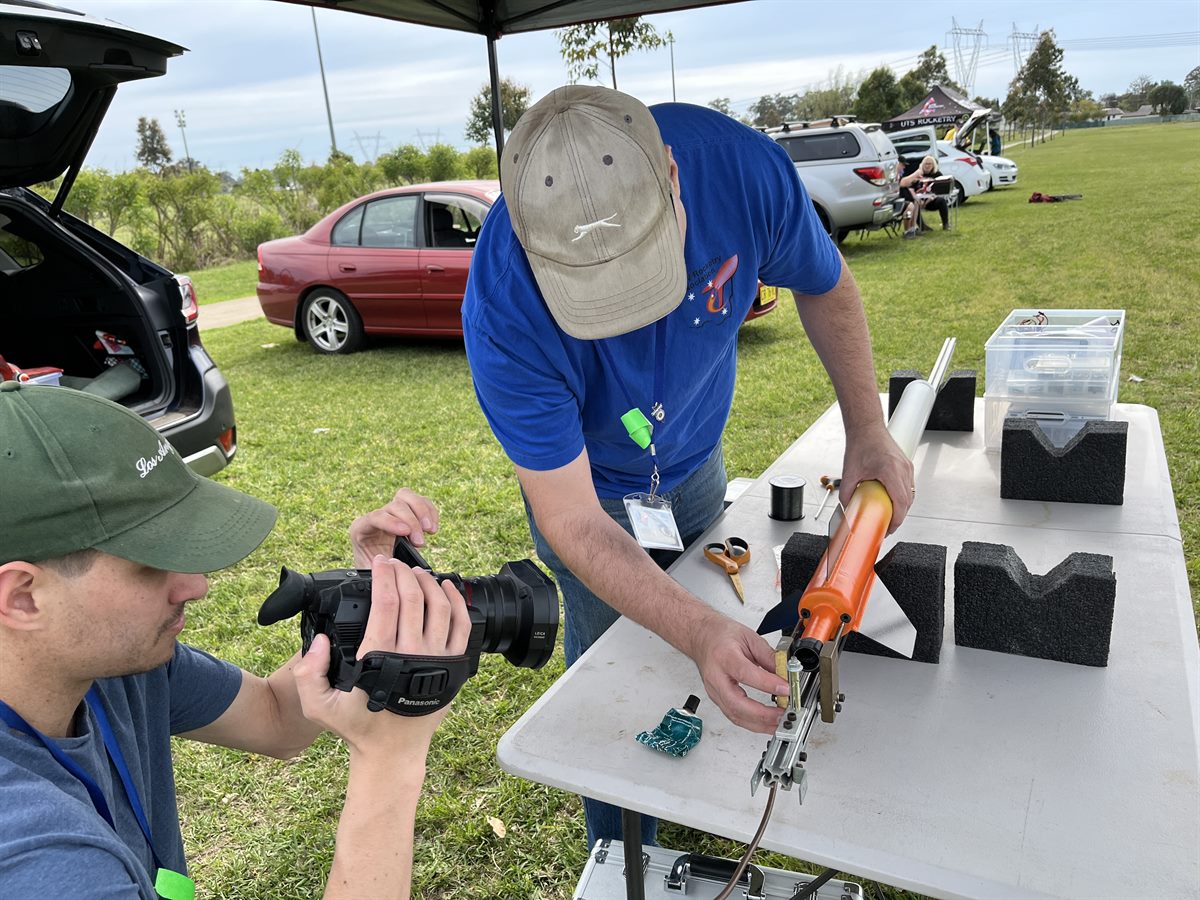
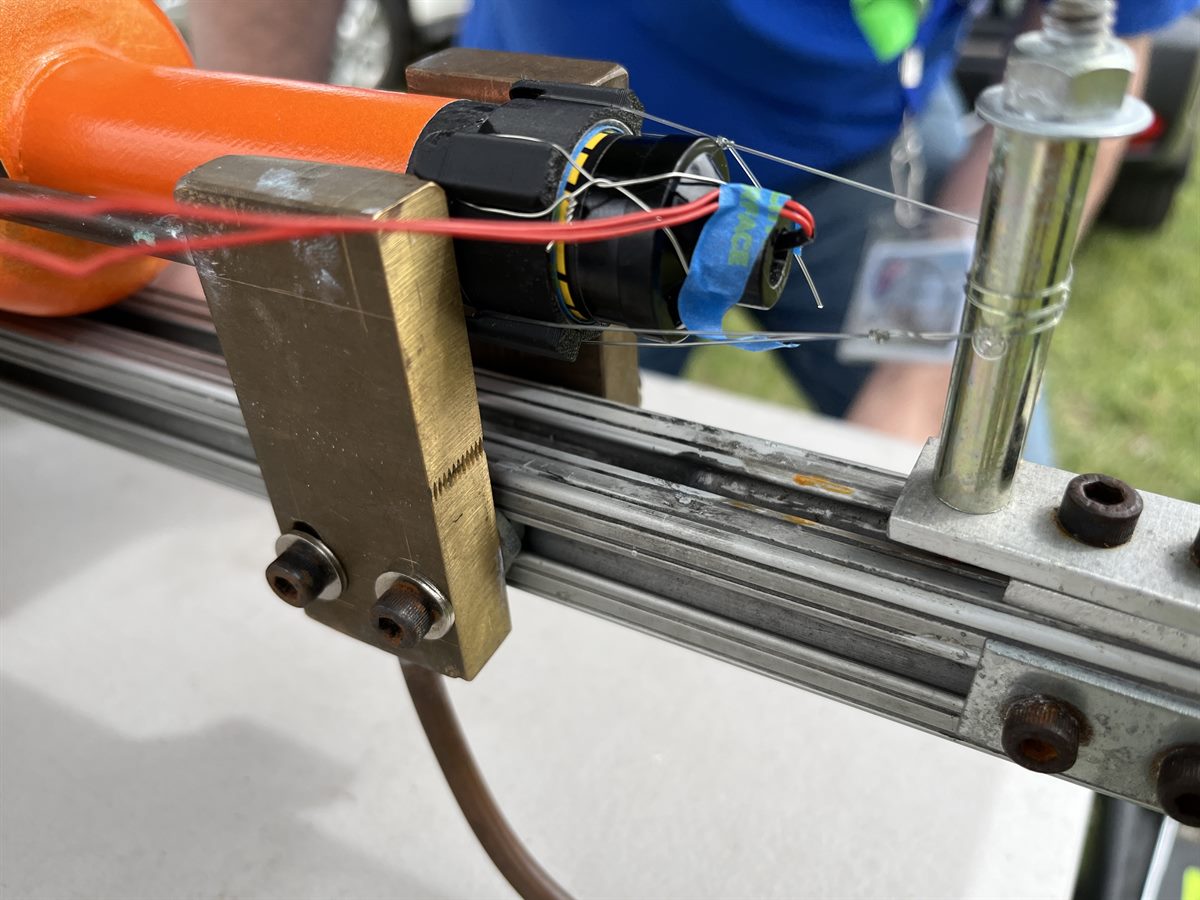
We also made a new launcher release head. This time mounted directly to a 1010 rail. This made it much easier to adjust everything and the guide rail was integrated. The whole thing could then be easily attached to our existing launcher legs.
The simulations said that with just the E-motor the rocket would reach around 320 feet. With the added boost of the air that should be closer to 600 feet as the energy stored in the compressed air would be the equivalent of another E-motor.
Today was a test of the new Air Hawk 2 rocket.
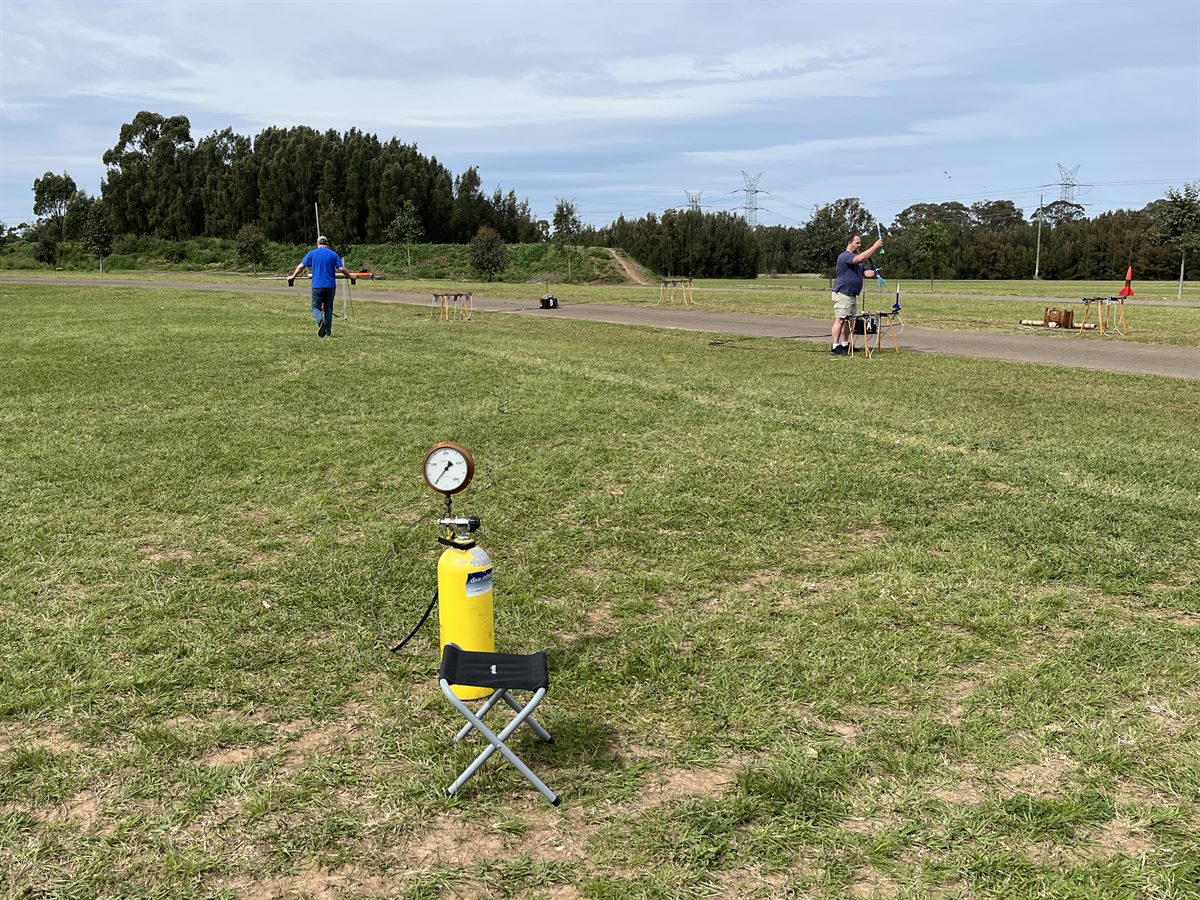
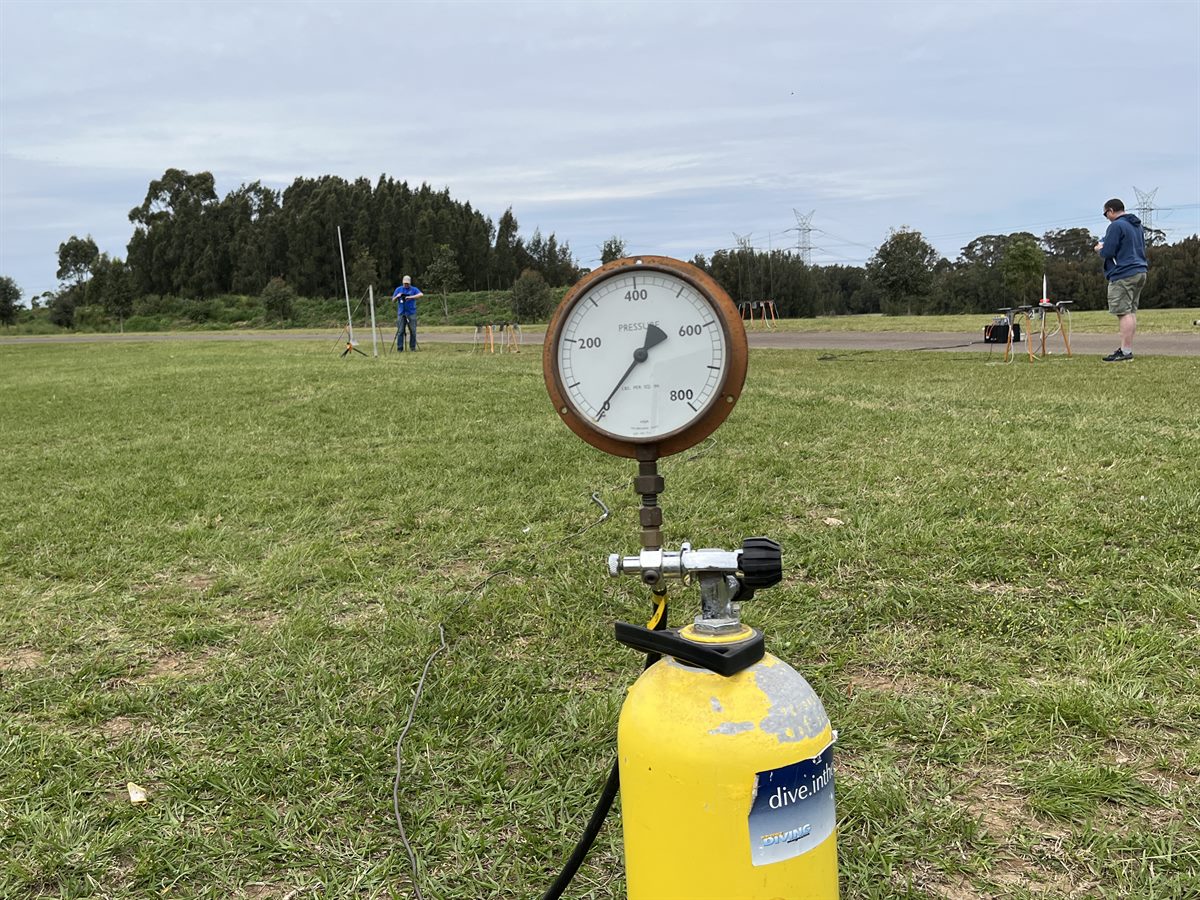
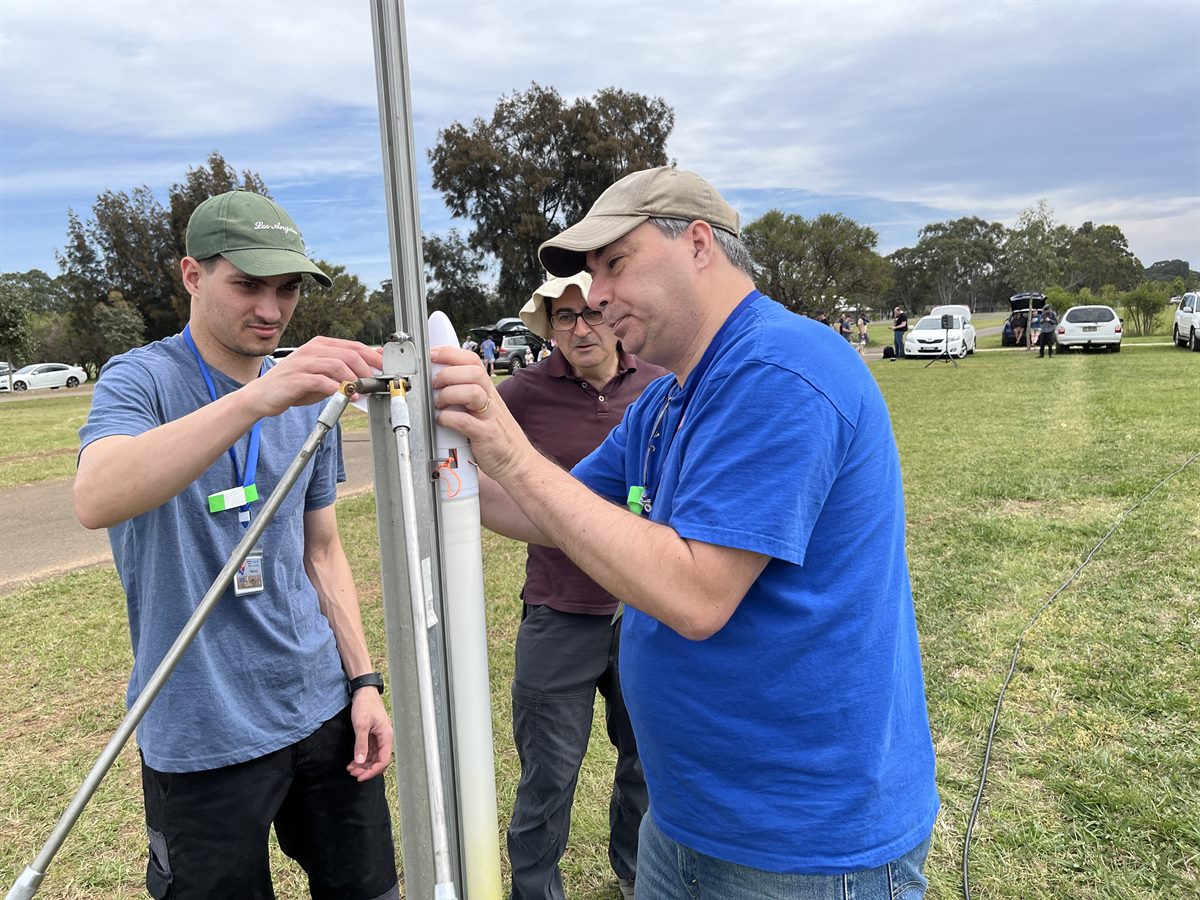
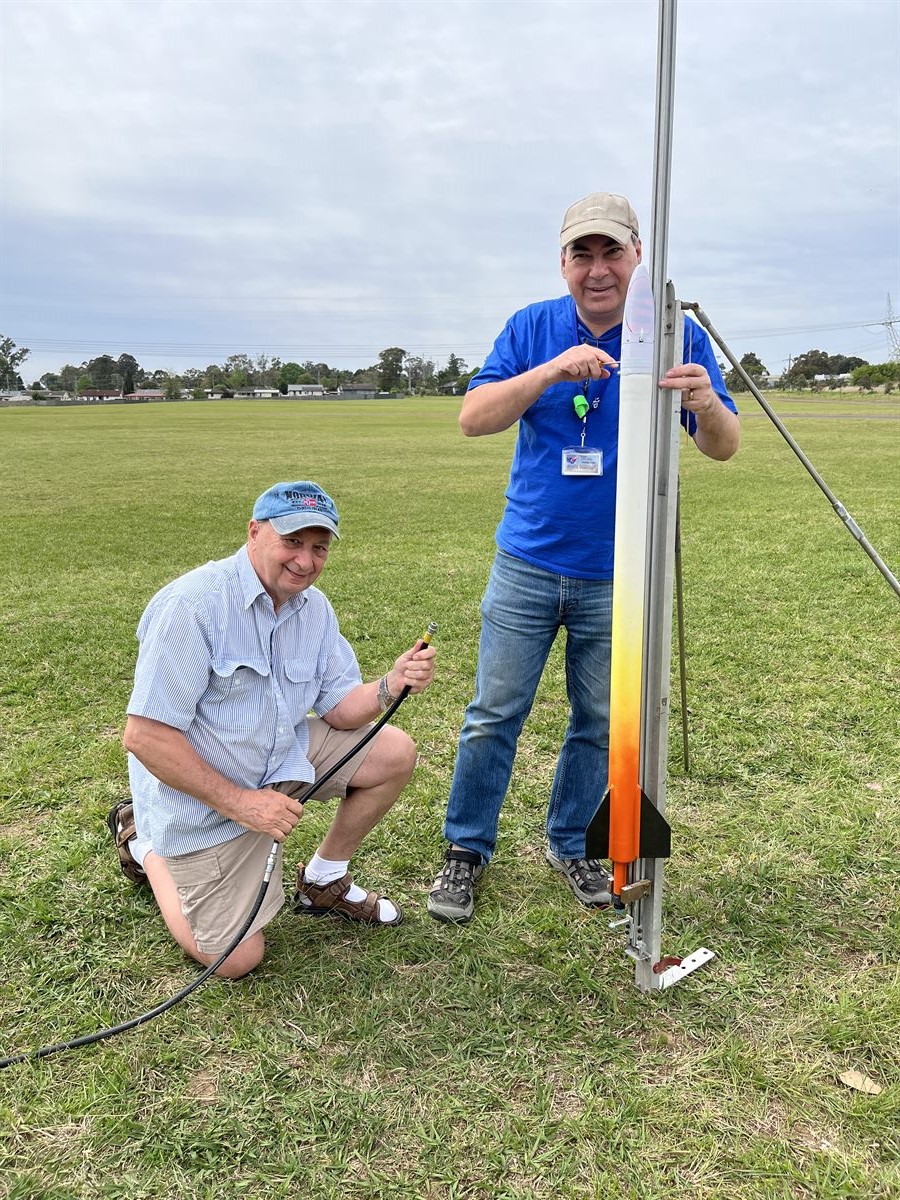
We started off the day with a pressure test. We hadn't tested the pressure chamber yet to the launch pressure and so we thought we'd do it first at the launch site. The test was successful and we didn't see any leaks near the nozzles. The o-rings were just sealing against the hole we drilled through the composite.
We prepped the motor by removing it's ejection charge. We didn't bother sealing up the port to the ejection charge, as it was vented at the top anyway.
We upgraded the fishing line to a 20lbs one just in case. We wrapped the line a couple of times around the restraint and made sure the fishing line was directly under the nozzle of the motor.
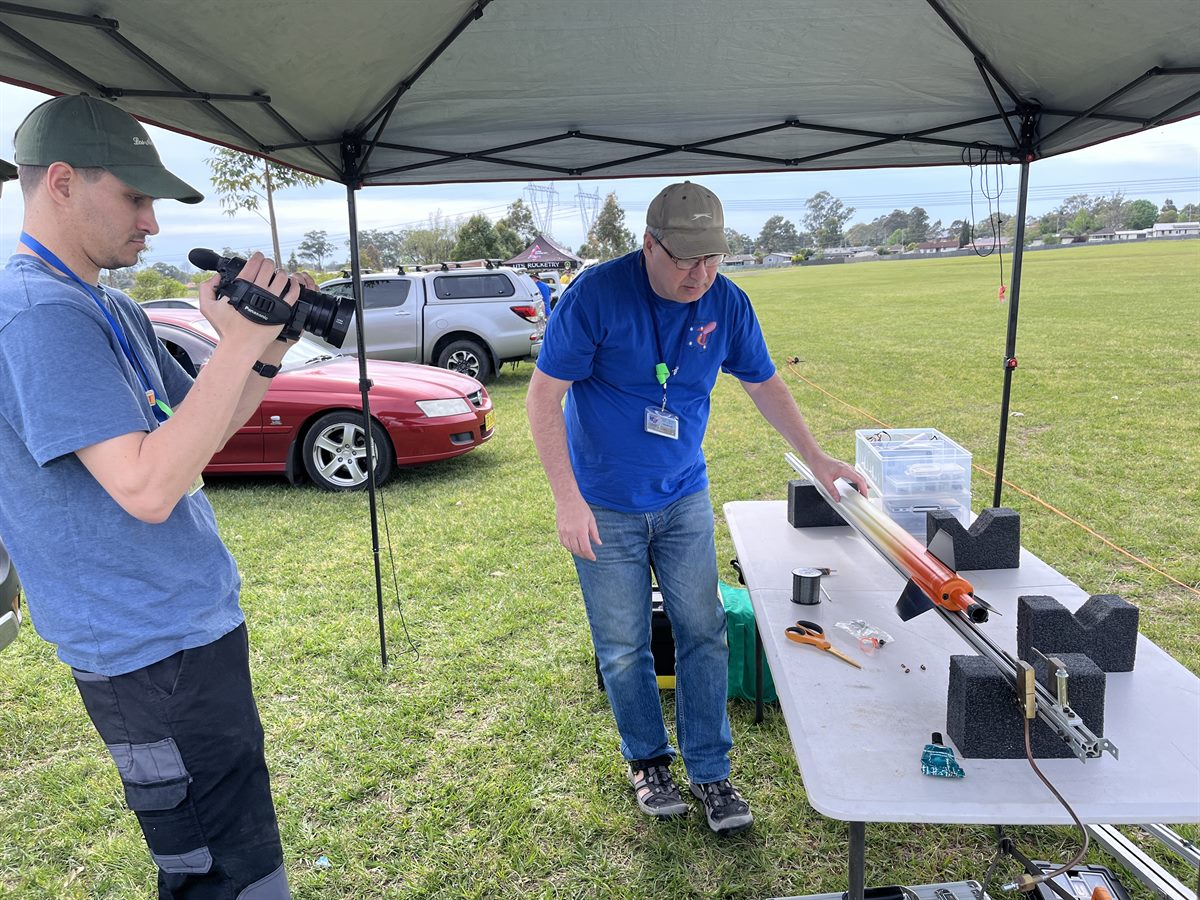
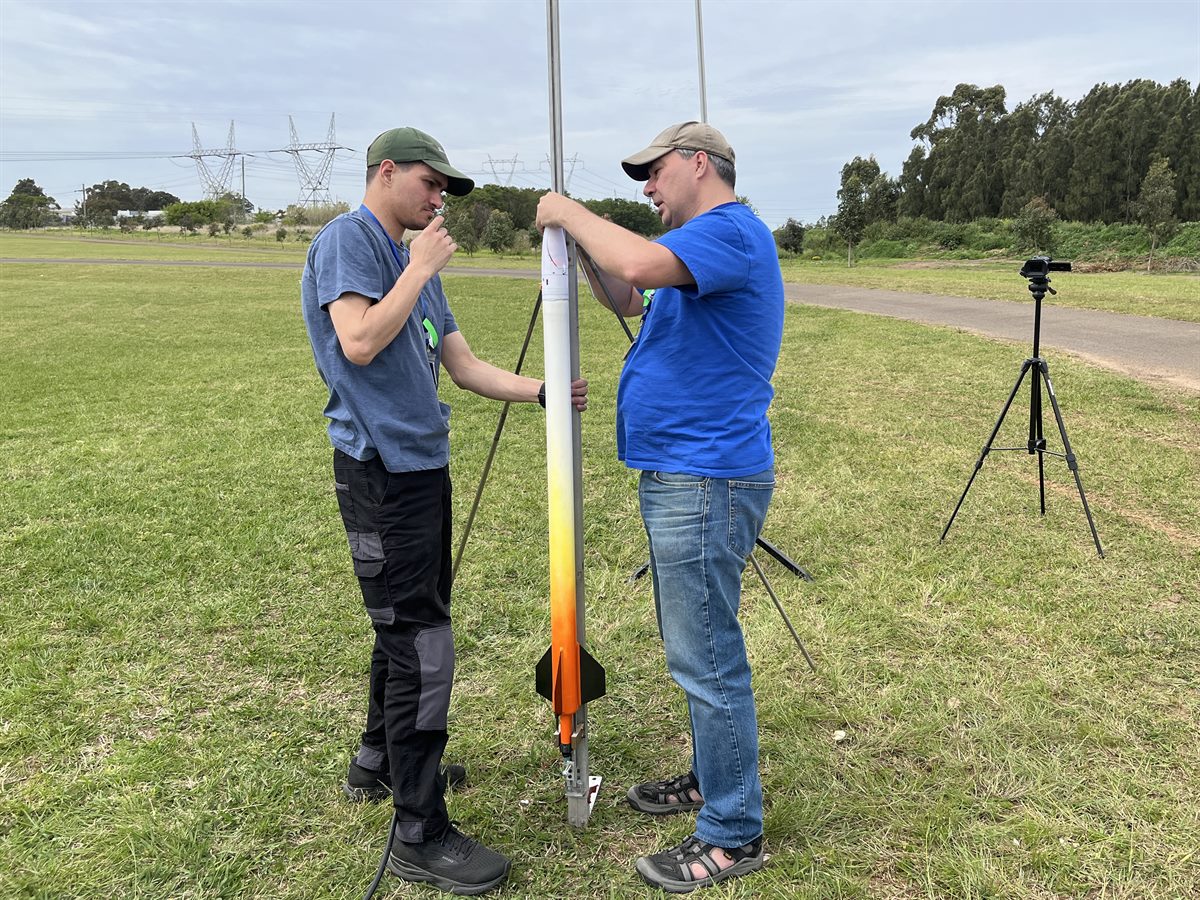
Setup for launch otherwise was fairly straight forward.
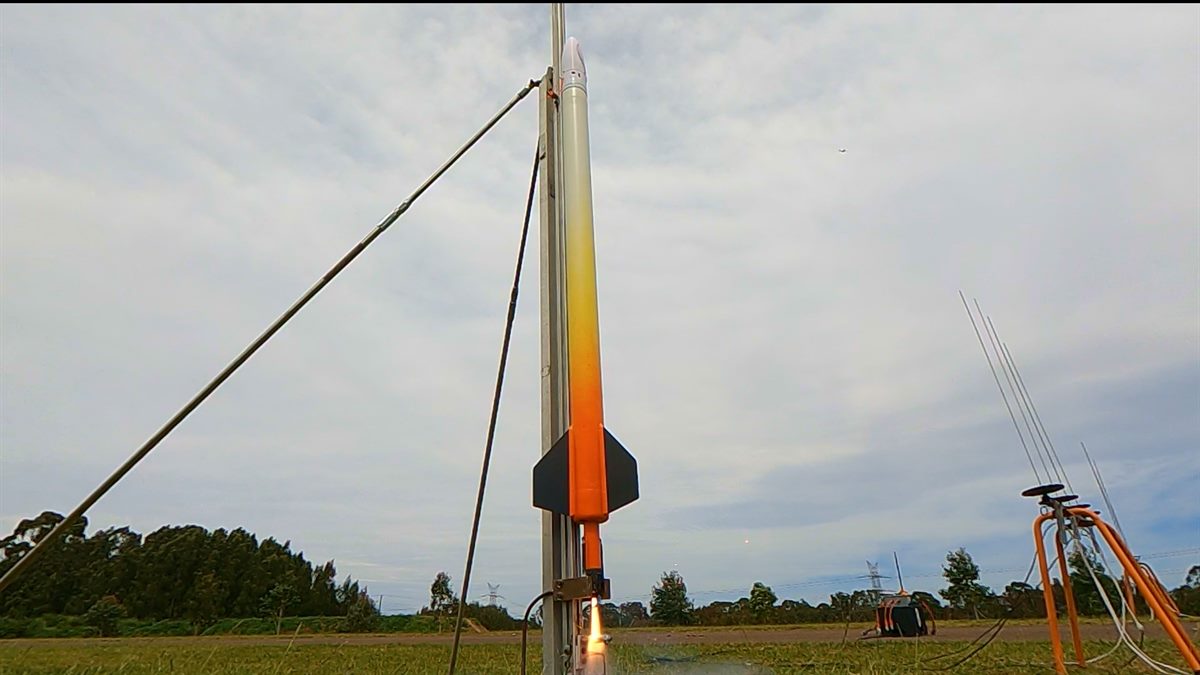
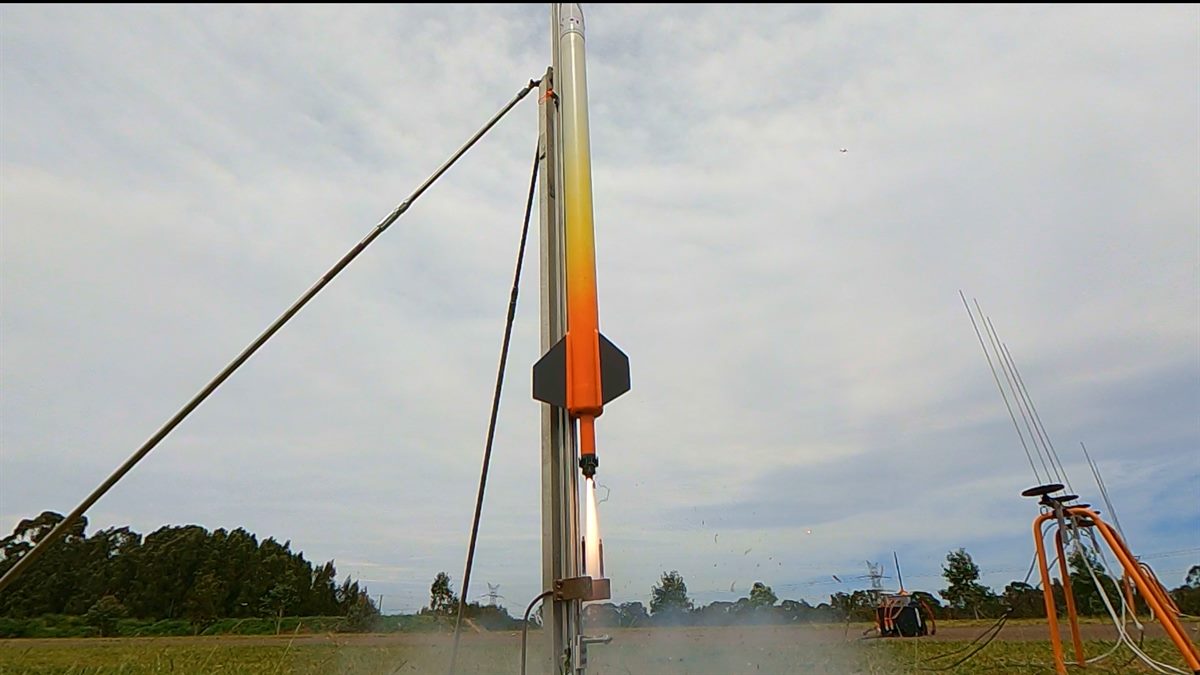
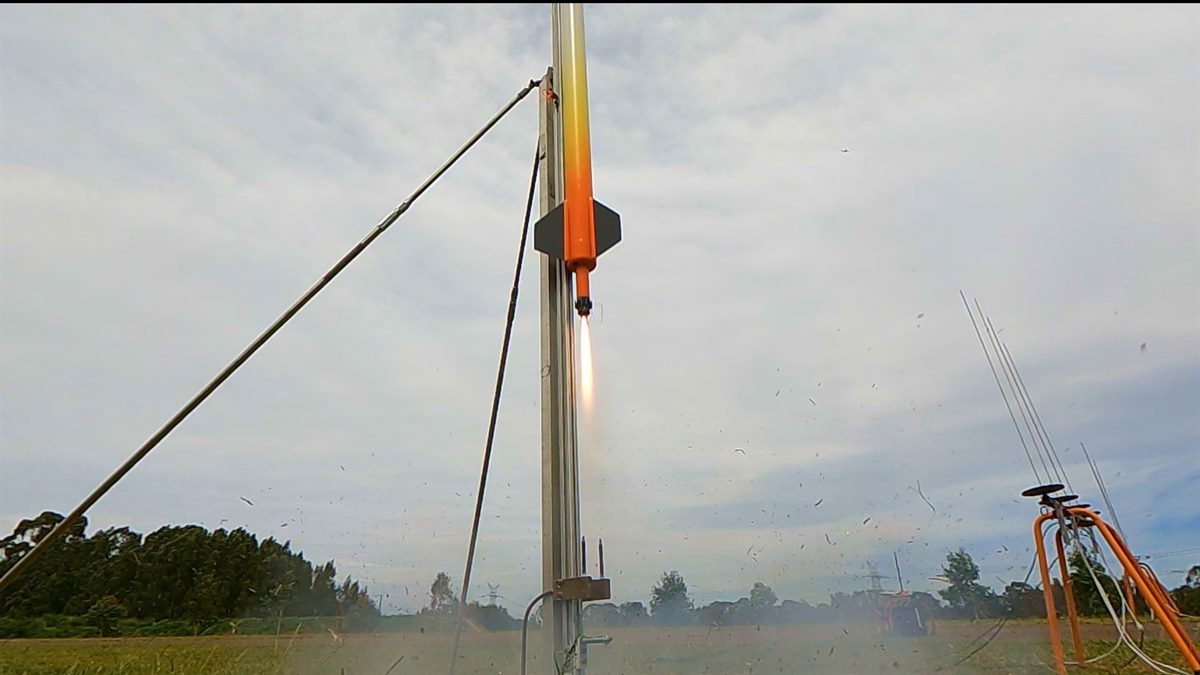
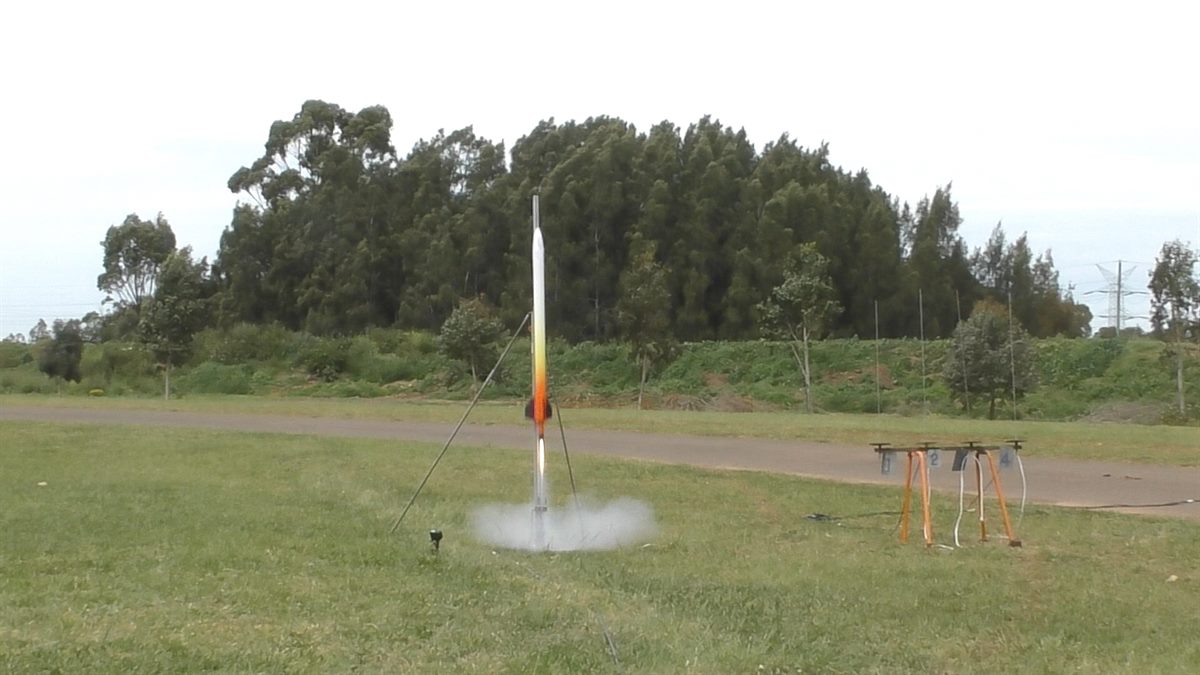
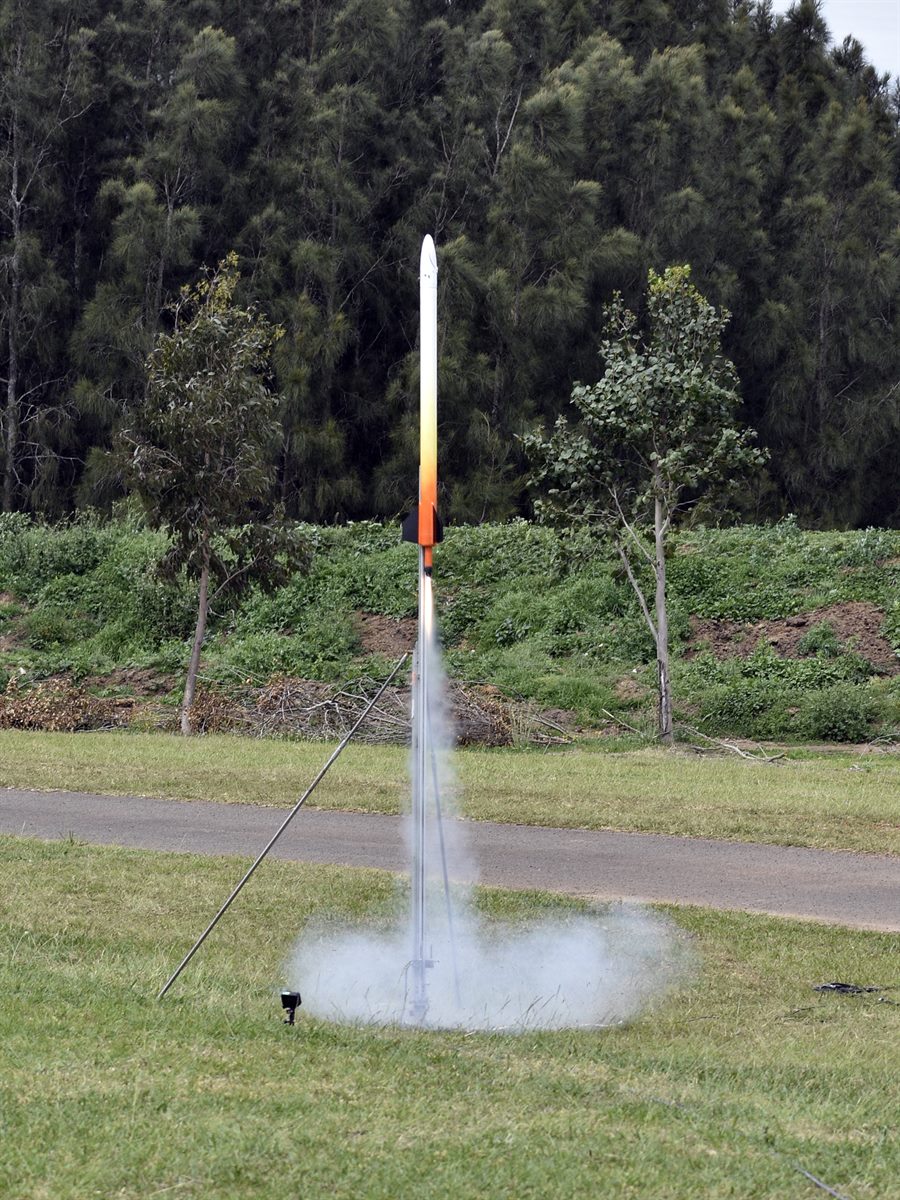
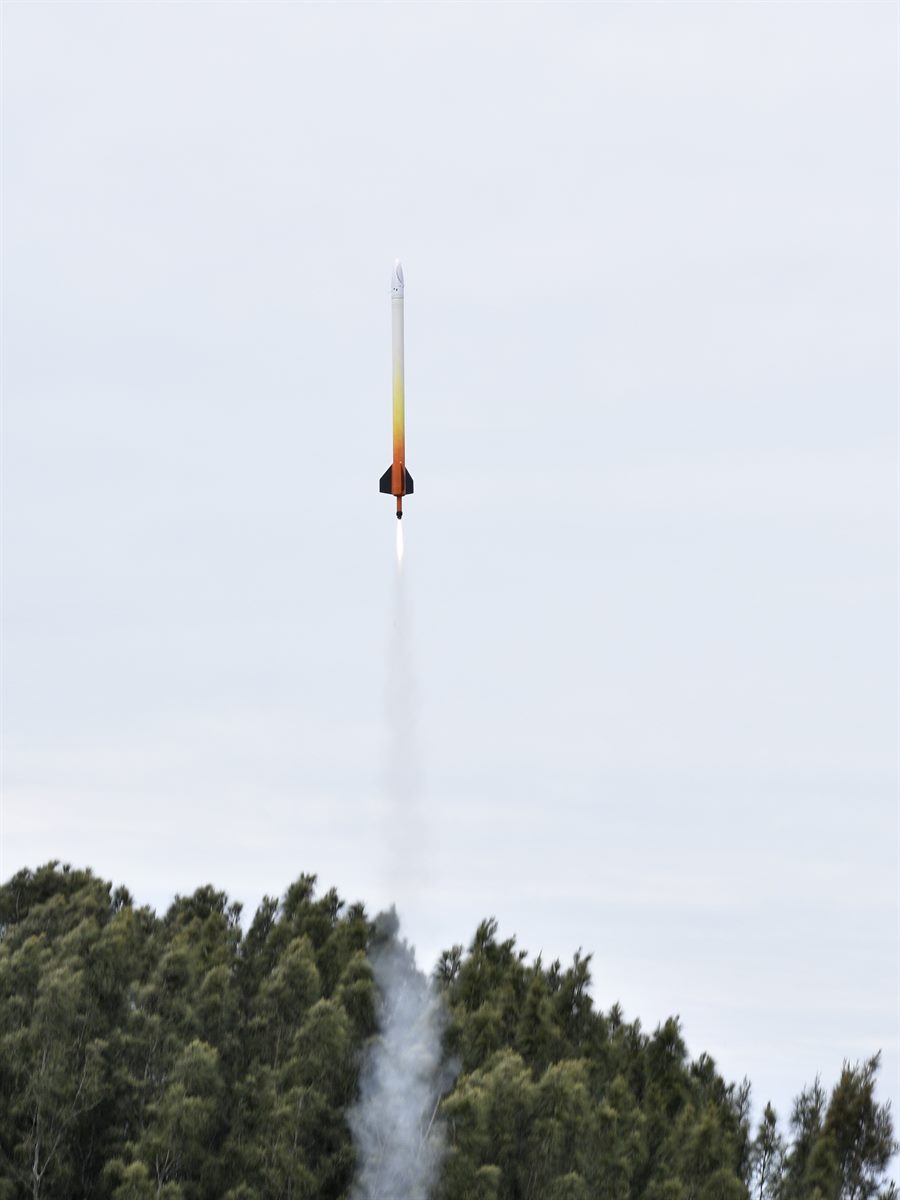
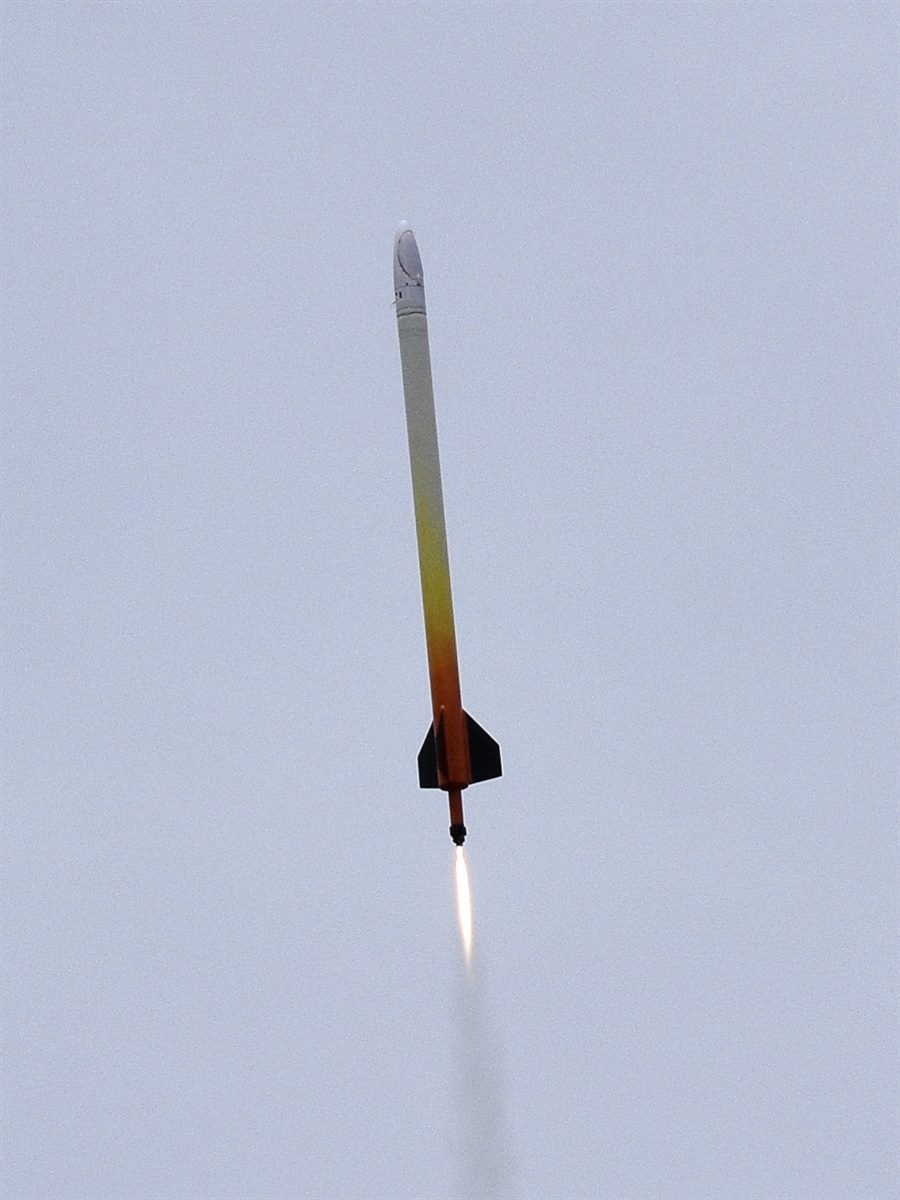
The rocket was pressurised to 300psi in less than 2 minutes and then the motor was ignited using the club's launch controller. The motor ignited fairly quickly and as soon as the full flame emerged from the nozzle the fishing line was burned through and released the rocket.
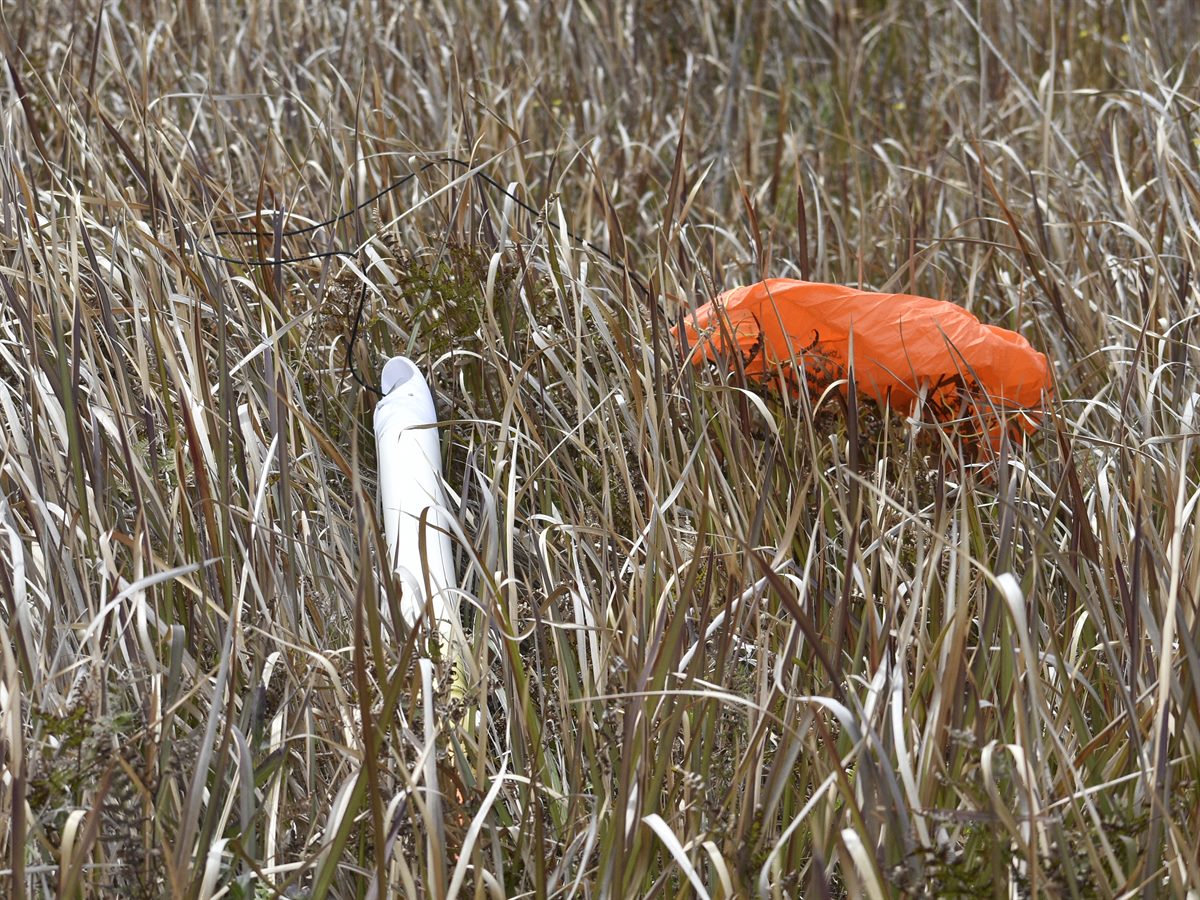
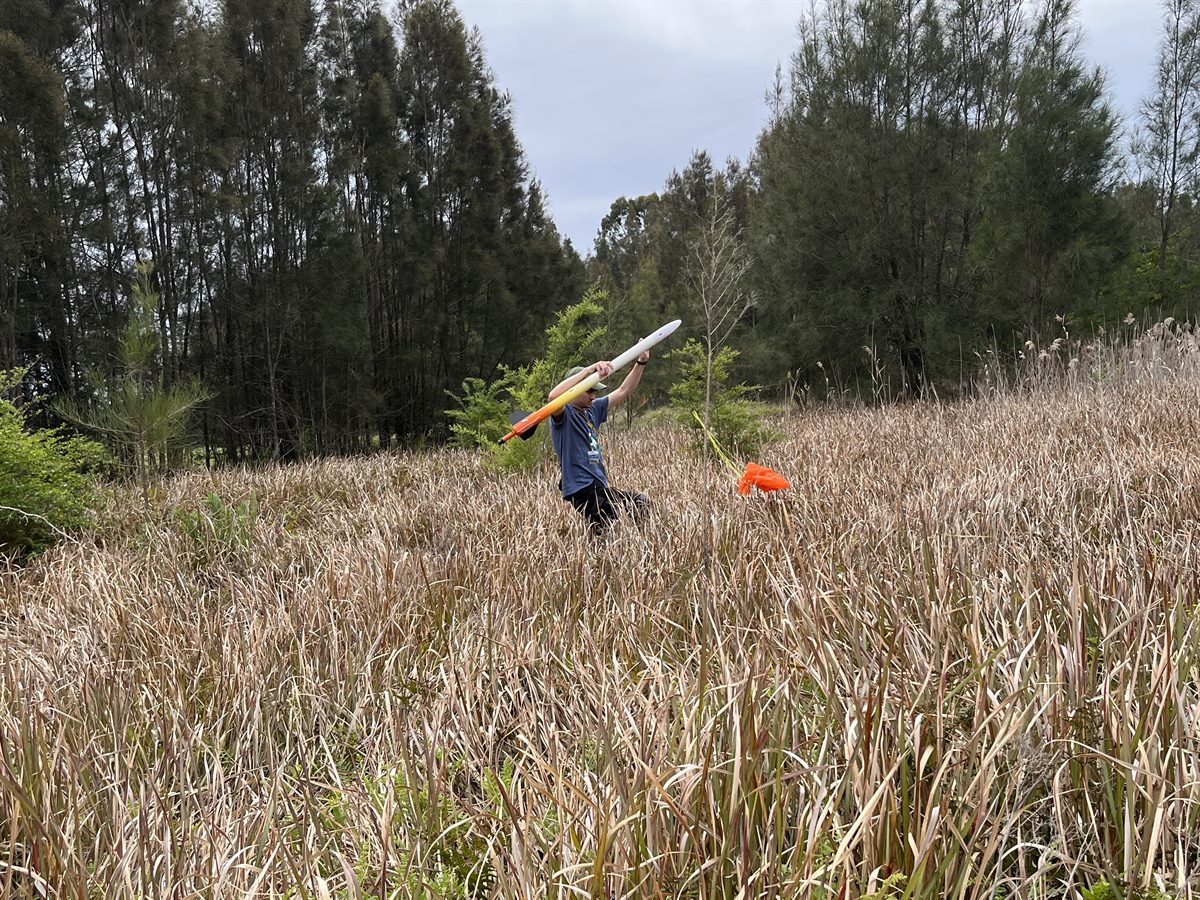
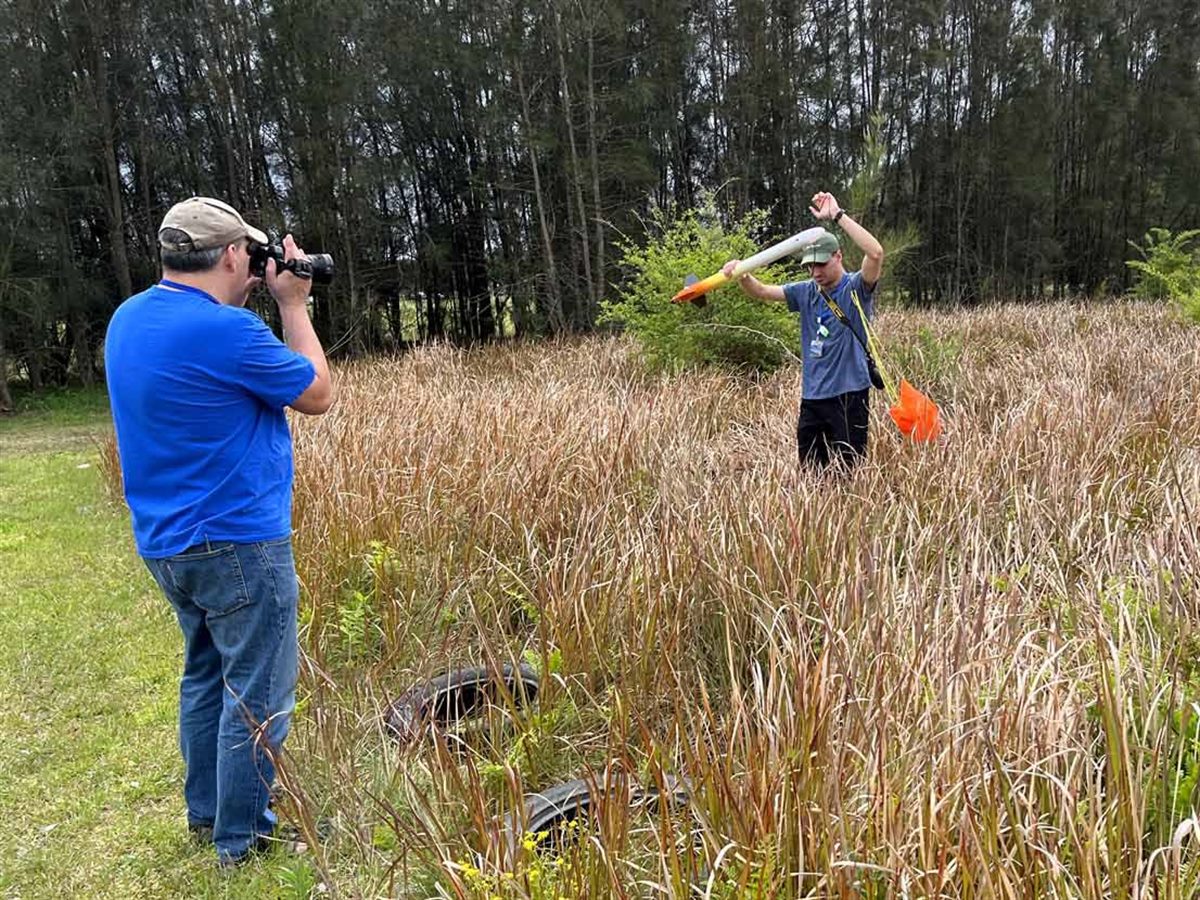
The rocket took off nice and fast and flew nice and straight. We didn't fly an altimeter on this rocket just in case something had failed, but it definitely looked somewhere over 500 feet+. The parachute deploy delay was set for 4 seconds which looked about right and the parachute came out clean. The rocket then proceeded to drift a long way down range just missing a bunch of tall trees. The rocket was recovered without damage.
So overall this was a successful test and we will fly it again on another E-motor but this time with an altimeter so we can get better performance data.
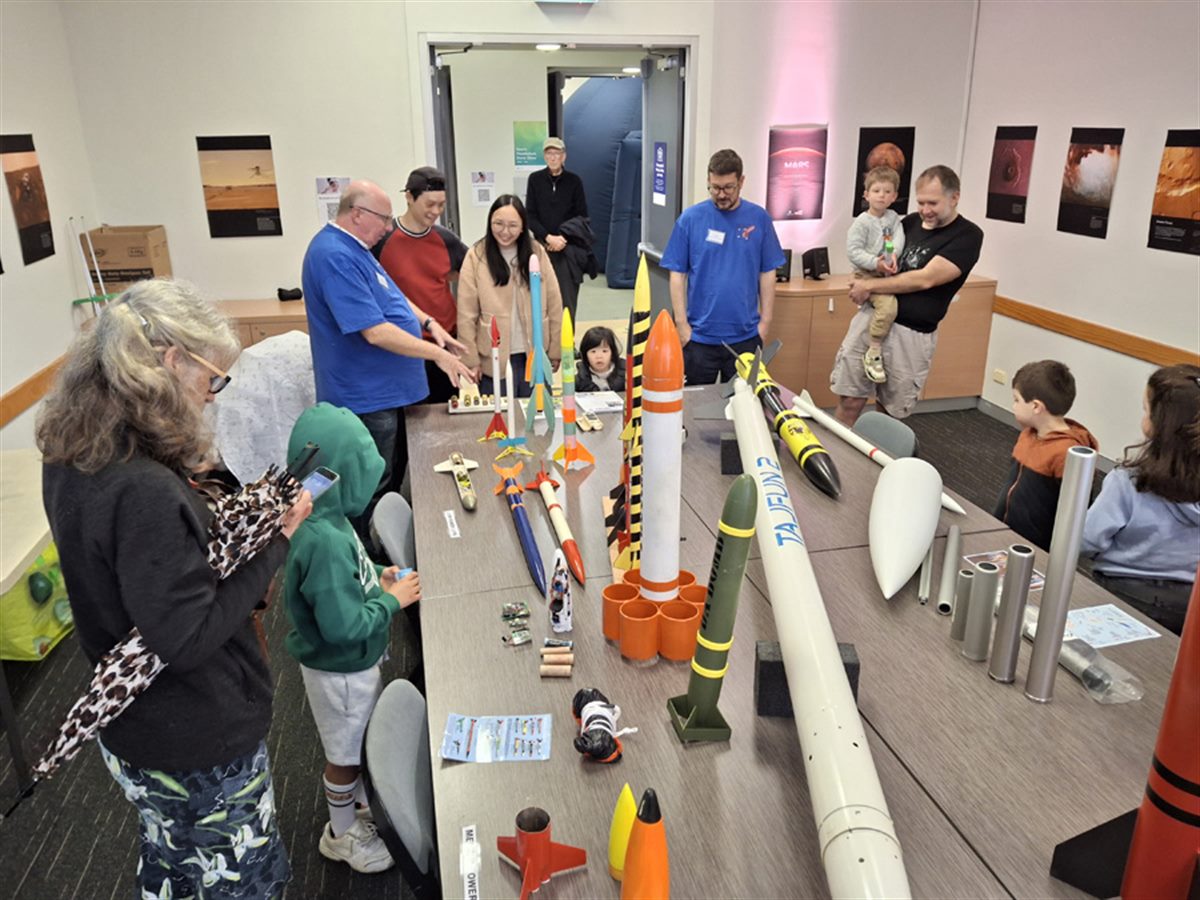
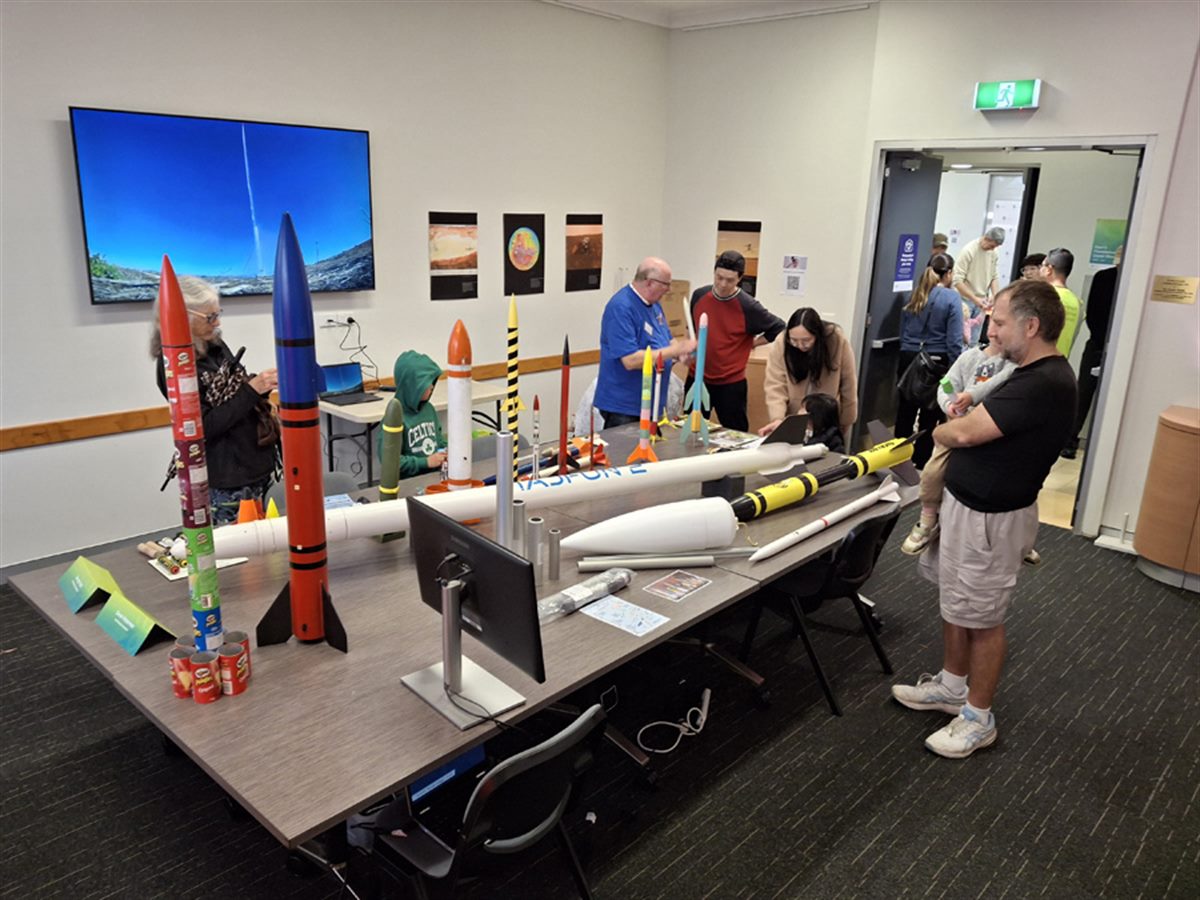
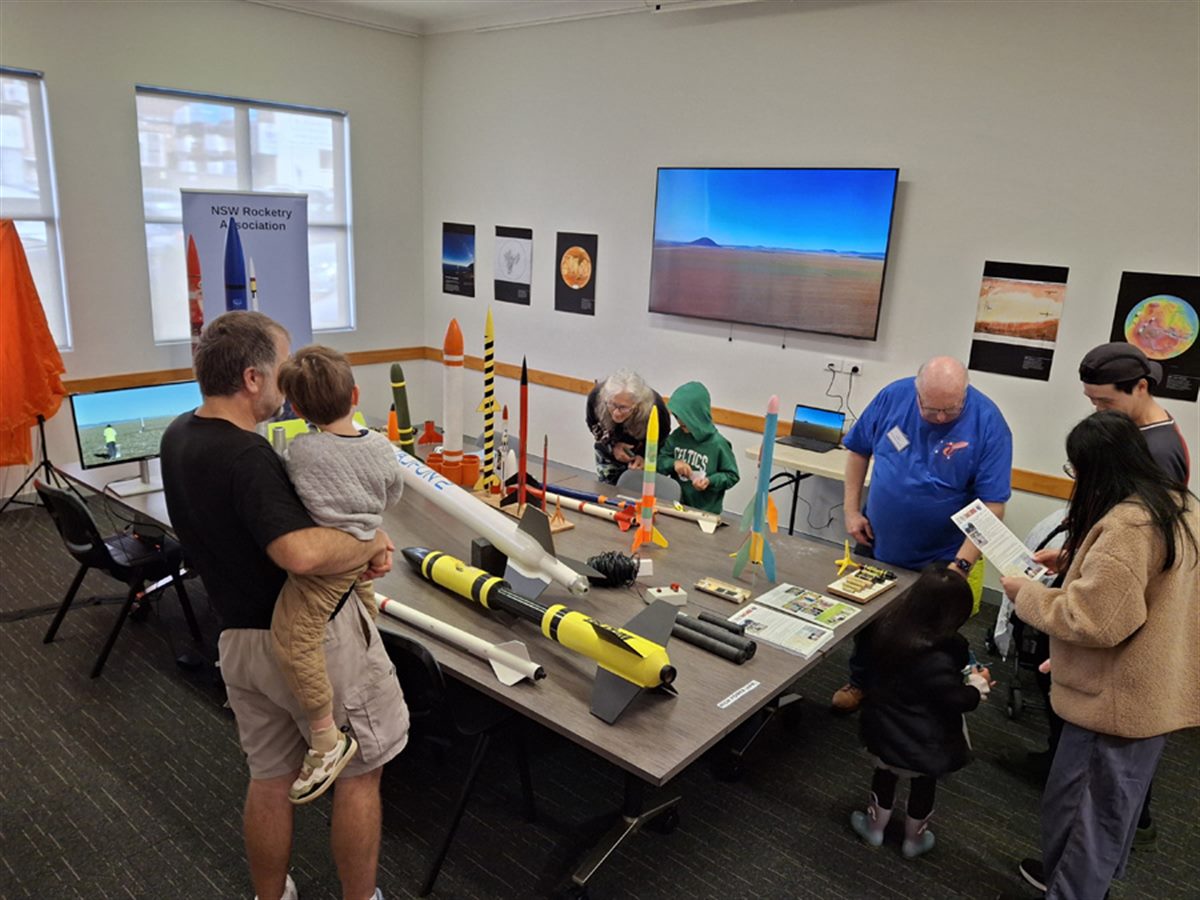
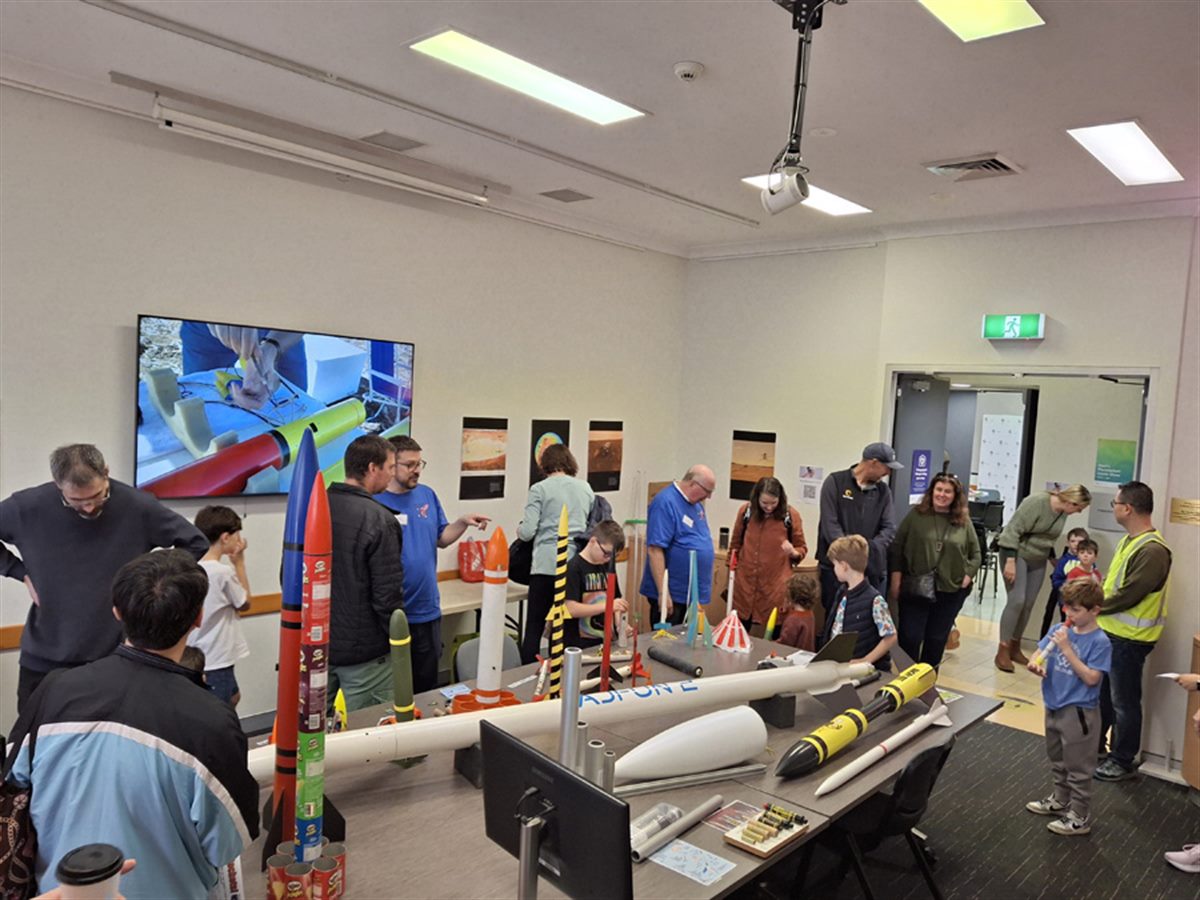
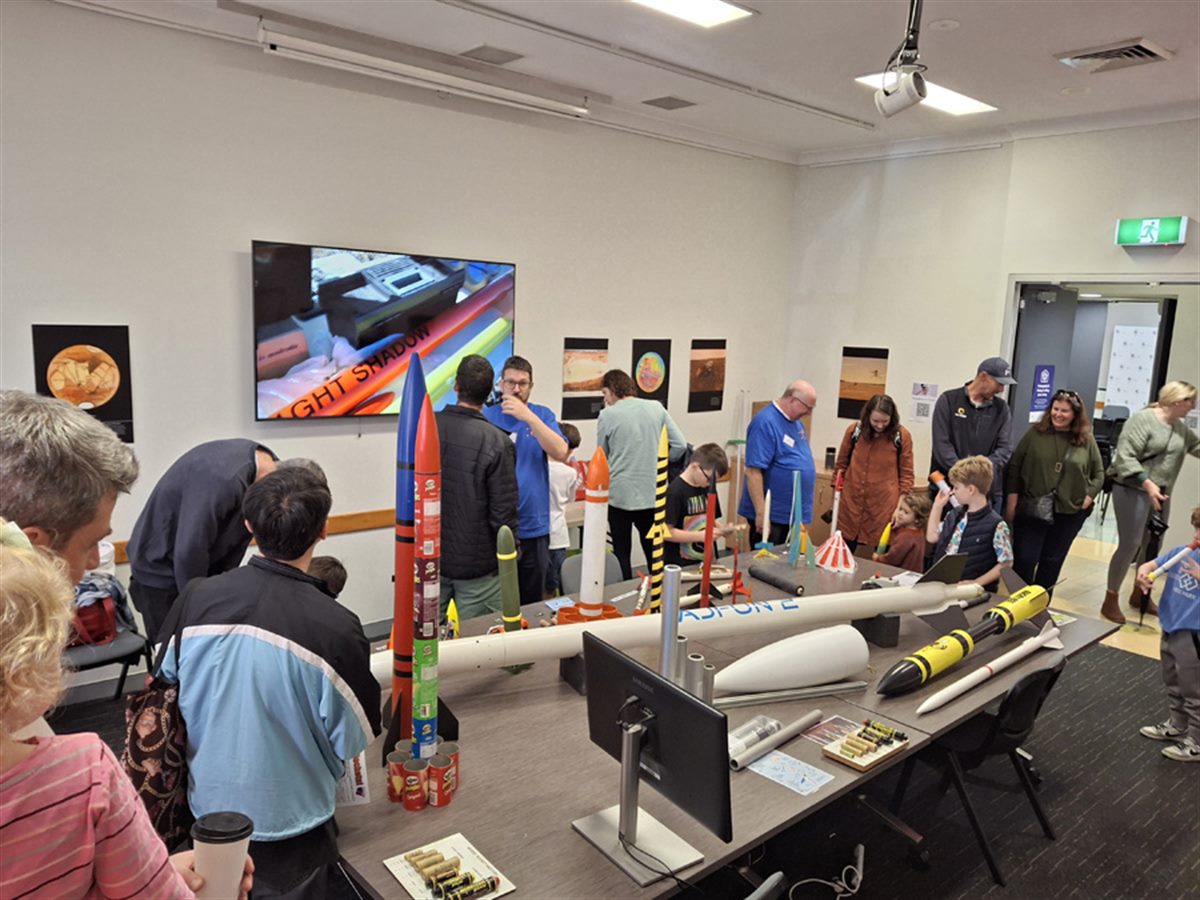
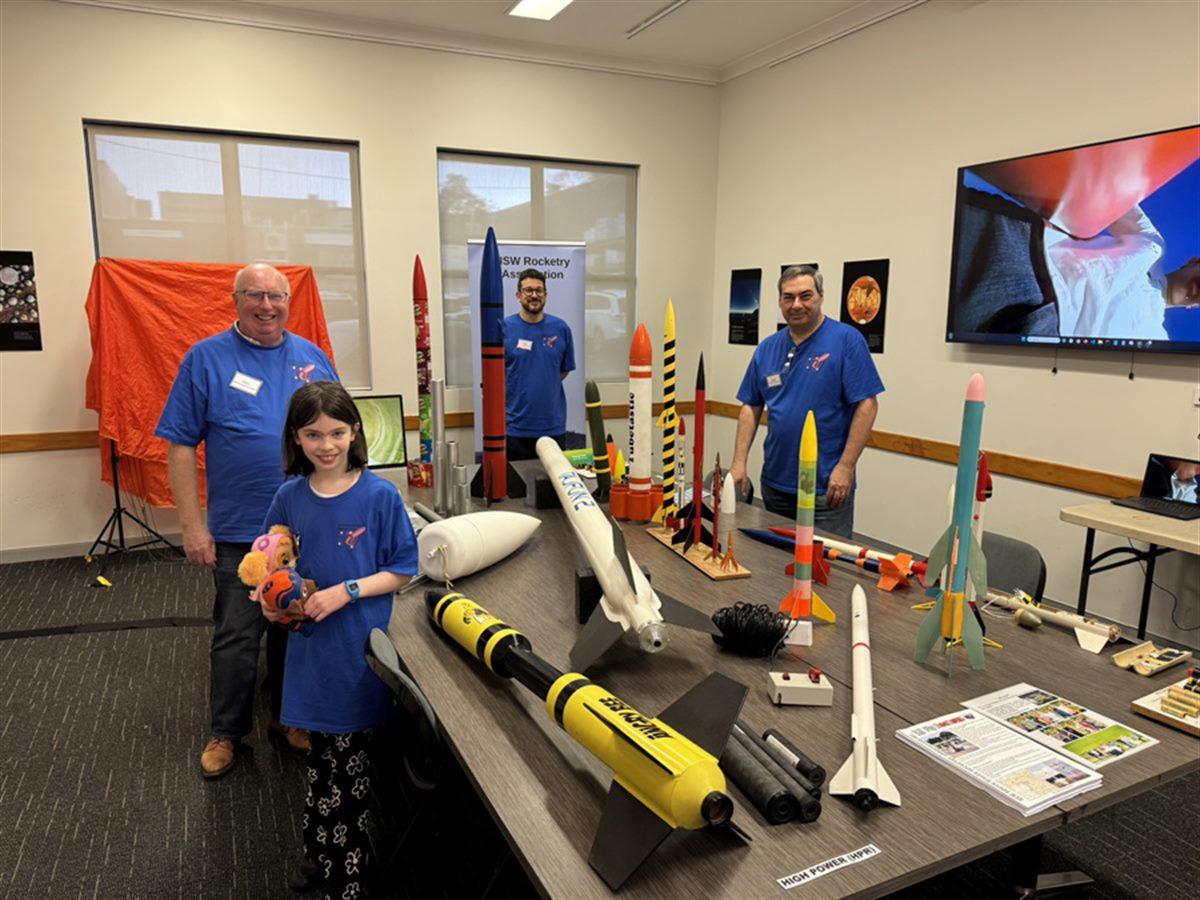
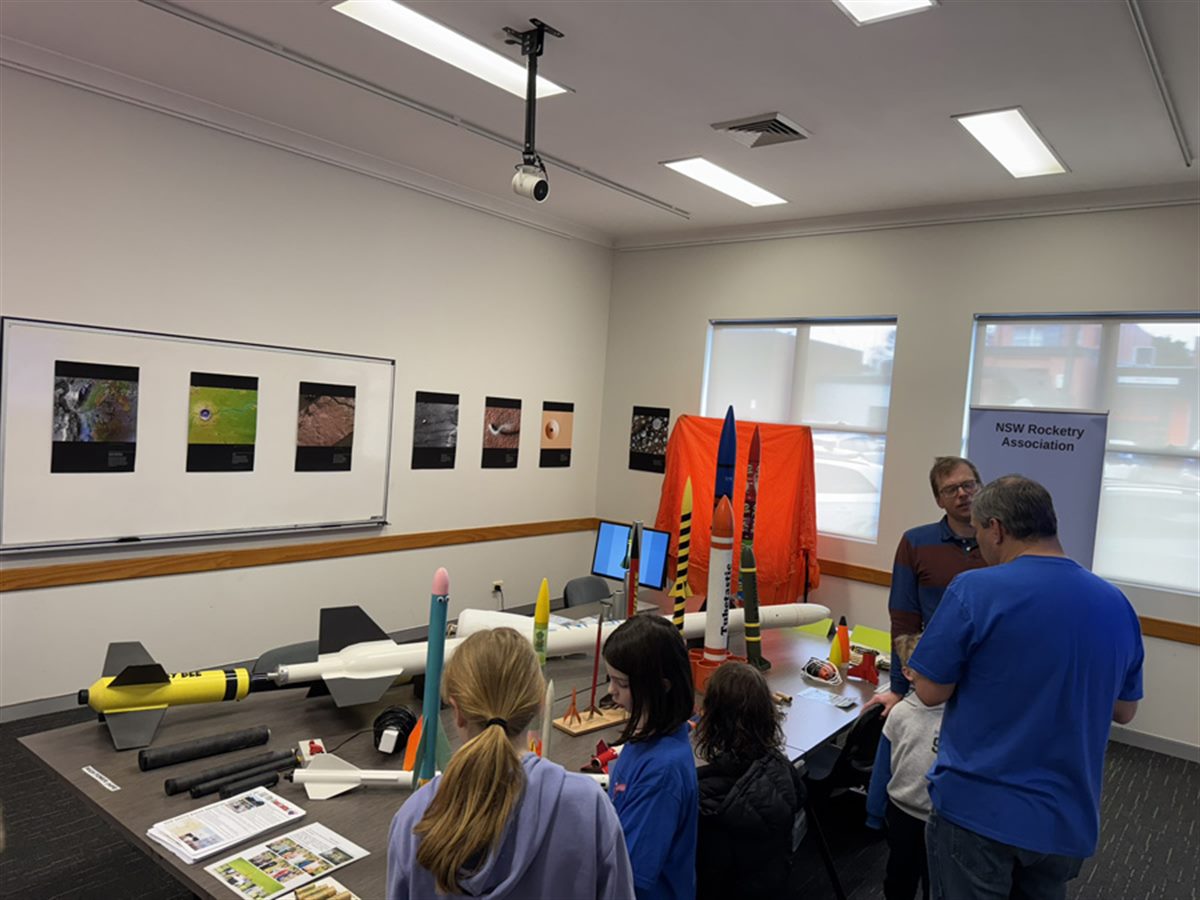
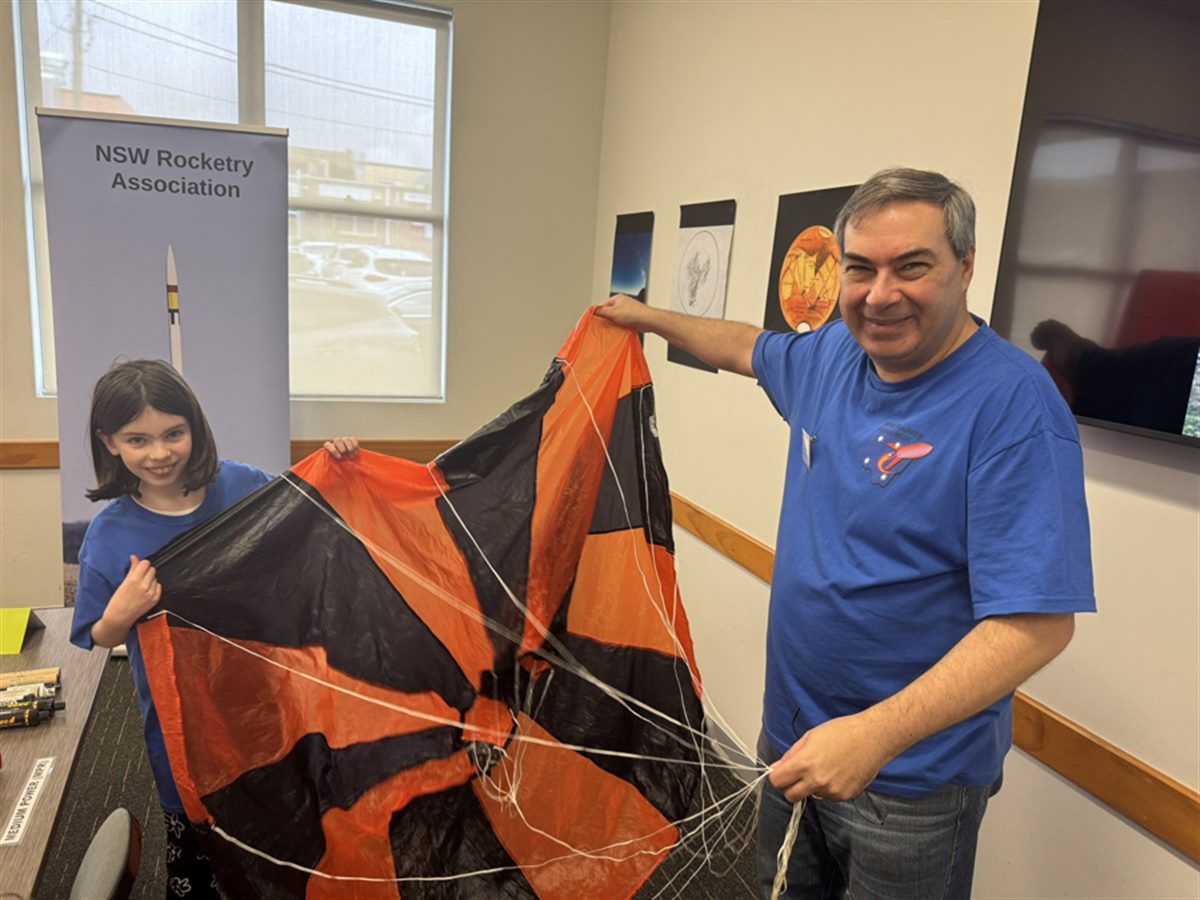
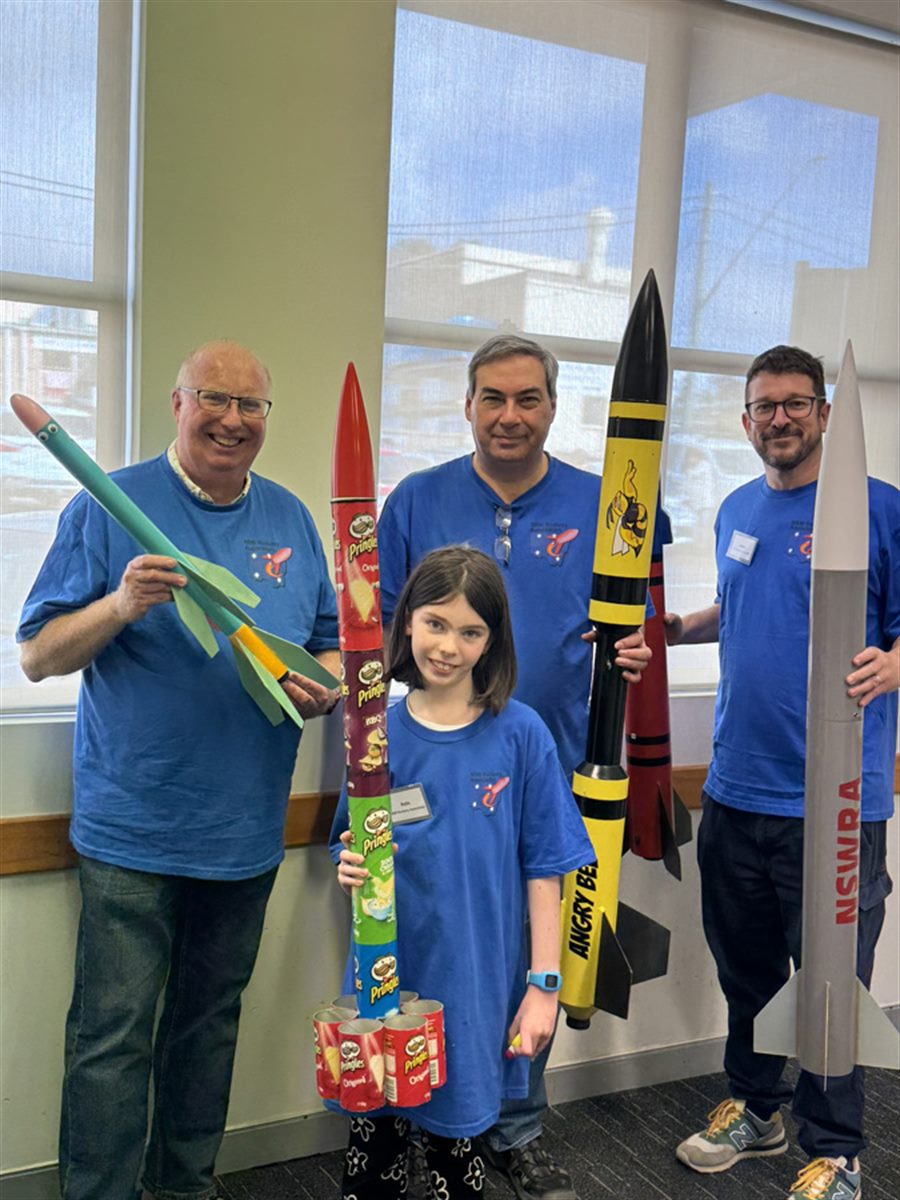
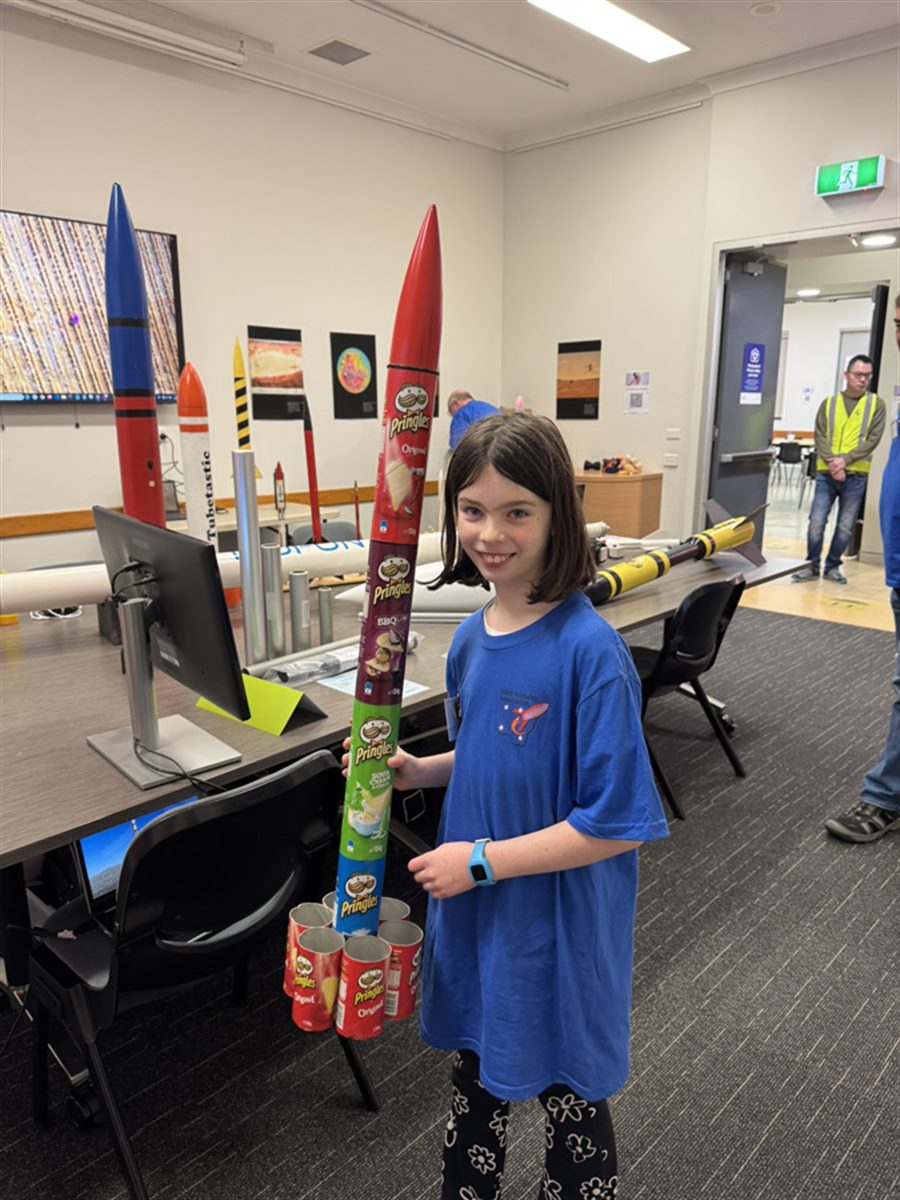
On 9th August 2025 Derek, Arthur, Nelle and I set up a display at the Forestville Library science week open day. We had a couple of hundred people come through to have a look at the display which was quite a good turnout. We all showed the general public what model rocketry is all about and we had quite a positive interest and in fact a couple of the families ended up coming to one of our launch days at Whalan Reserve. These presentation days are always fun to be involved with.
| Launch | Details | ||||||||||||||||||||||||
| 1 |
|