


| Date: | 26 April 2026 |
| Location: | Whalan Reserve, Australia |
| Conditions: | Sunny, 5-10km/h wind 23C |
| Members: | GK and PK |
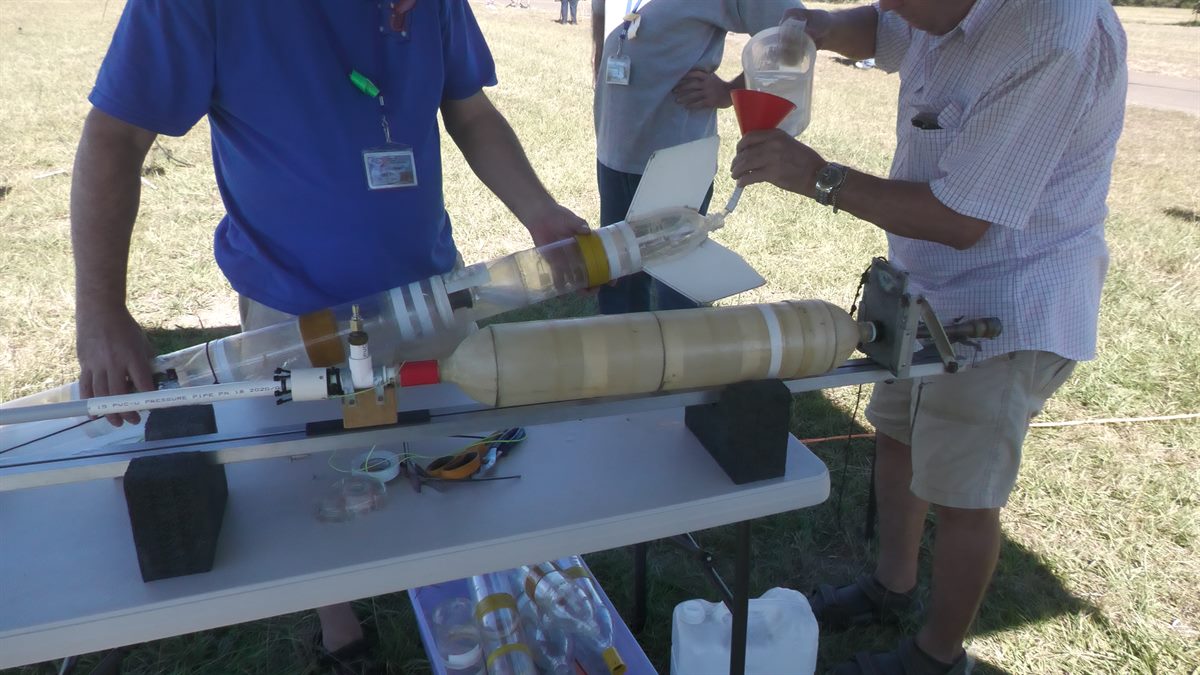
Today we wanted to do more comparison flights for the launch tube video we are making. We used our regular Axion rocket to for all the flights with the same amount of water and at the same pressure. We also used the newer version of the AltimeterOne altimeter for measuring altitude.
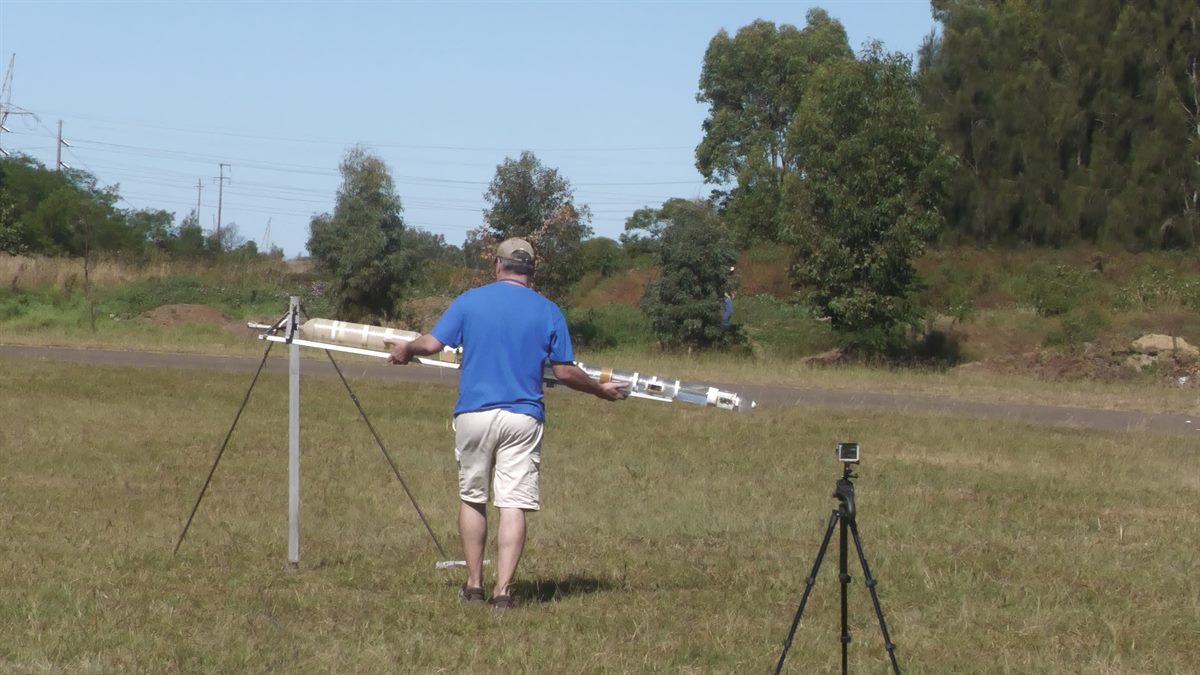
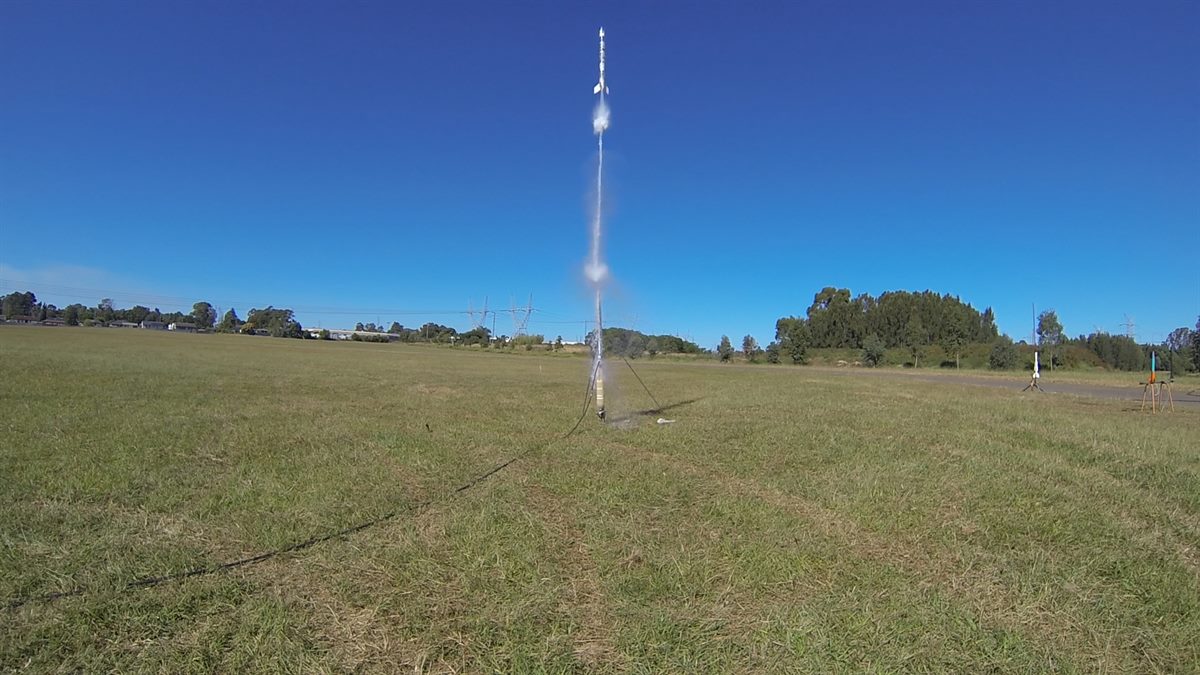
For the first flight we set up the Clark cable-tie launcher with no launch tube. This just uses the full throat of the bottle as the nozzle. The rocket was pressurised to the 110psi using the adjustable pressure regulator. After the rocket reached the launch pressure. We left the pressure regulator set to the exact pressure for the subsequent flights to make for more accurate comparison.
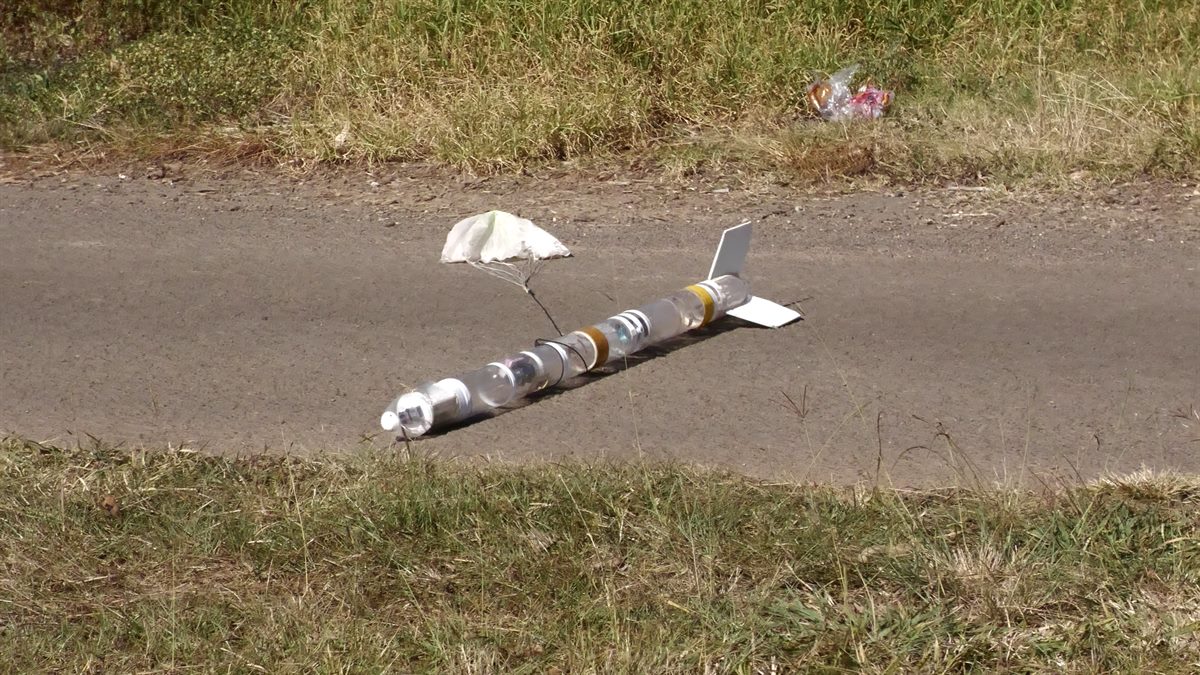
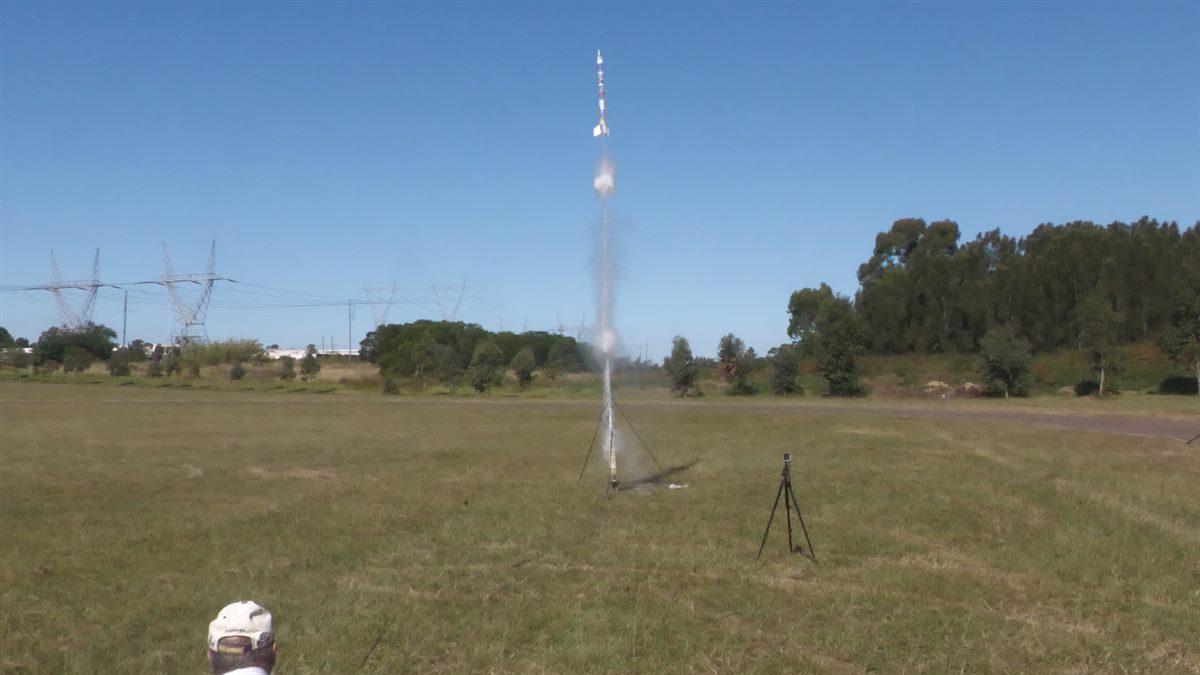
The rocket flew well, with a parachute deployment past apogee and the rocket landed safely on the path without damage. It reached an altitude of 354 feet (108m).
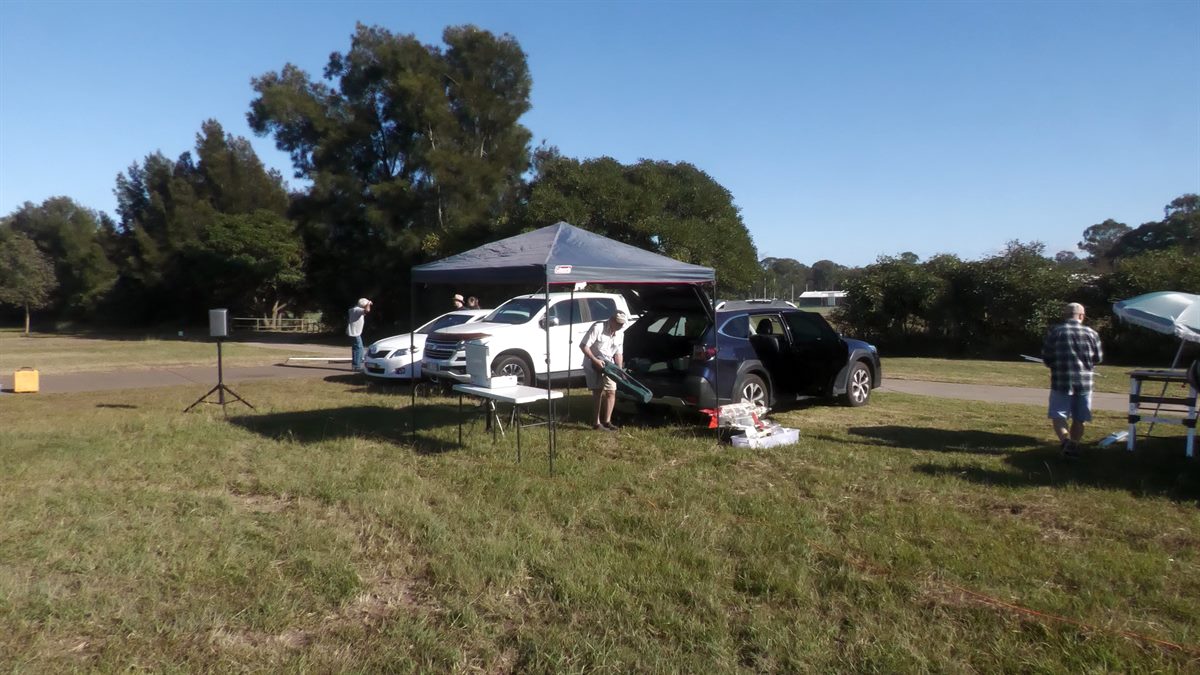
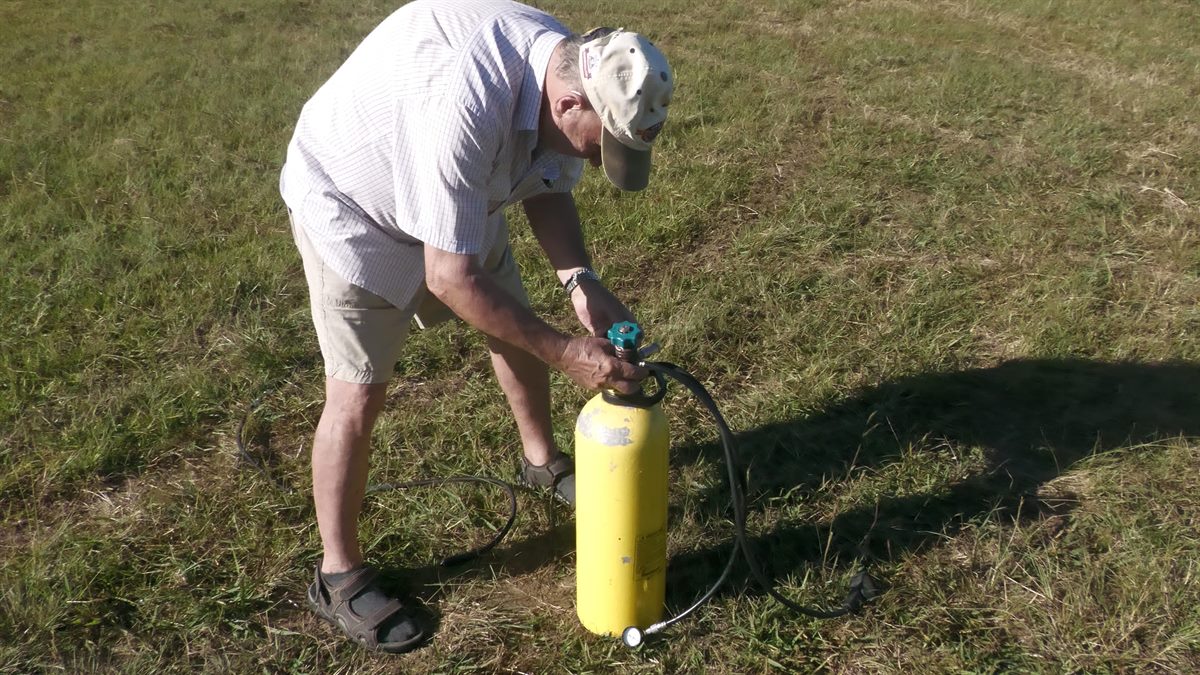
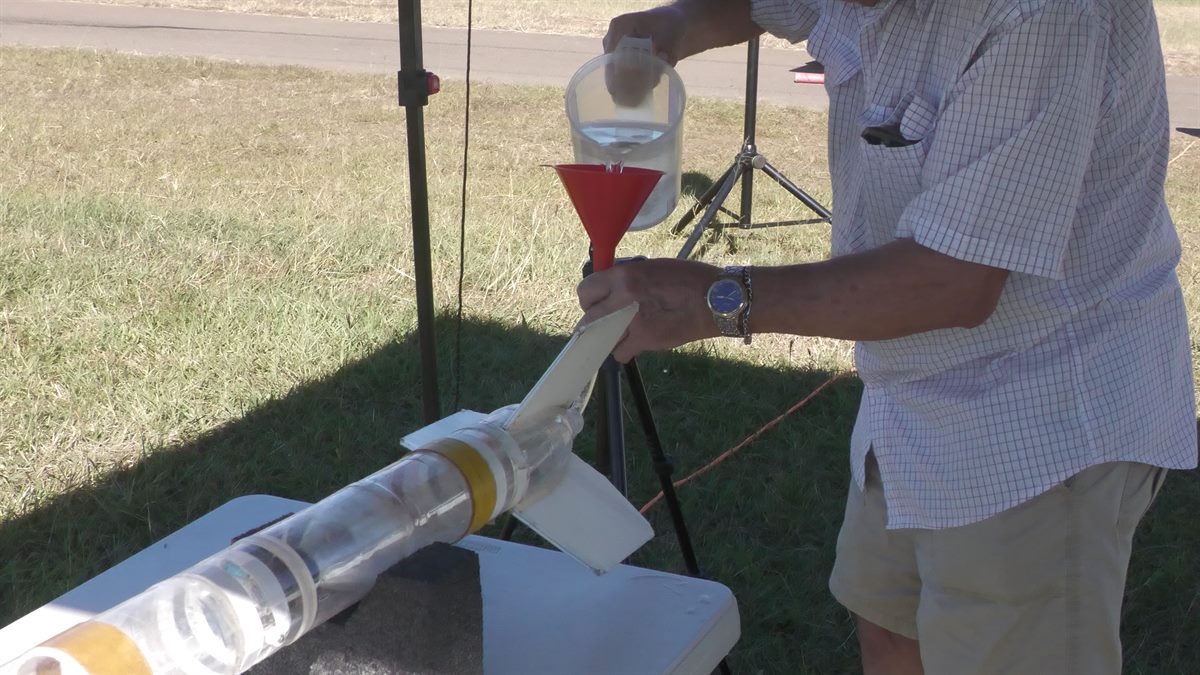
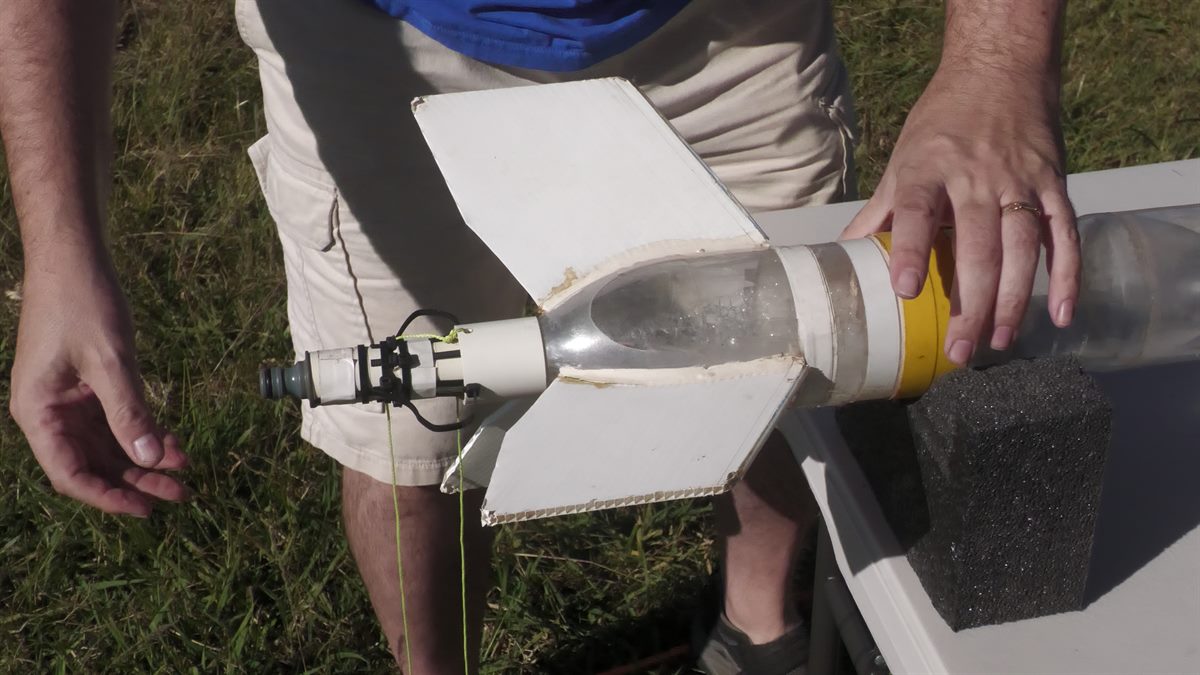
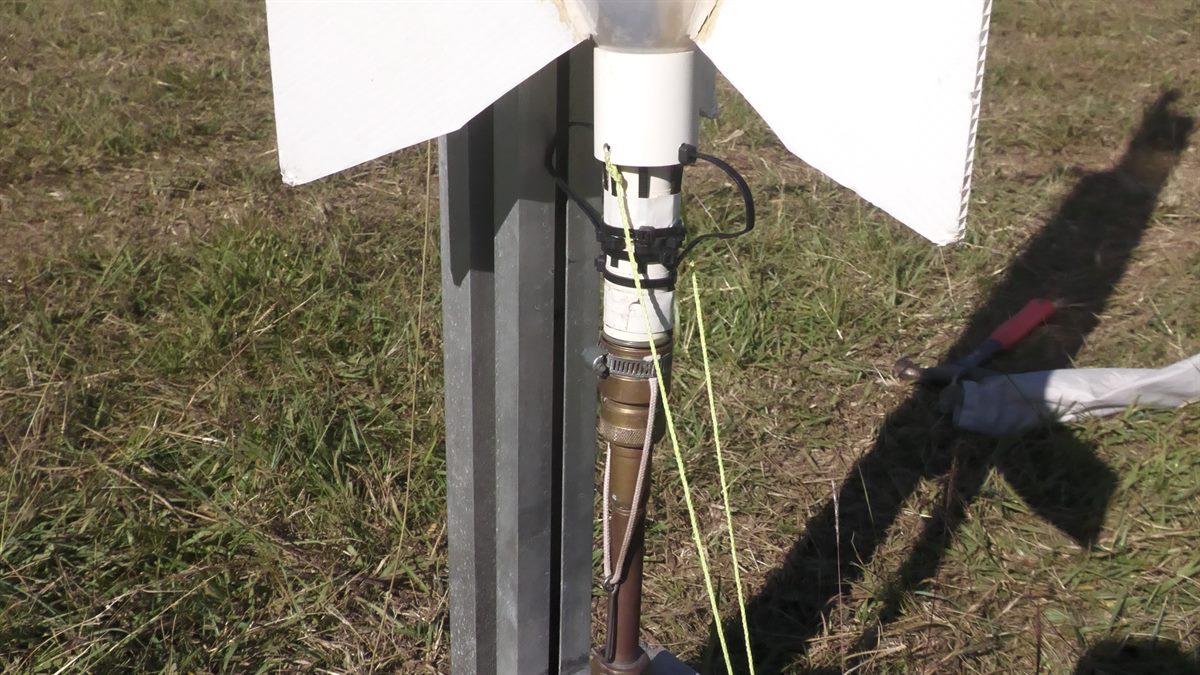
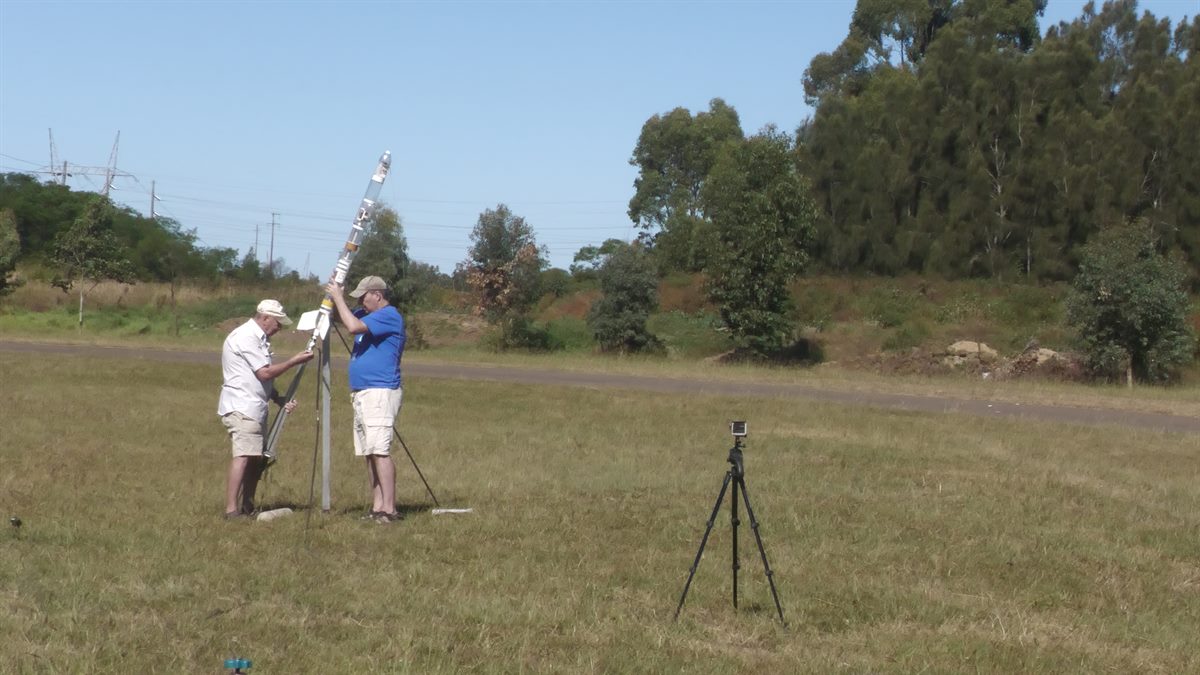
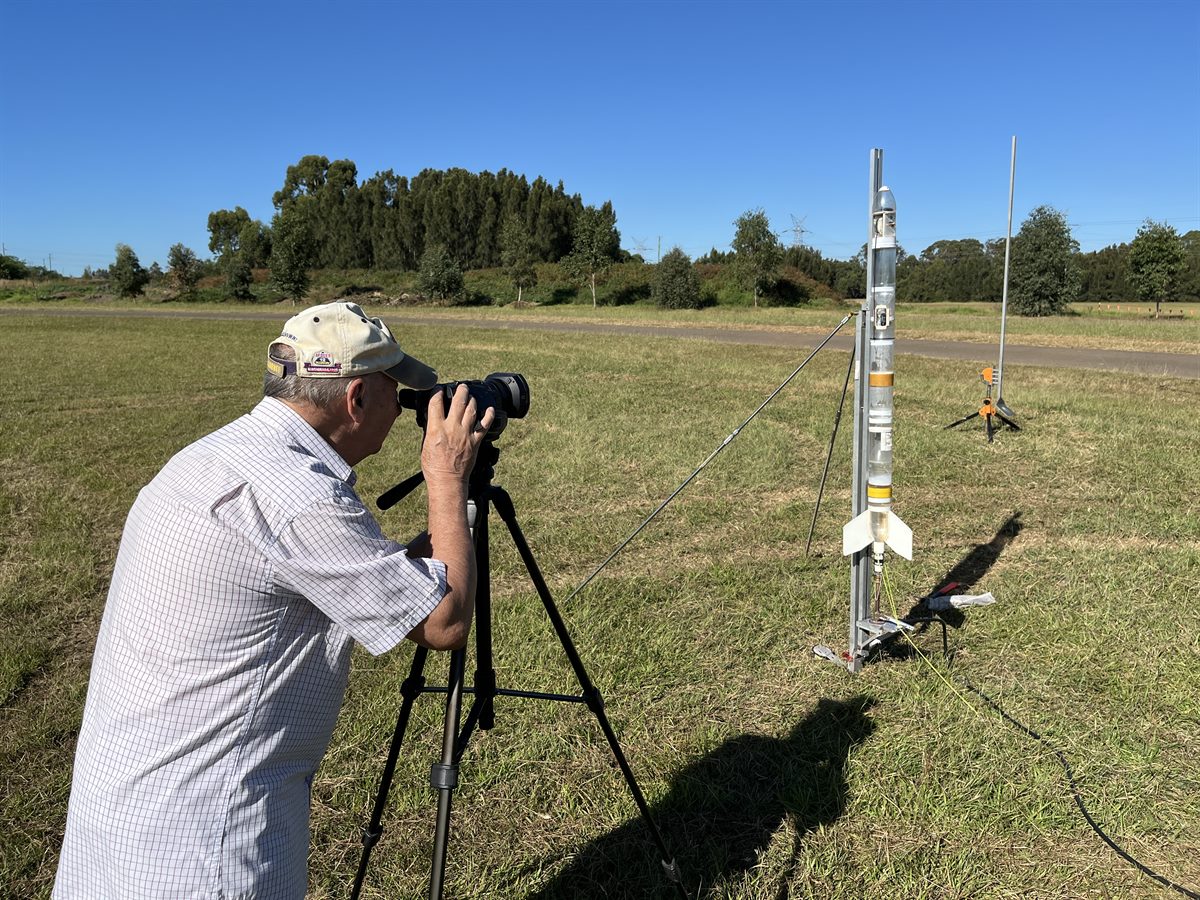
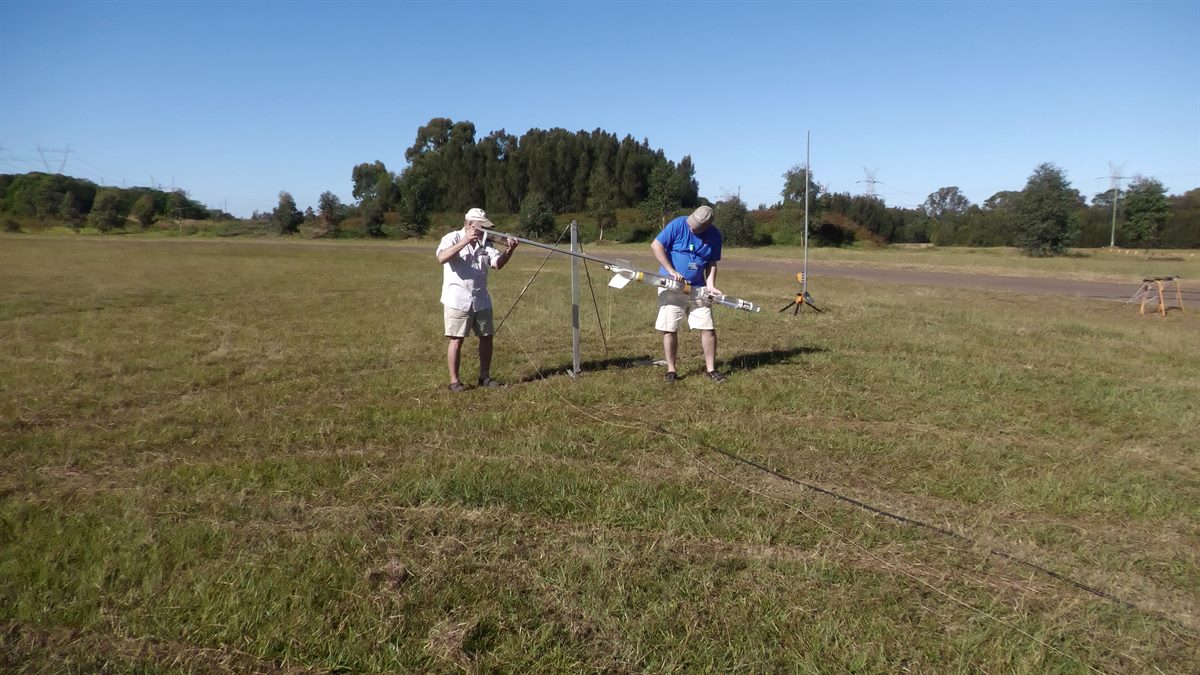
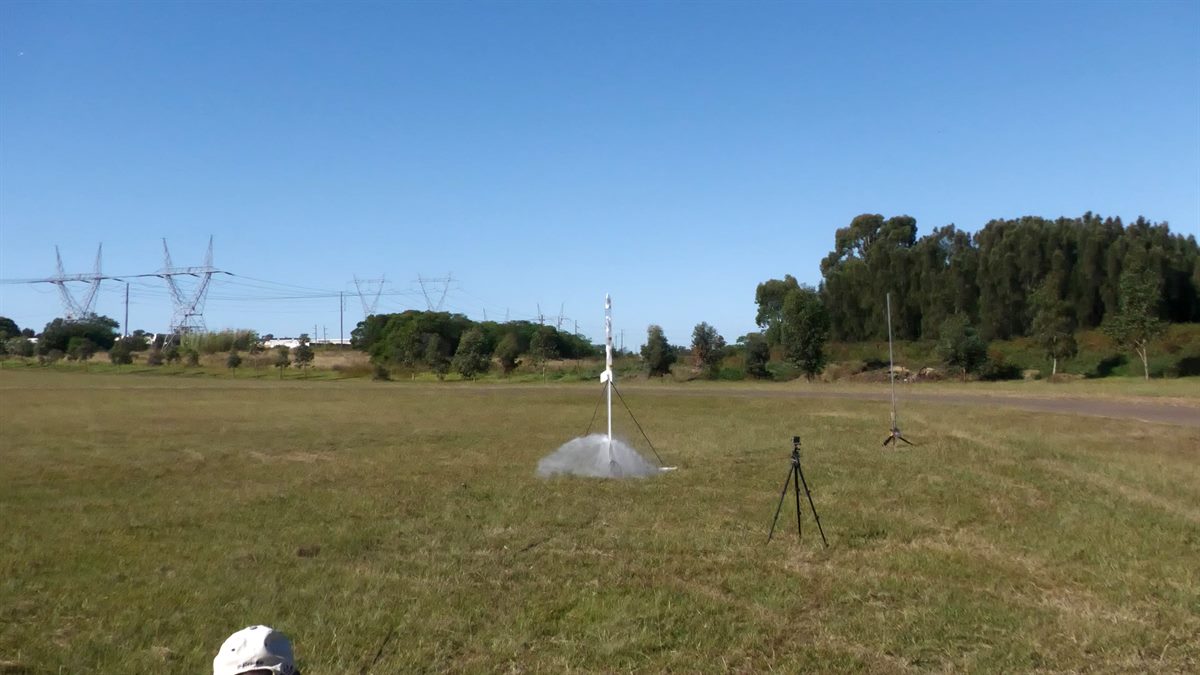
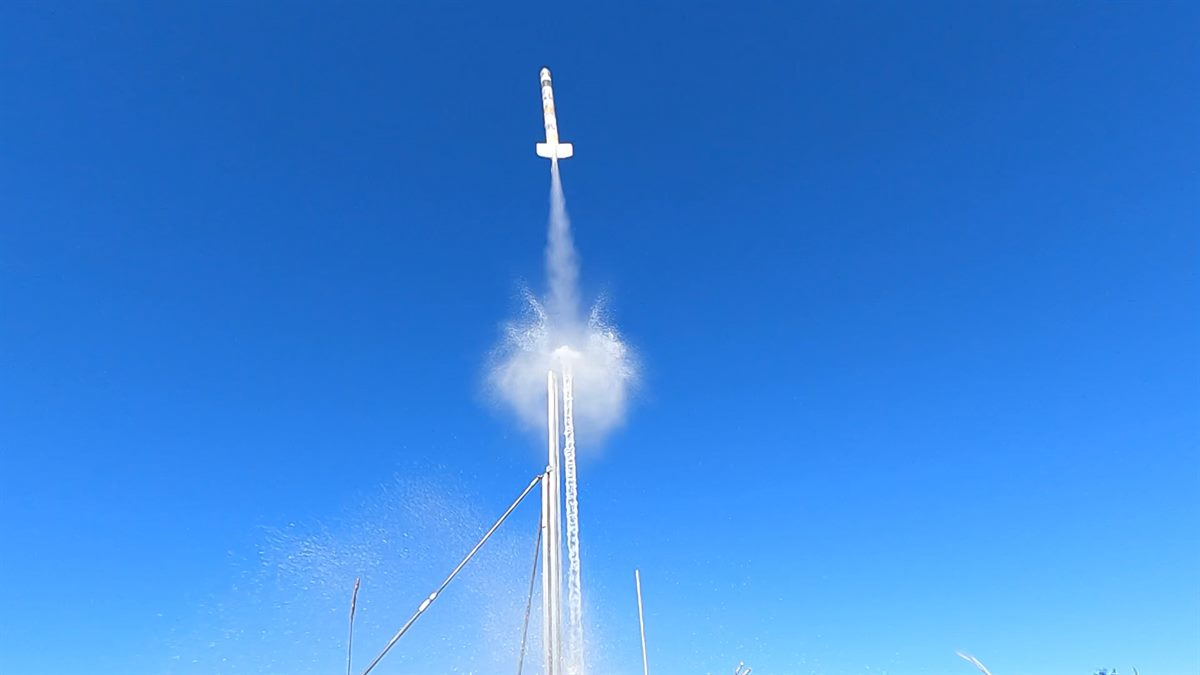
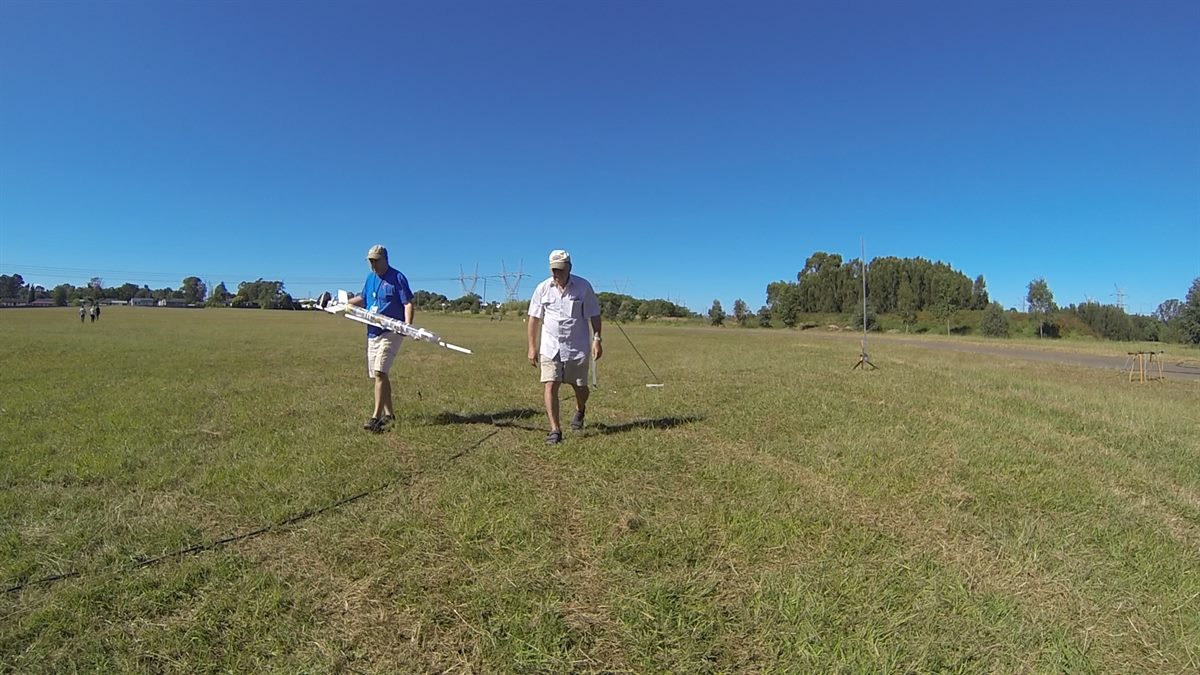
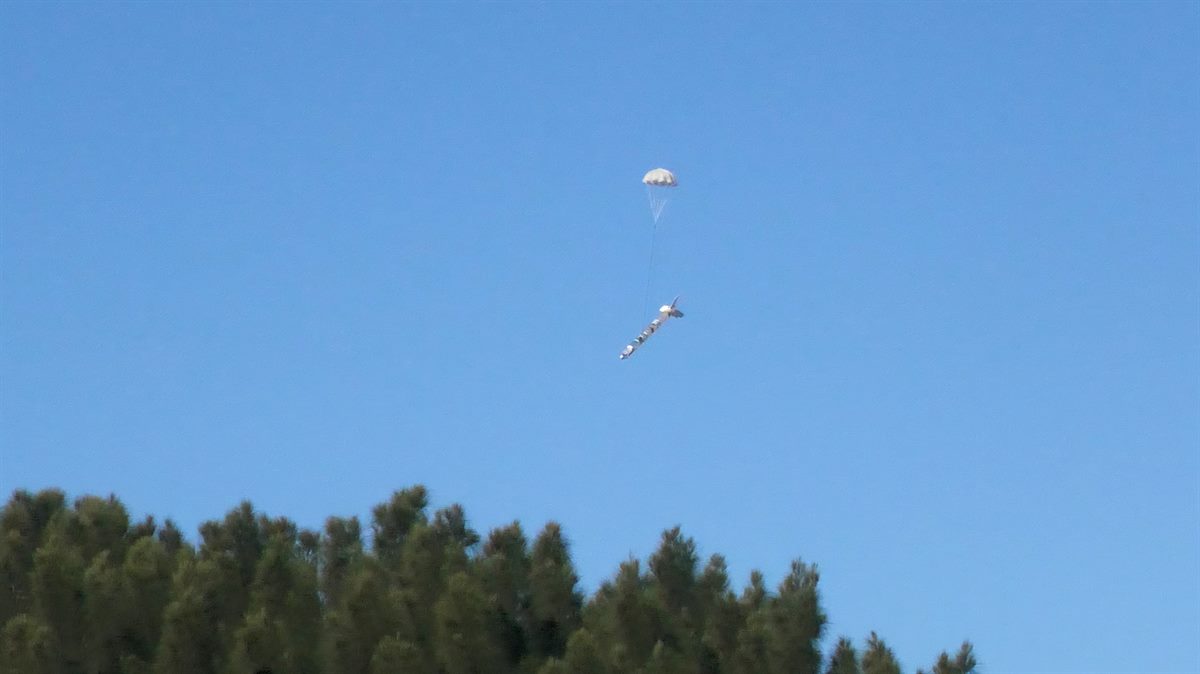
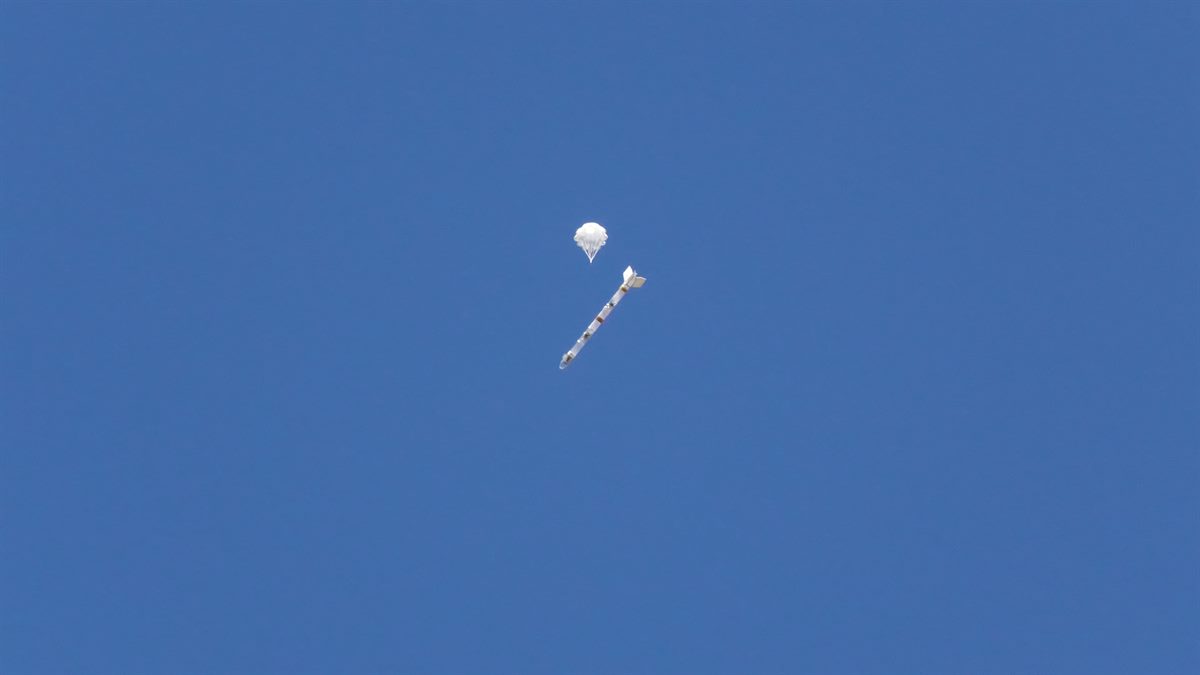
For the next launch we replace the release head with a second one that has a T-intersection and the air is fed from the side. This is designed so that we can fit an Air Reservoir Booster at the bottom of it. But for this flight the ARB was removed and the hole was capped.
We pressurised the rocket, but when trying to release it, it didn't go. We could see the collar was down so the rocket should have released but it just sat there. I suspected that it was just wedged on the launch tube. We depressurised the rocket and then removed it from the launcher and took it back to the table. I noticed that it still had a little bit of pressure in it, perhaps 5 psi, and I could hear it slowly leaking from the hose adaptor. When I disassembled it the adaptor, it looks like the rubber washer must have deformed and almost blocked the hole completely. This meant that when we pressurised the rocket, it would have only perhaps had 10-15 psi in it, although the hose had the full pressure in it. With the friction it just wasn't enough pressure to release the rocket. We replaced the rubber washer with a nylon one that wouldn't deform as much and tried blowing into the rocket through the connector and this time the air flowed well.
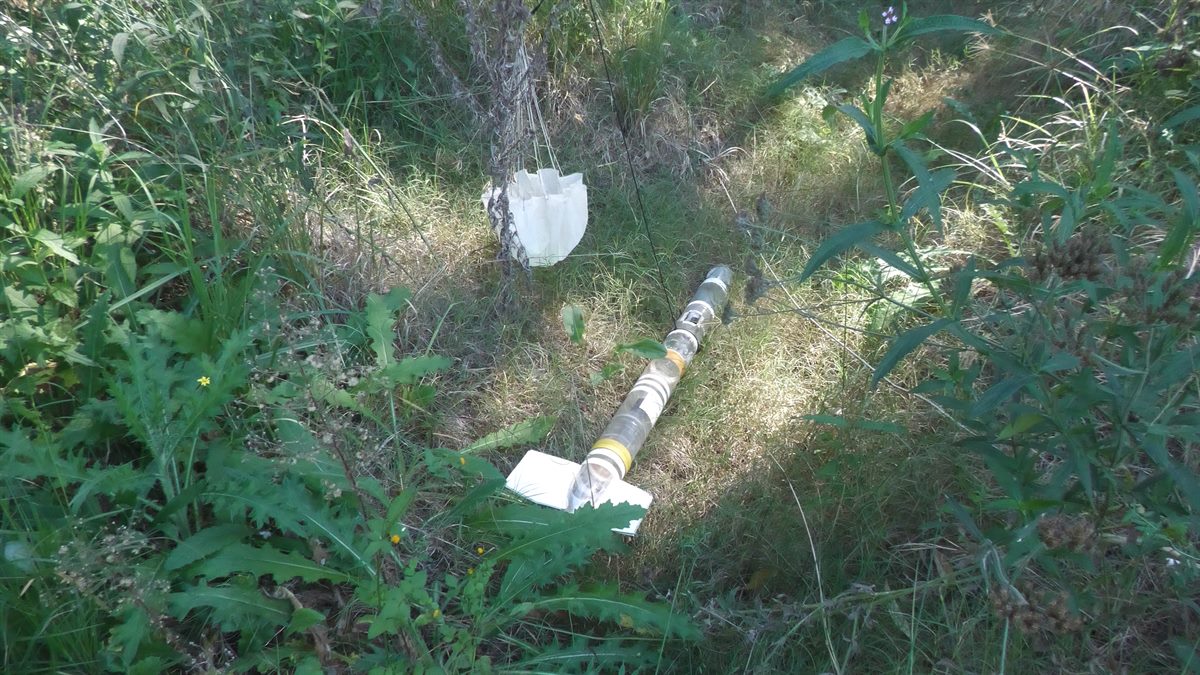
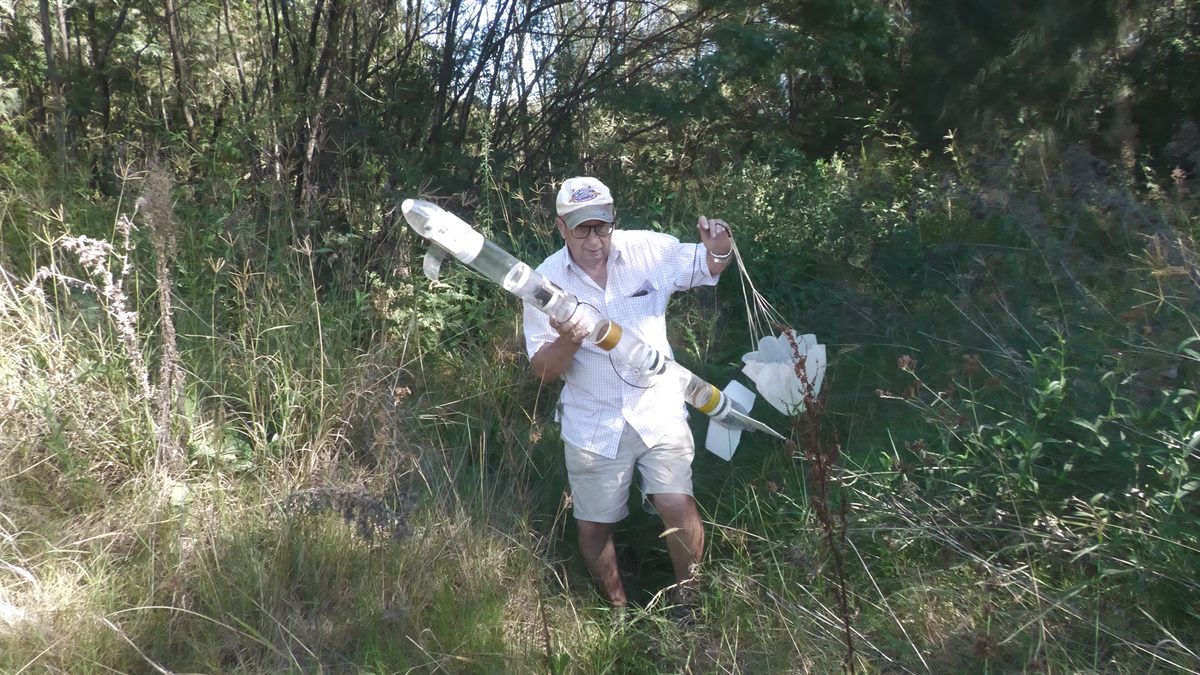
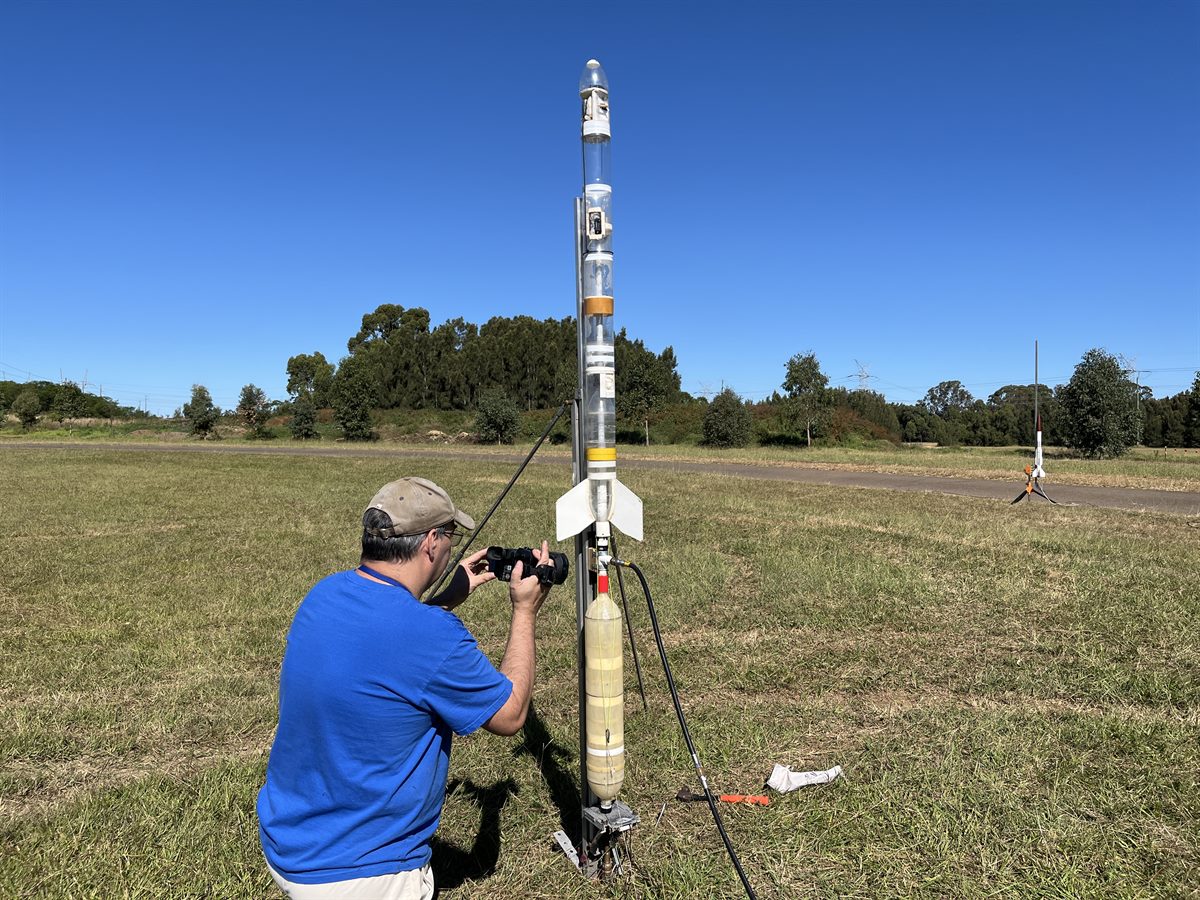
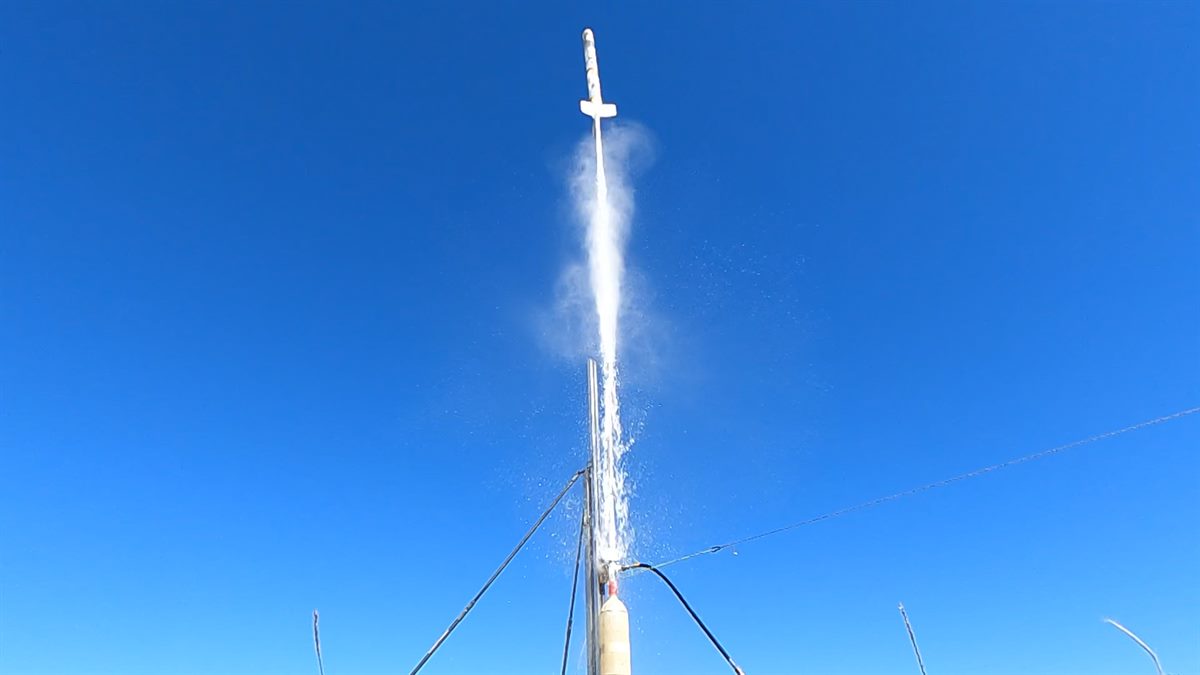
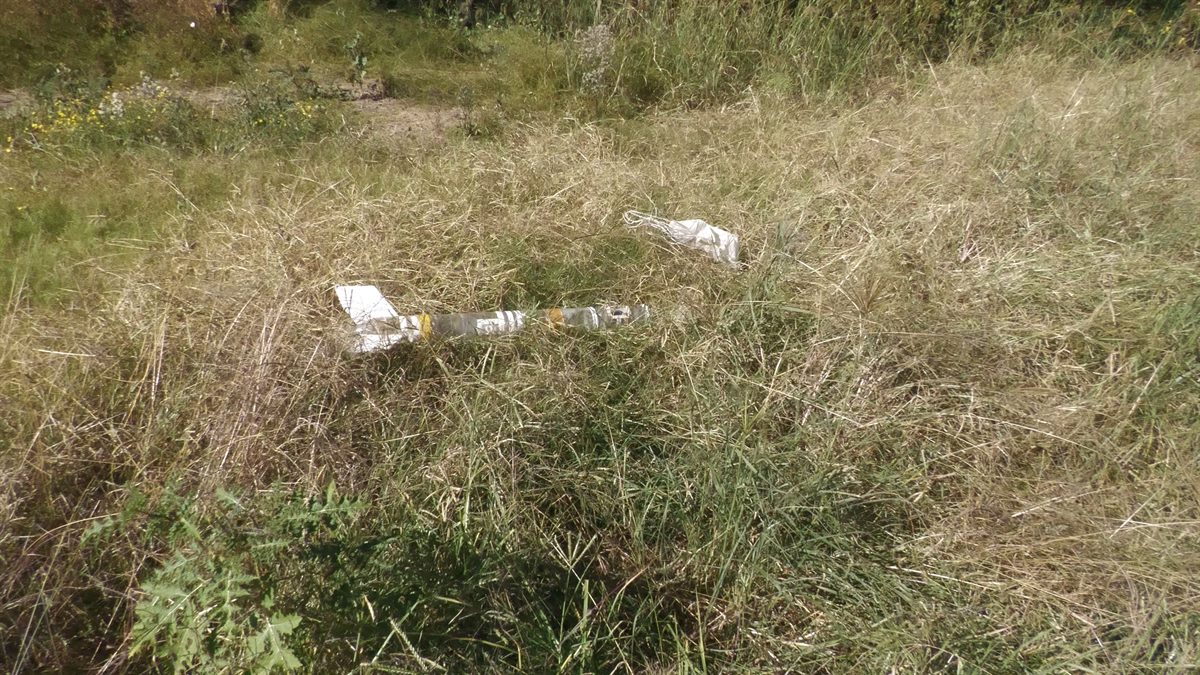
So we set the rocket up again on the pad and pressurised it to 110psi. This time the rocket launched as expected and flew up to 430 feet (131m). Again the parachute opened past apogee and the rocket proceeded to drift behind the trees. Luckily it missed all the trees and landed in a little gully in the tall grass. We got pretty lucky where it landed.
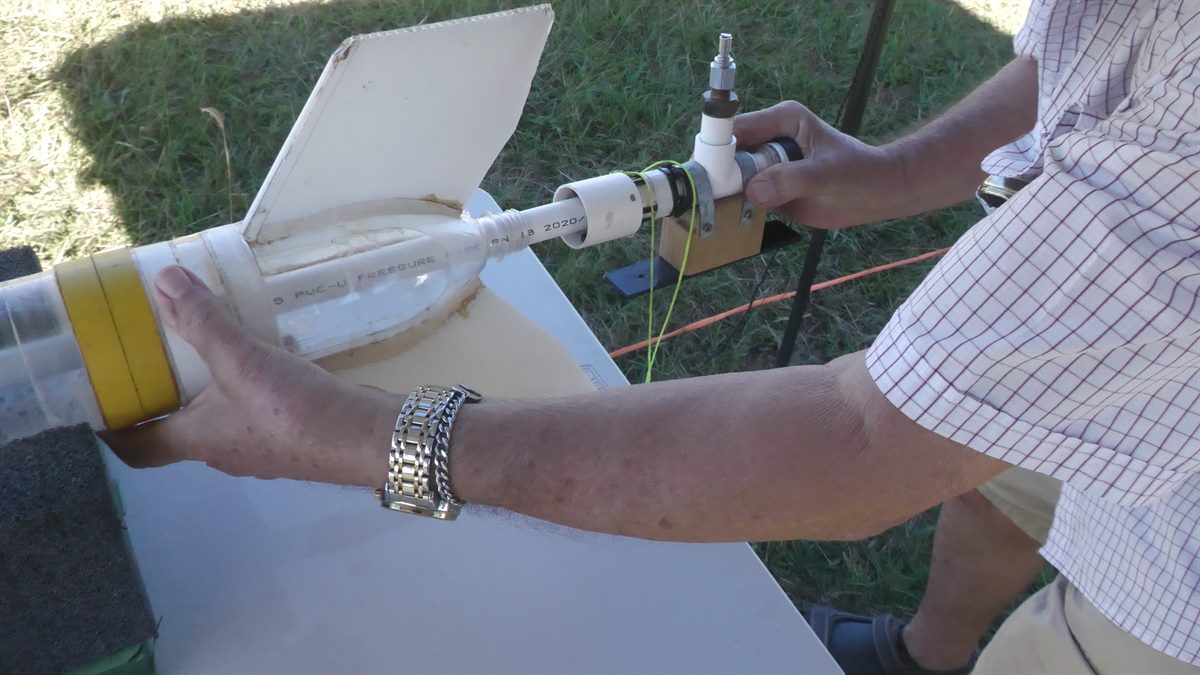
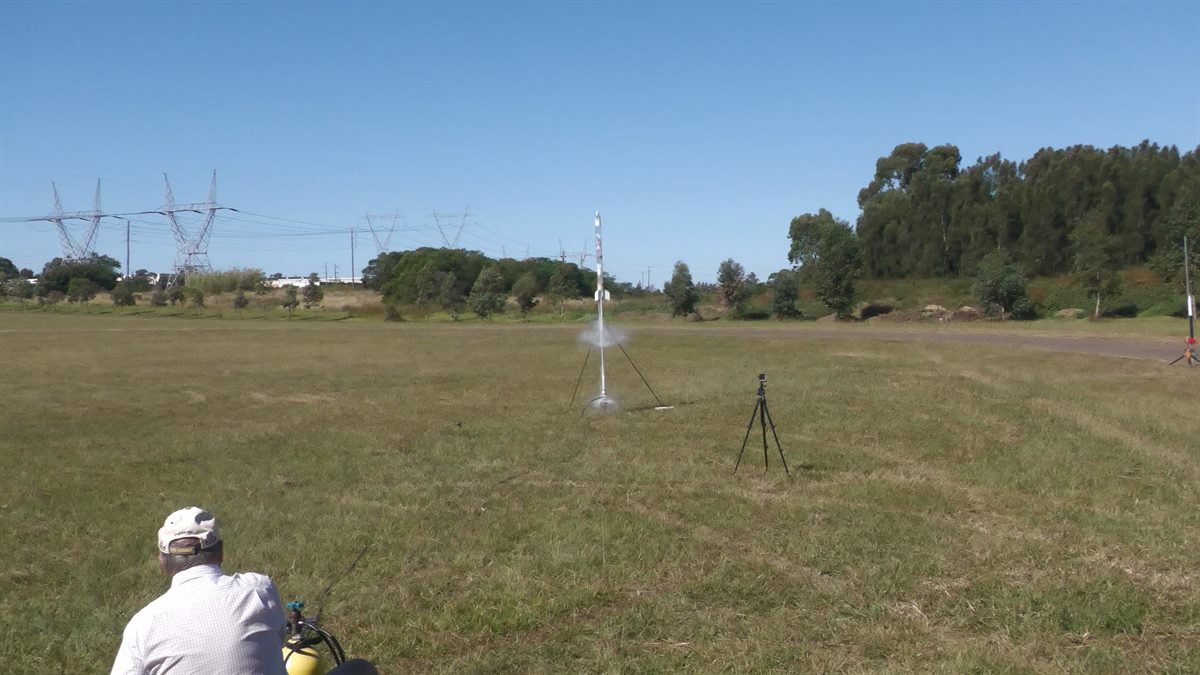
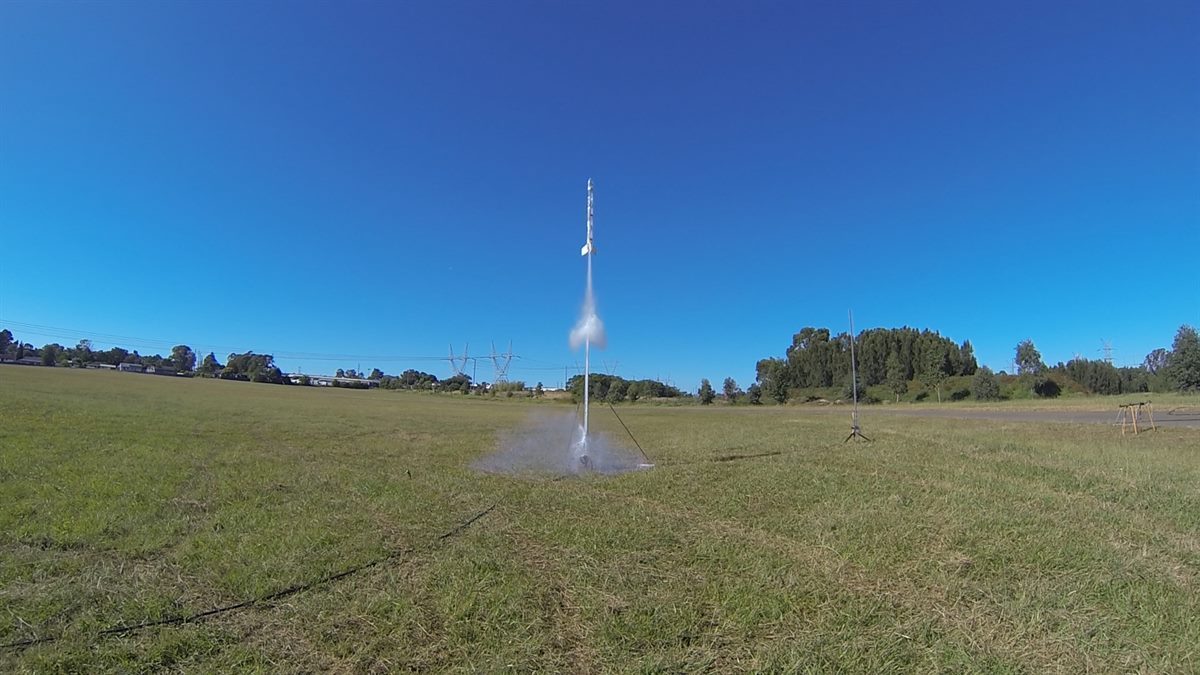
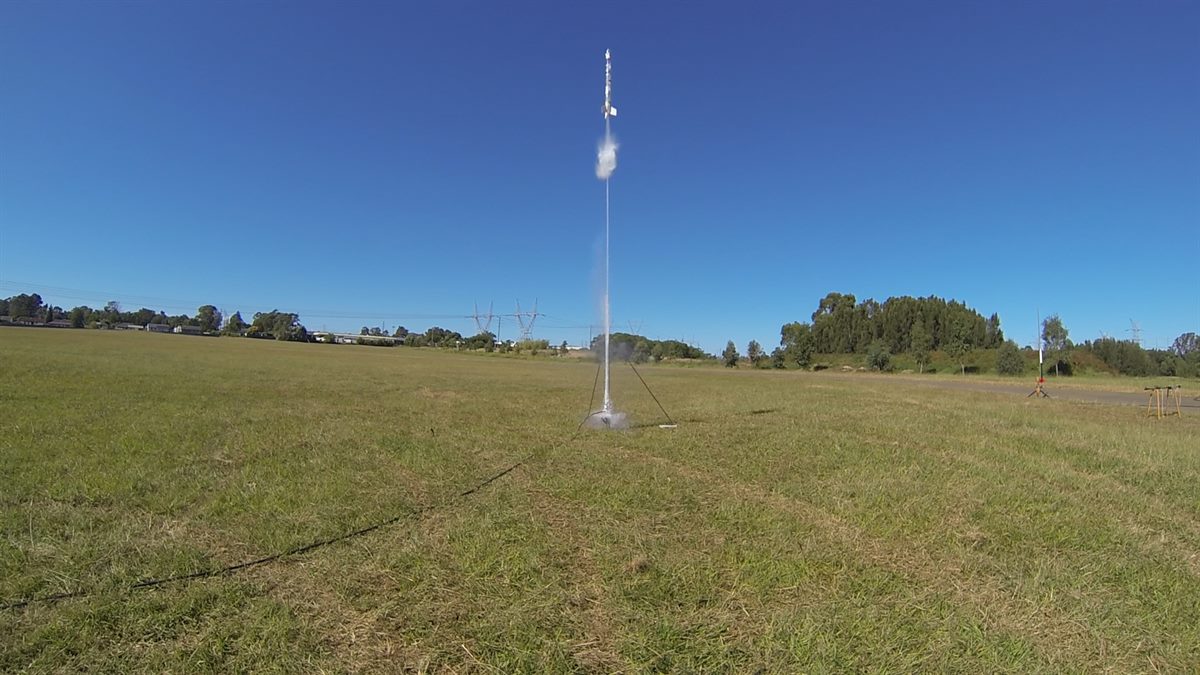
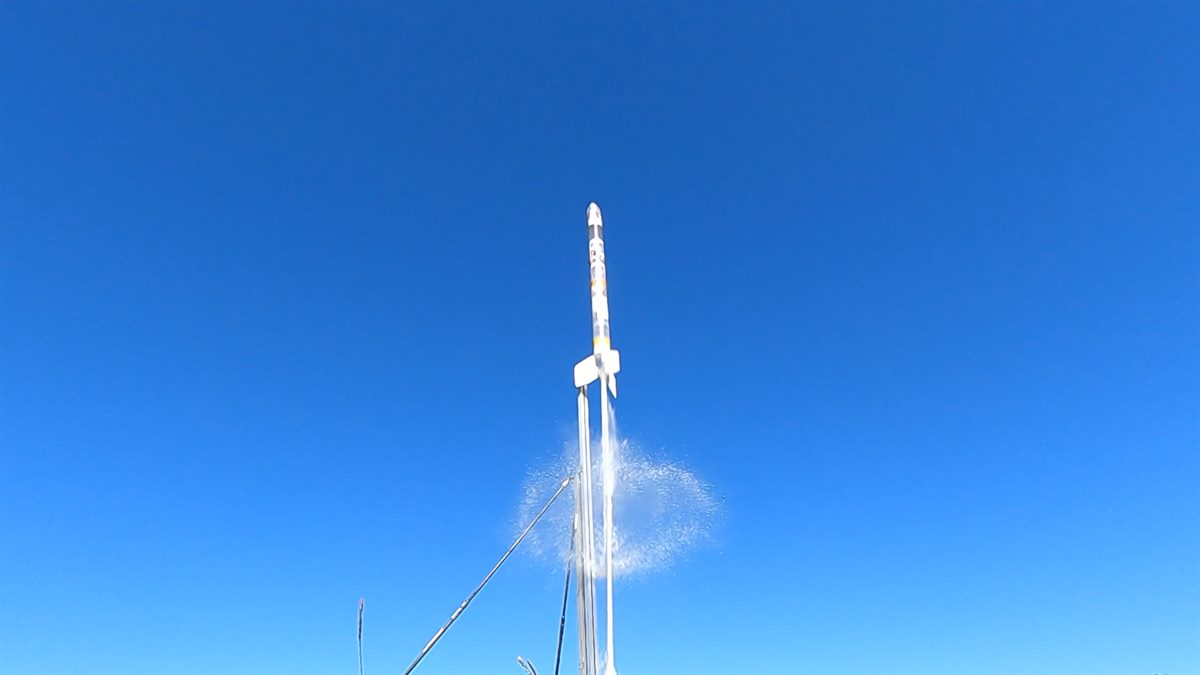
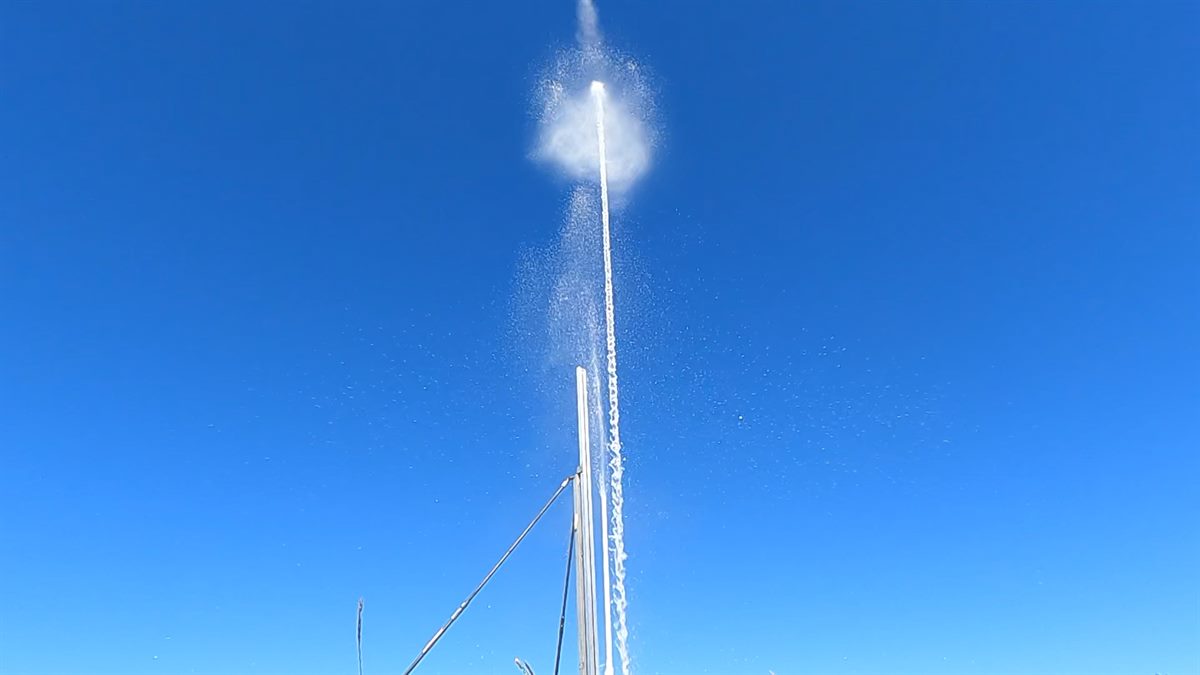
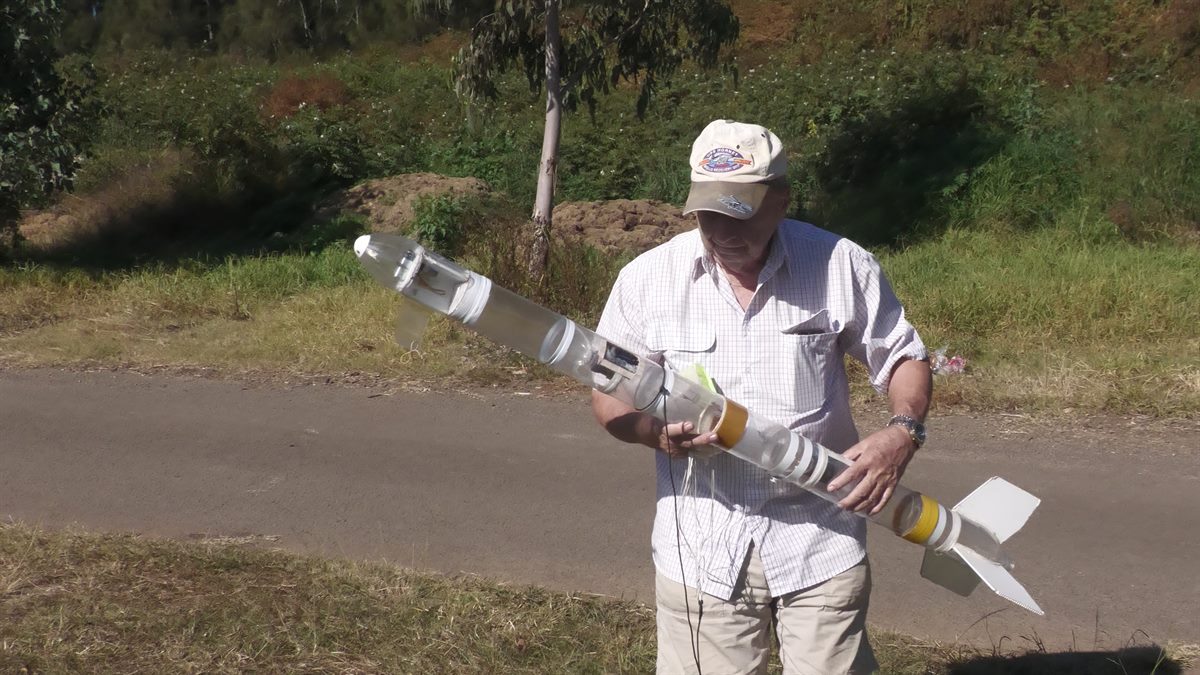
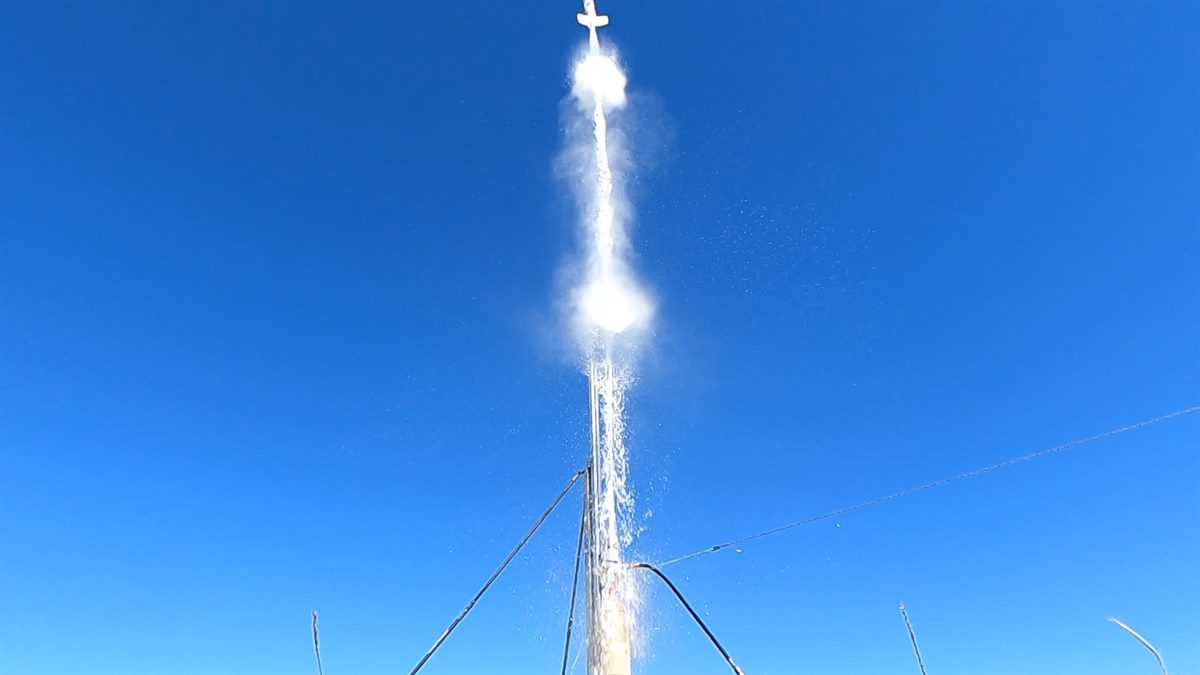
For the final launch we used the same release head, but this time fitted about a 5L ARB to the bottom of the launcher. As we placed the rocket on the pad a lot of the water that was above the launch tube drained from the launch tube straight down into ARB. So we had to carefully pull out the launch tube a little bit and then drain the water back into the rocket. This wouldn't have been too much of an issue had the launch tube been a little longer.
The rocket was again pressurised to 110psi and launched. The rocket flew well and this time it went a little higher to 443 feet (135m). The parachute again opened cleanly past apogee and the rocket this time drifted to the other side of the trees, and again luckily missed all of them and landed undamaged on the ground.
All in all it was a great day, with good results.
We ran a simulation for each of the flights to see how they compare to real world. The following table shows the comparison. As you can see the simulations are fairly accurate as to what we see in the real world. Sim predicted a 5% increase in altitude with the ARB over just the launch tube, and we saw a 3%increase.
| Flight | Predicted (feet) | Actual (feet) |
| #1 - No Launch Tube | 358 | 354 |
| #2 - Launch Tube | 459 | 430 |
| #3 - Launch Tube + ARB | 483 | 443 |
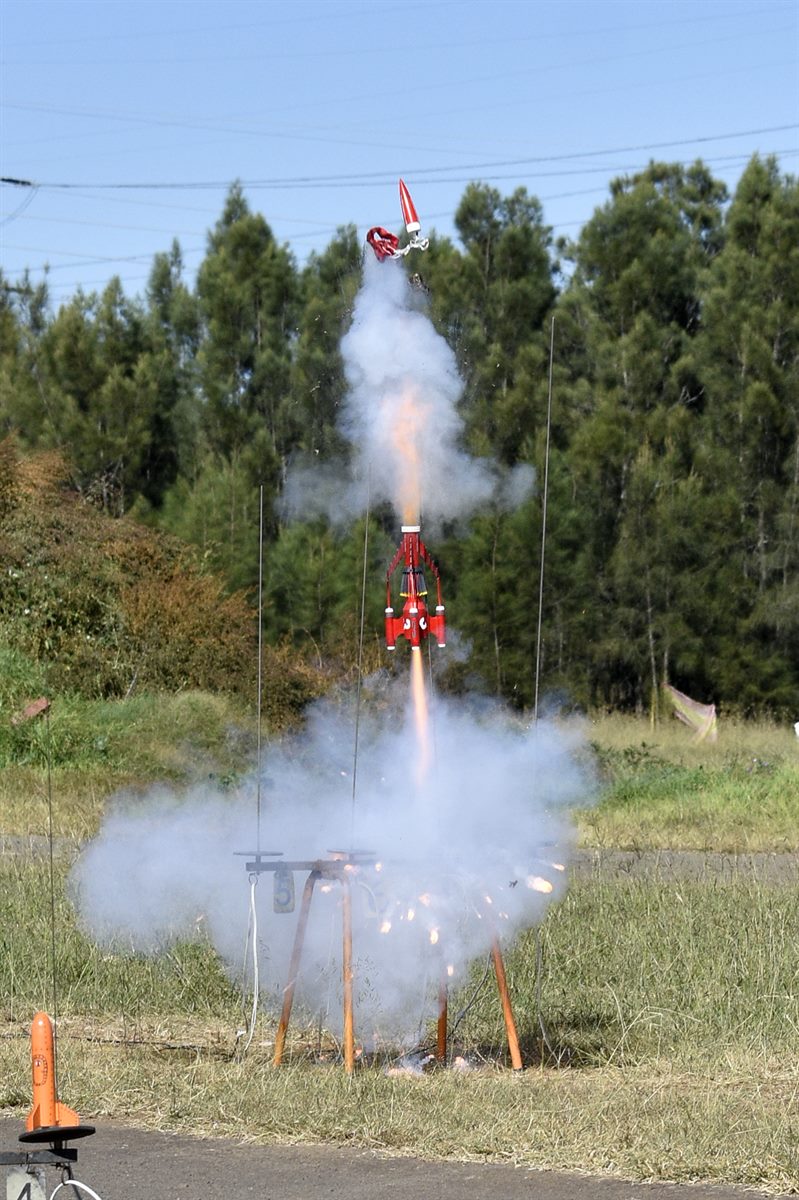
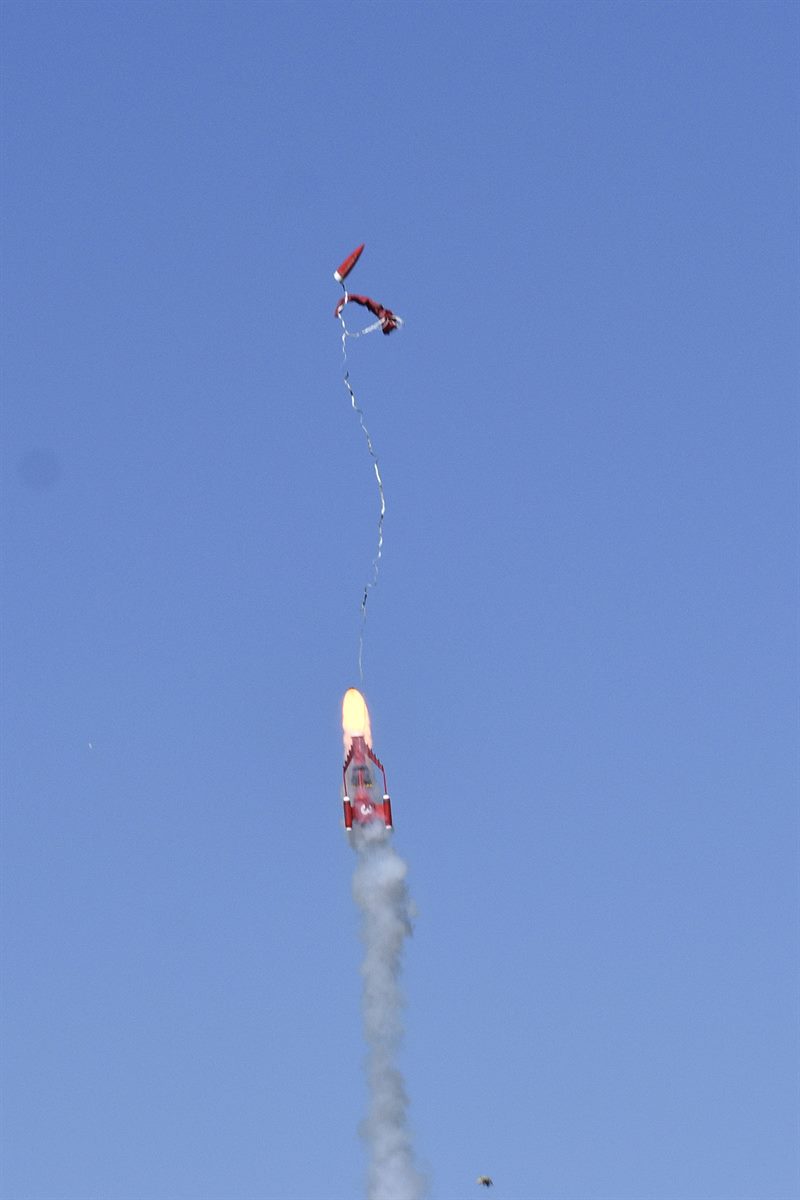
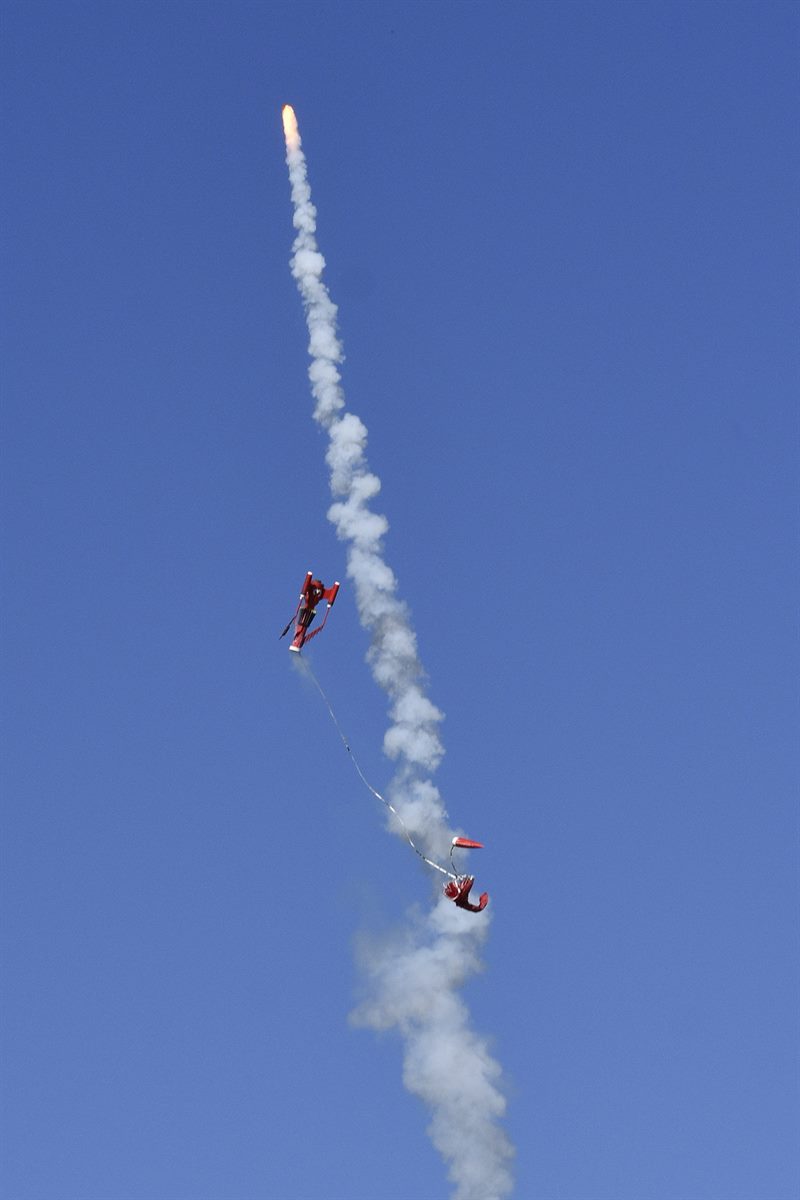
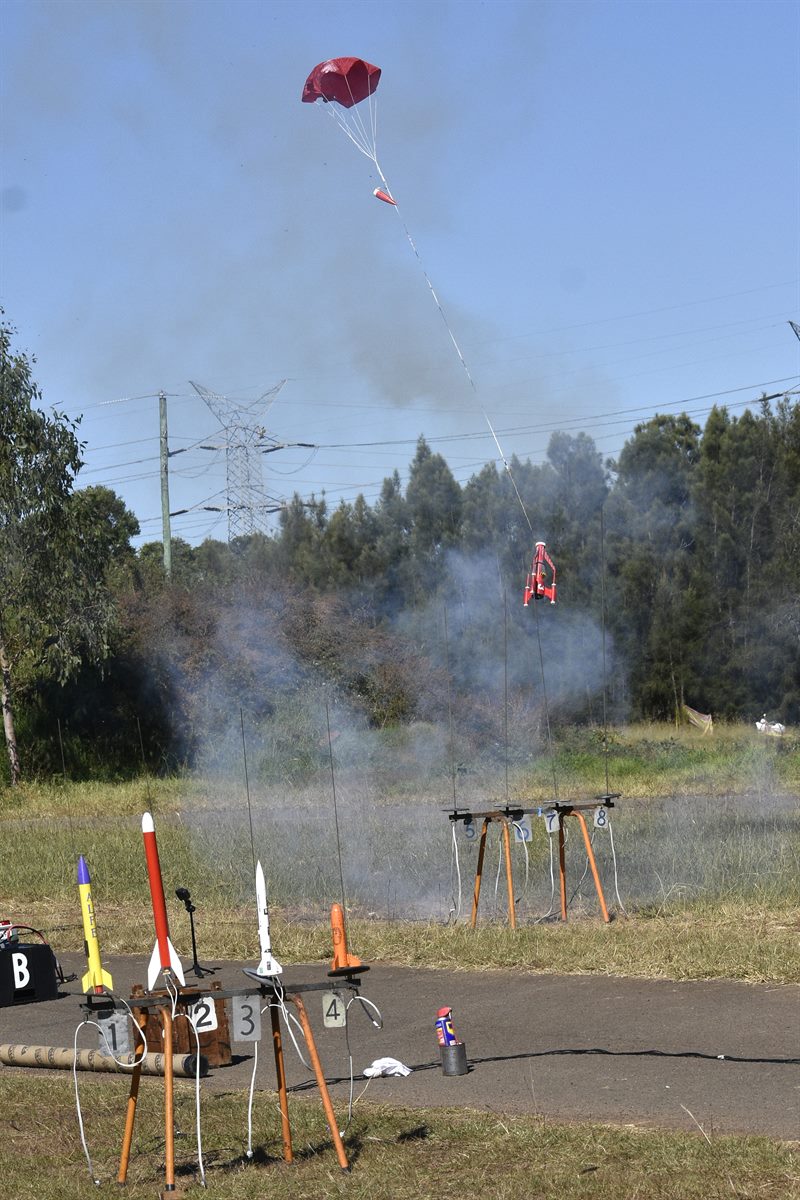
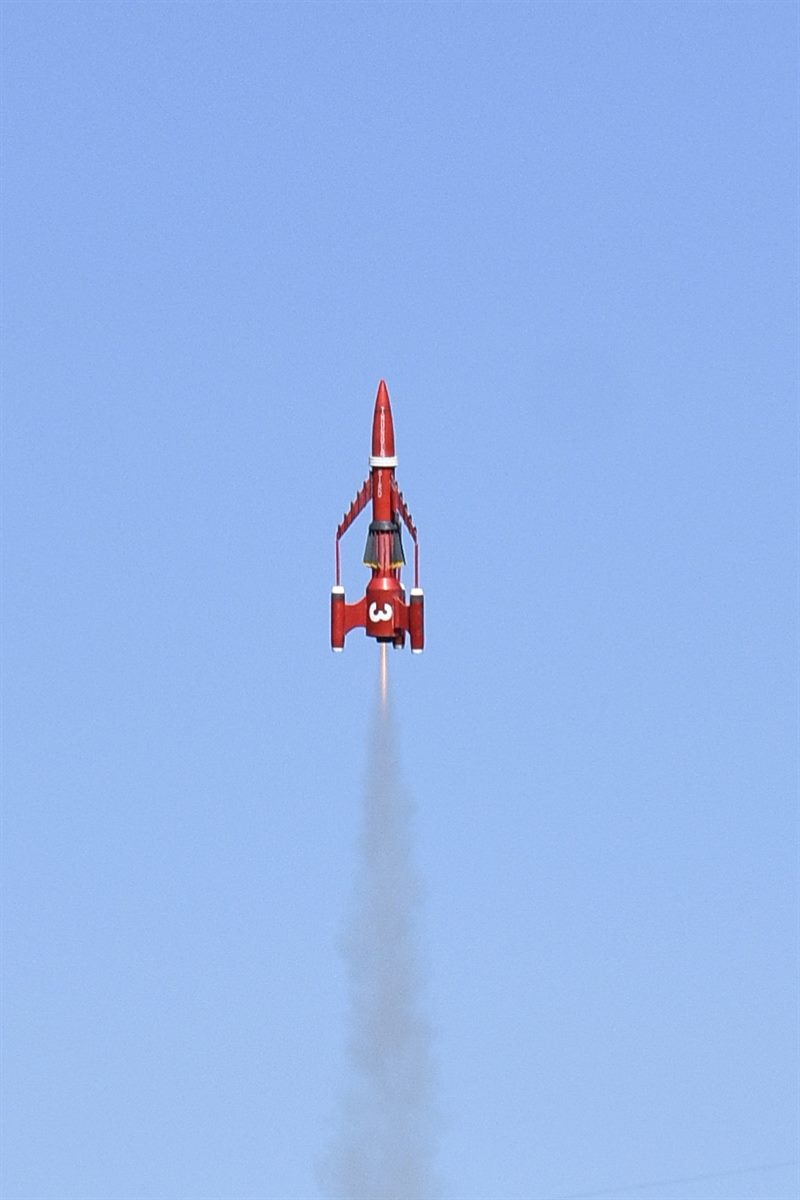
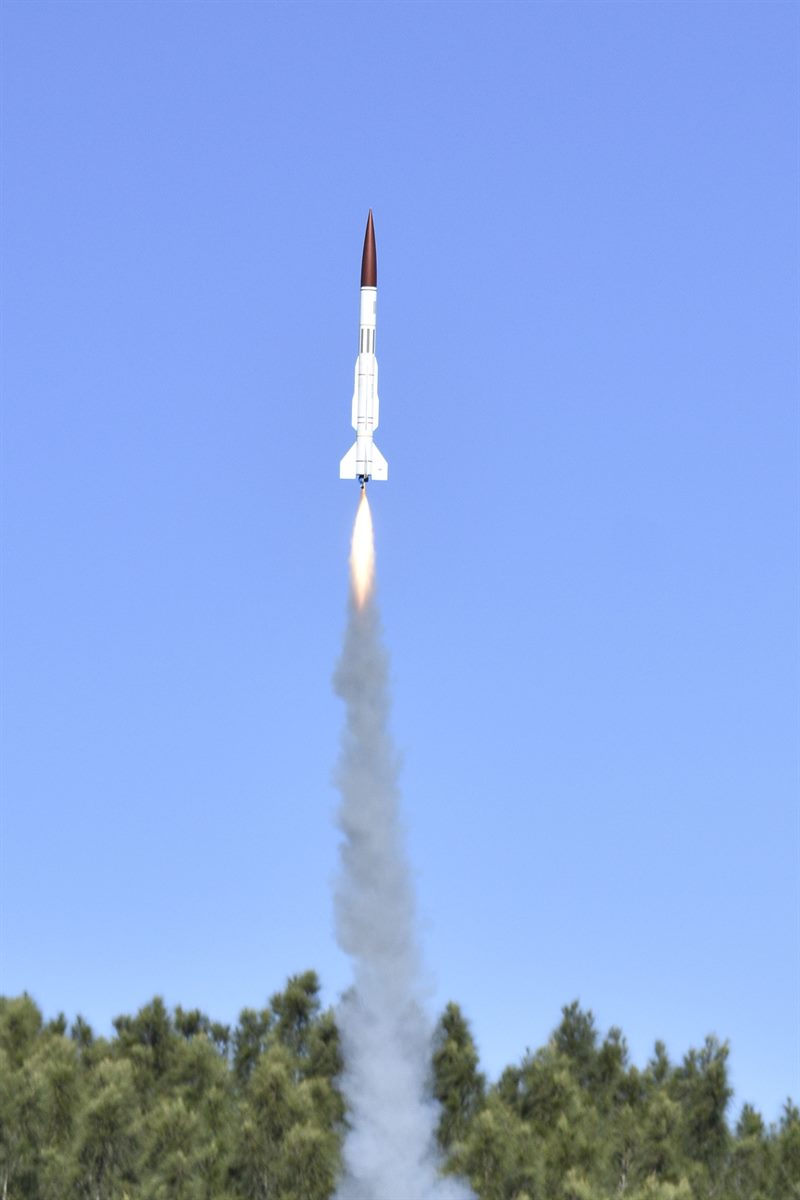
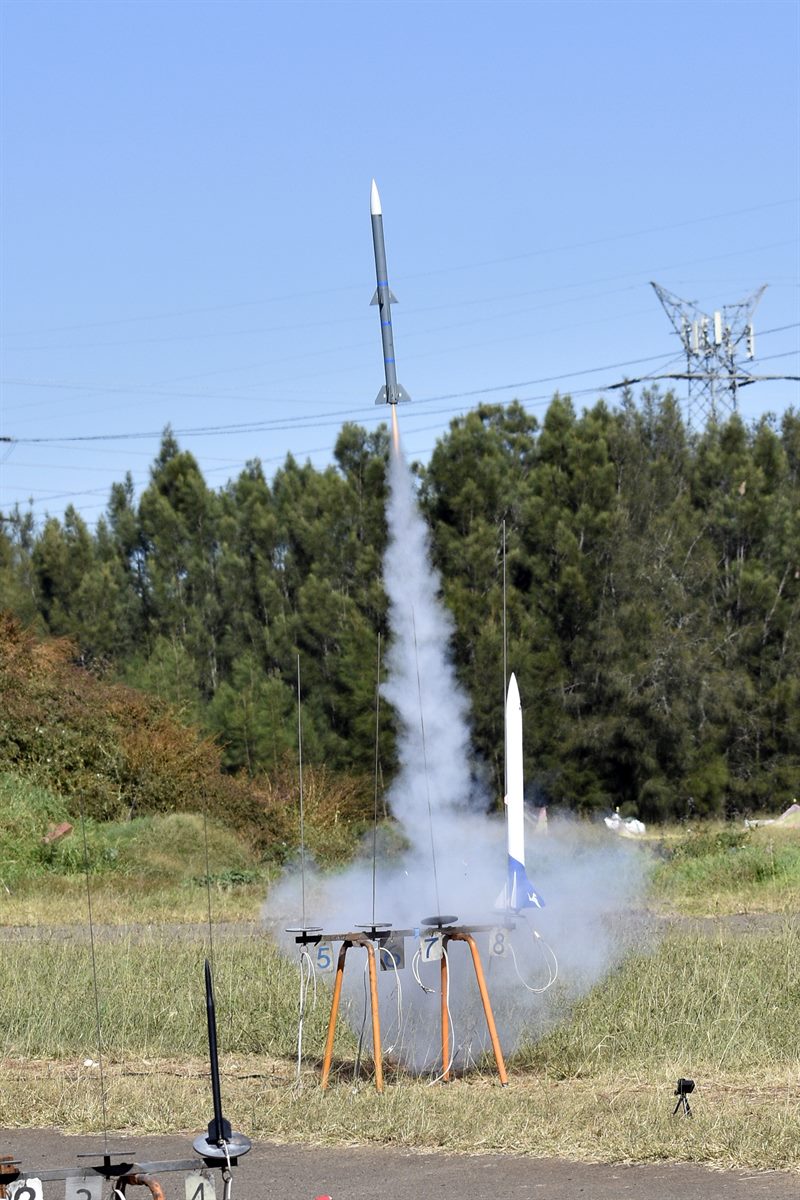
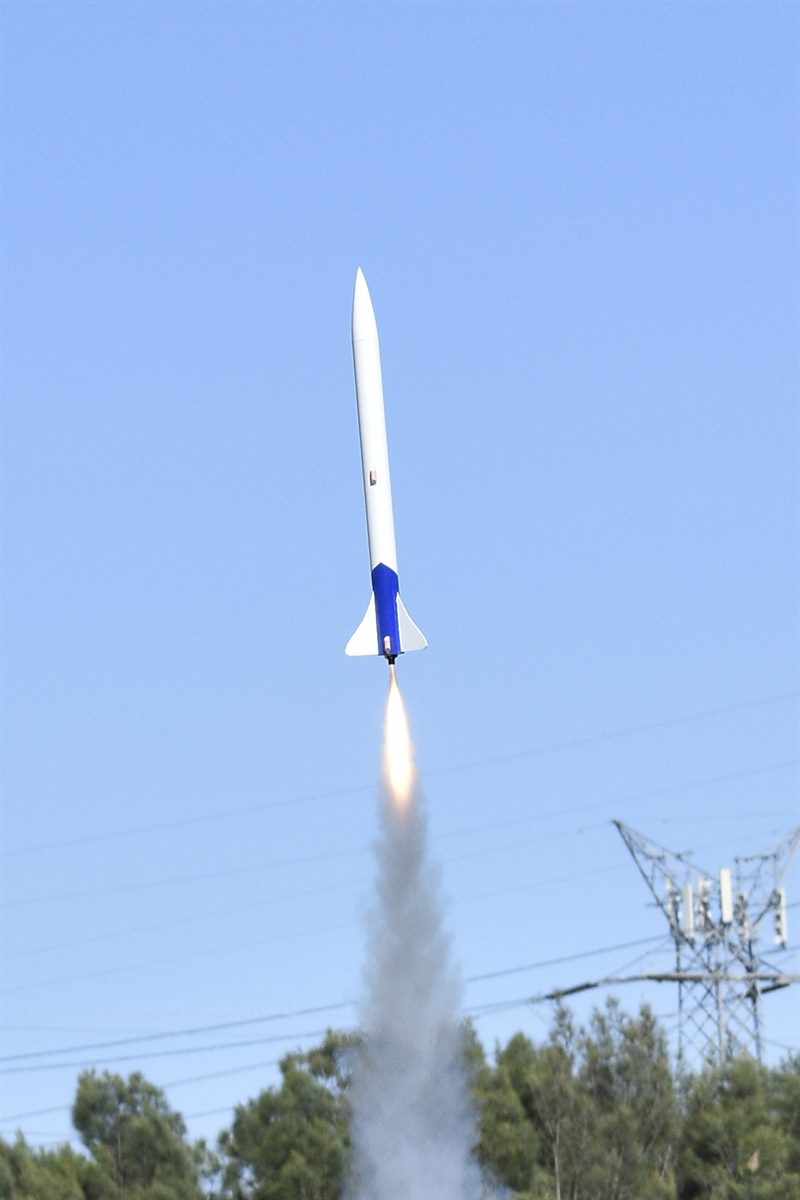
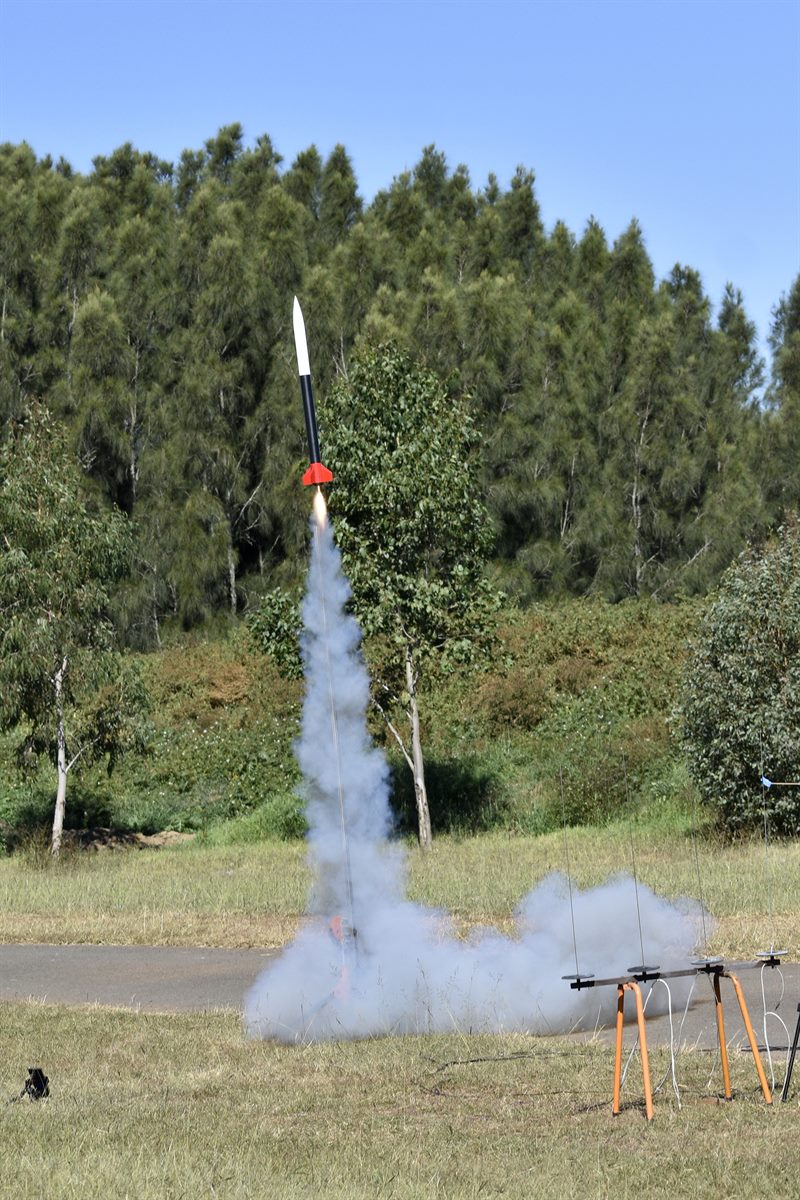
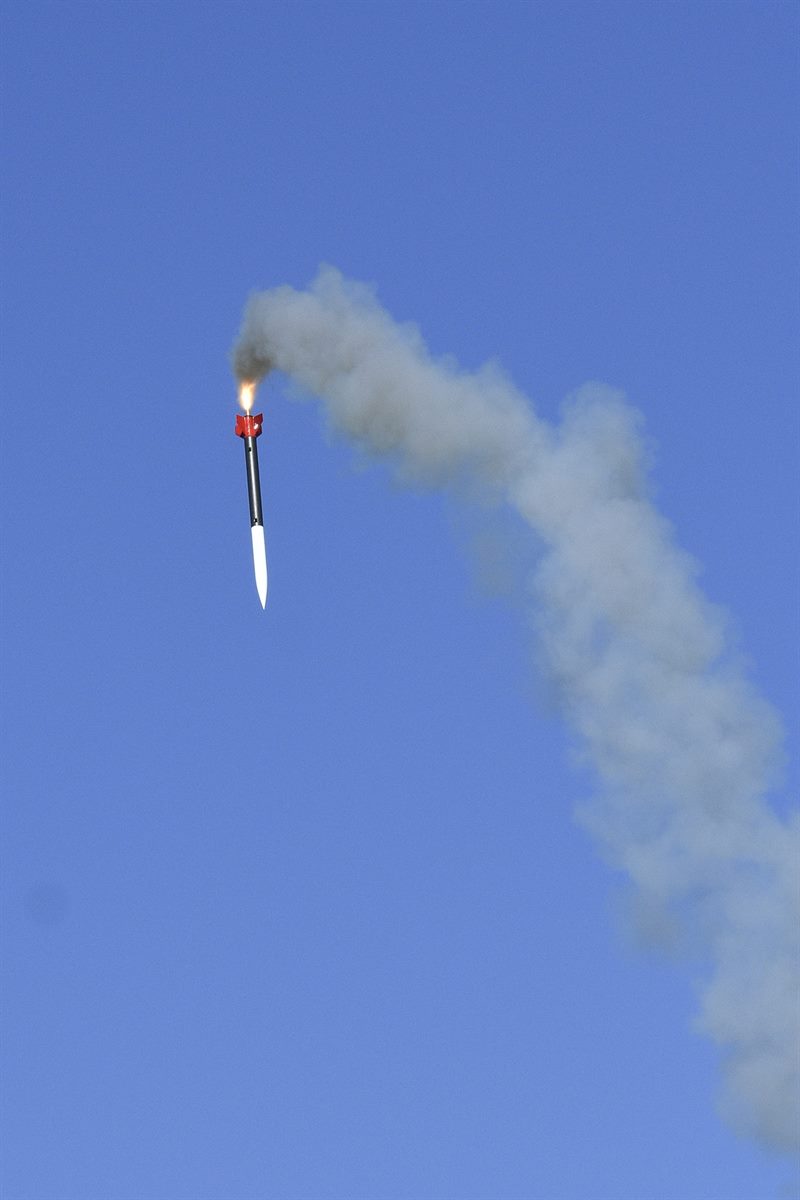
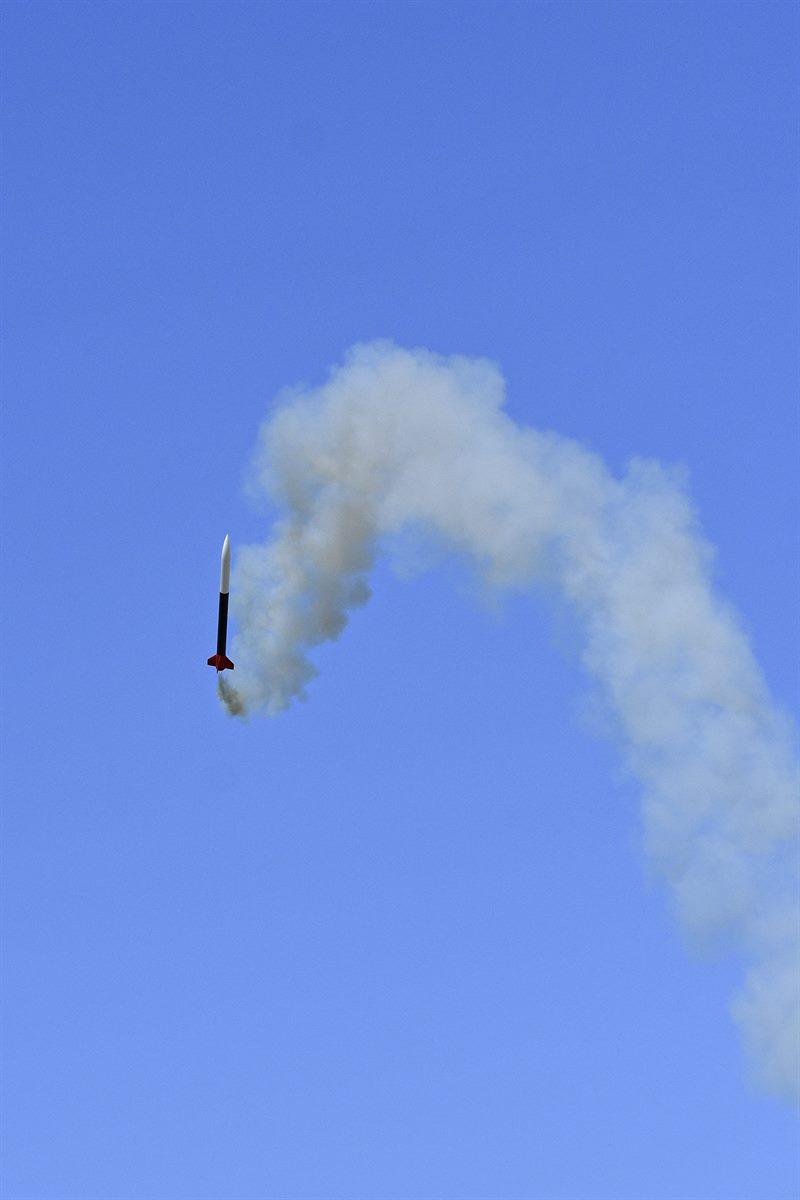
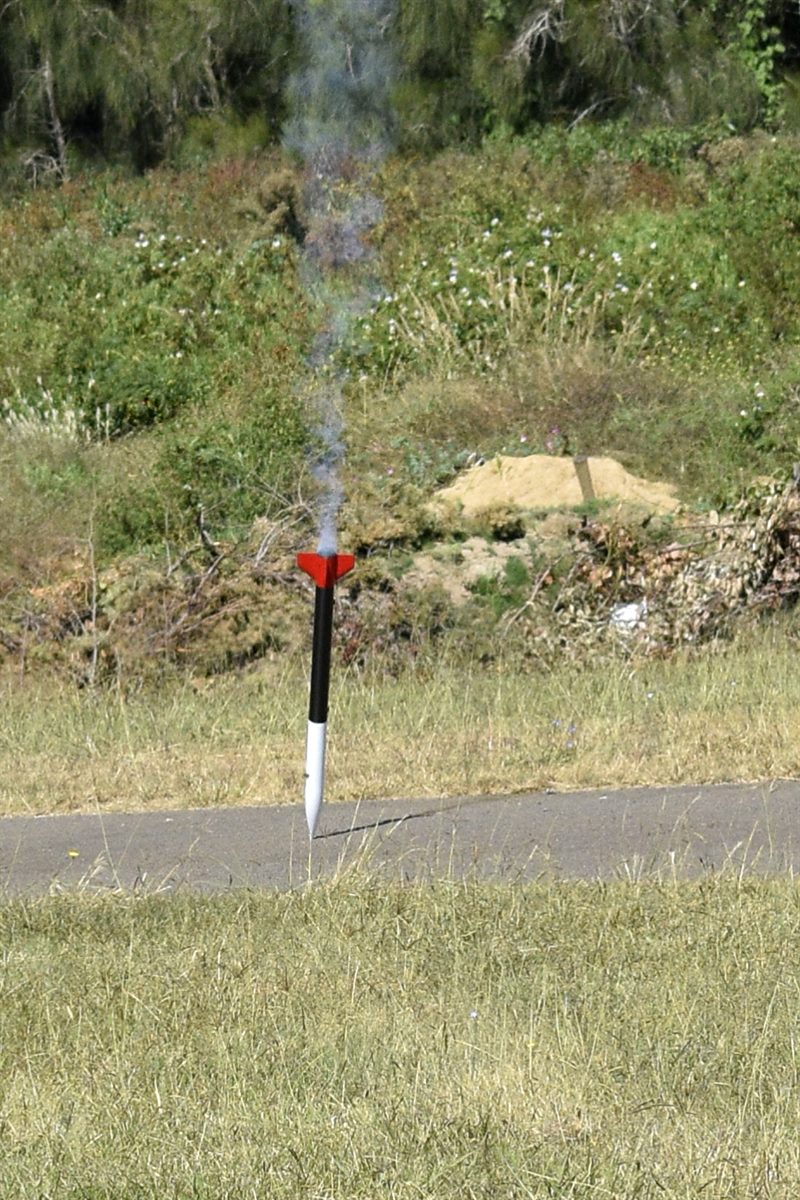
Here are some photos of other club member rockets I took on the day. We will start including some of these from the launch days.
| Launch | Details | ||||||||||||||||||||||||
| 1 |
|
||||||||||||||||||||||||
| 2 |
|
||||||||||||||||||||||||
| 3 |
|