


| Date: | 25 October 2025 |
| Location: | Whalan Reserve, Australia |
| Conditions: | Mostly sunny, 25C, wind 10-20km/h |
| Members: | GK, Paul K and PK |
This week we decided to fly the Air Hawk 2 rocket again, but this time with a little bit water and shampoo. Last time we didn't get to see the air emerging out of the nozzles other than just hearing the sound. So this time we wanted to add the water to give us a look how the nozzles are performing. We also wanted to get a reference data point for its performance so we added an altimeter.
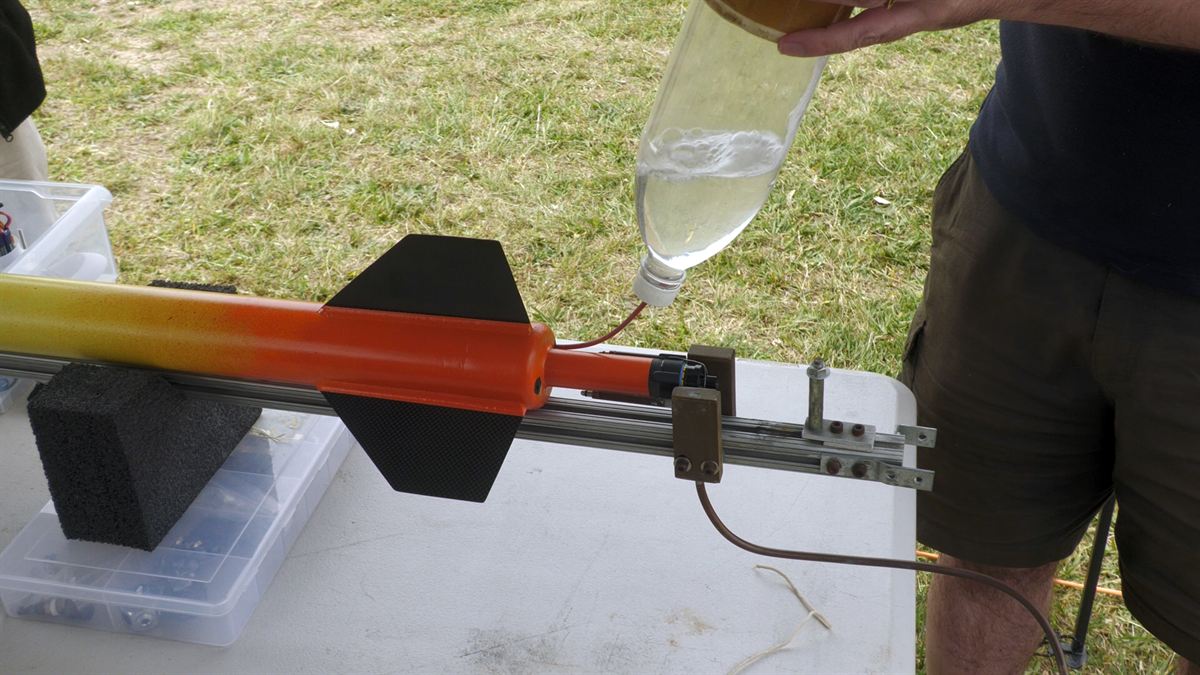
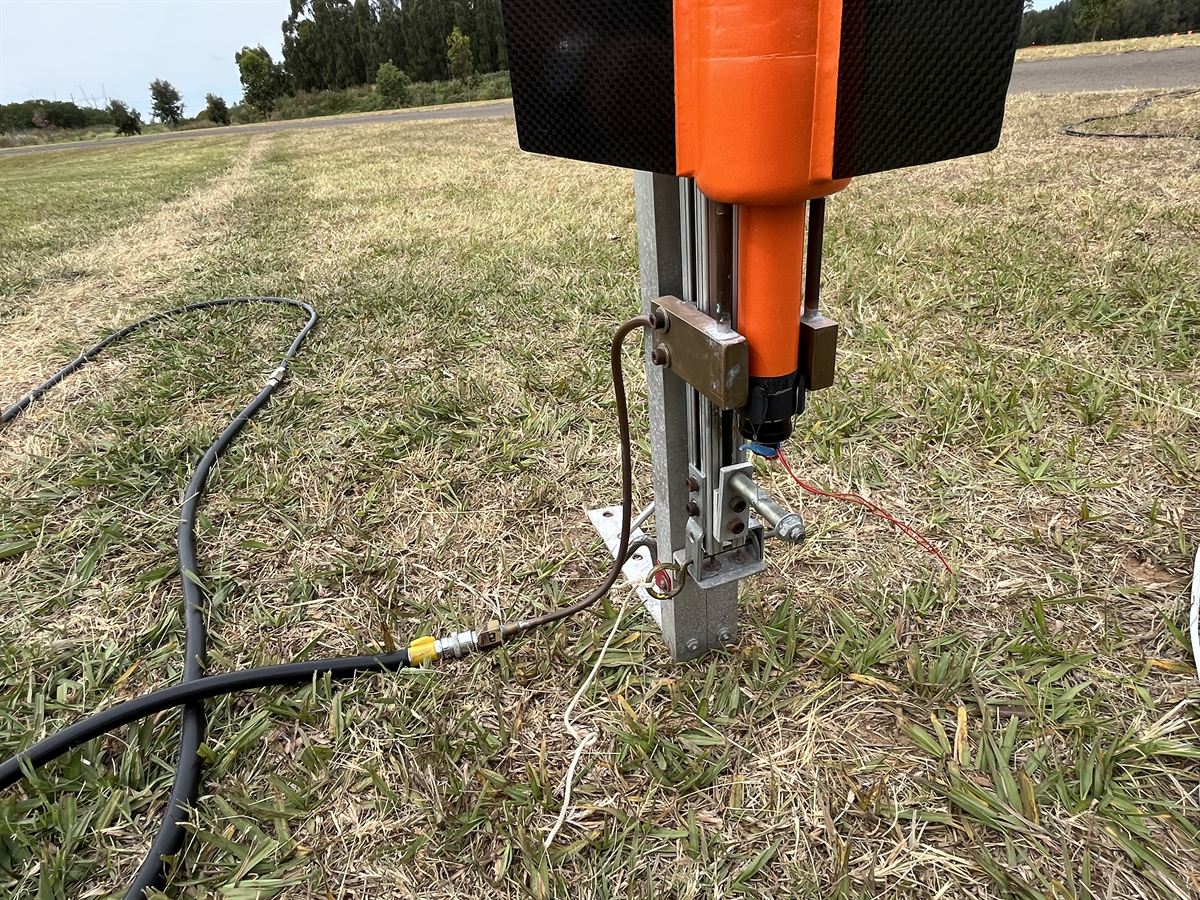
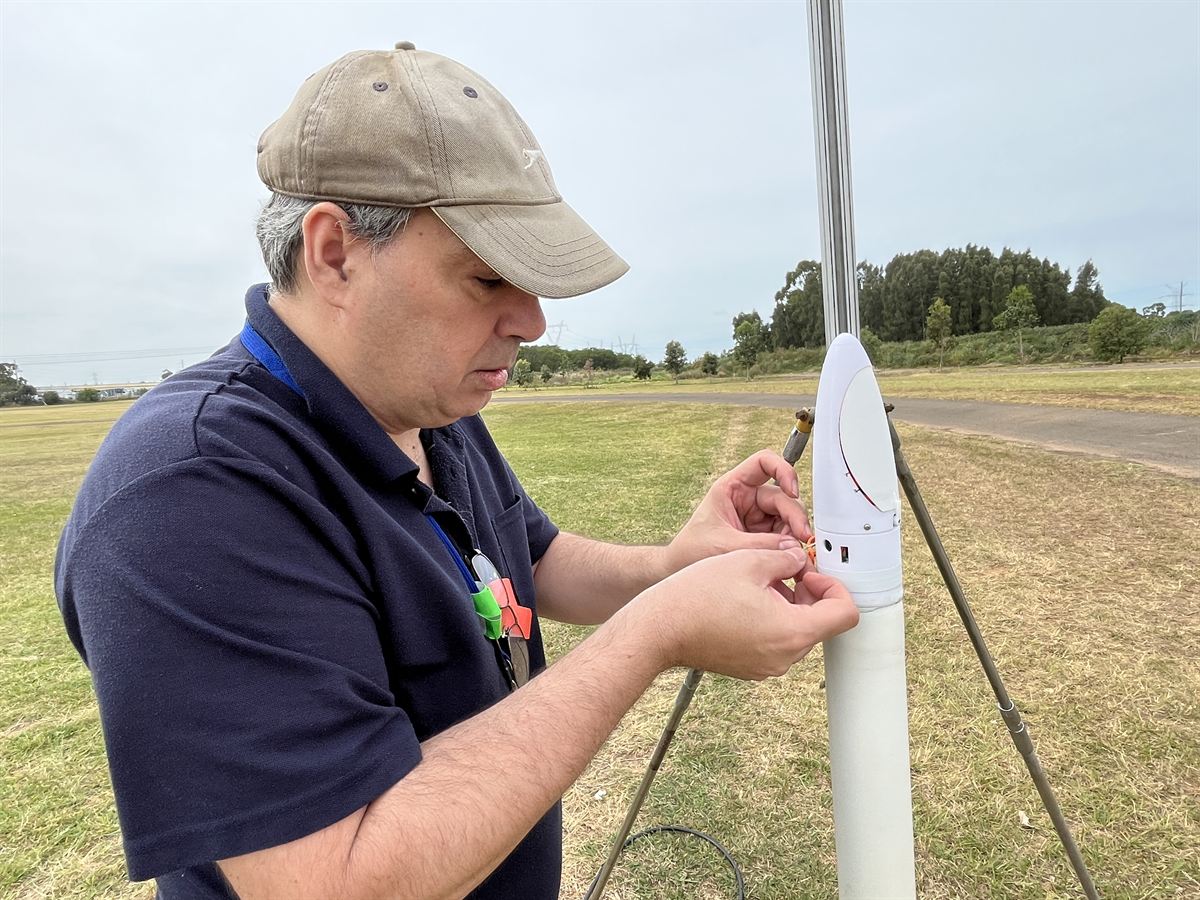
The prep went well for the flight and we inserted the other E20 motor that we had. We already removed the ejection charge before putting it in. To fill the rocket with water, we made a small filling tube from a piece of heat shrink tubing that's about 4mm diameter, and we inserted the other end of the tubing to a bottle cap with a hole in it. We sealed it on the inside and outside with blue-tac. To fill the rocket we used one of our spliced pairs of bottles as the fill bottle as we could open the end and let gravity do its thing to drain the water into the rocket. If it had been a sealed bottle you would have had to squeeze it, and let it suck air back into it in pulses.
We filled the rocket with only 300mL of water or about 10% of the volume. We didn't want to weigh it down too much especially with small nozzles which would have meant the rocket was going to spend more time with heavy water near the bottom making it unstable.
We put the rocket up on the pad and hooked up the igniter. When I turned on the altimeter I noticed that it turned itself off again. These old AltimeterOnes have old lipo batteries and this one just wouldn't hold it's charge anymore. Bummer, It was too late to pull every thing apart and replace it. We were just going to launch it without getting data.
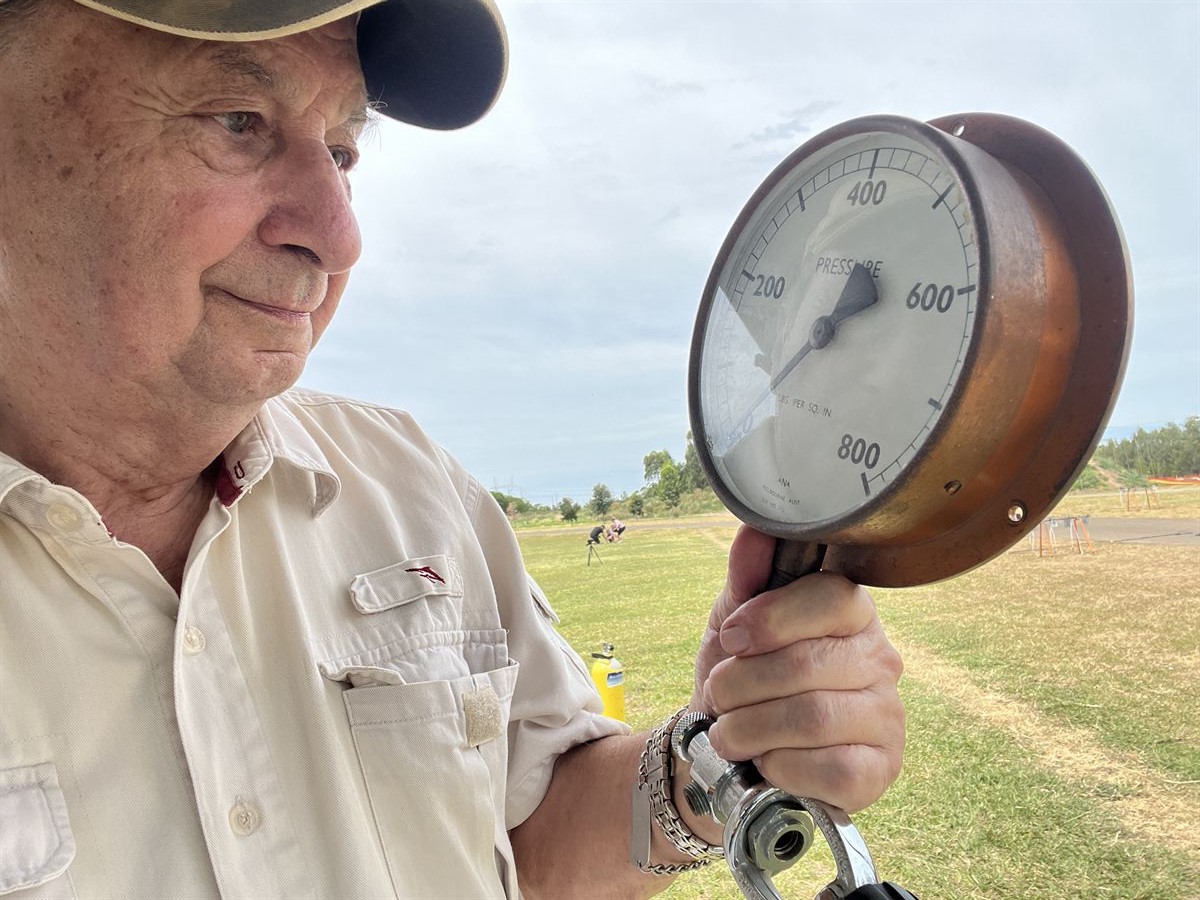
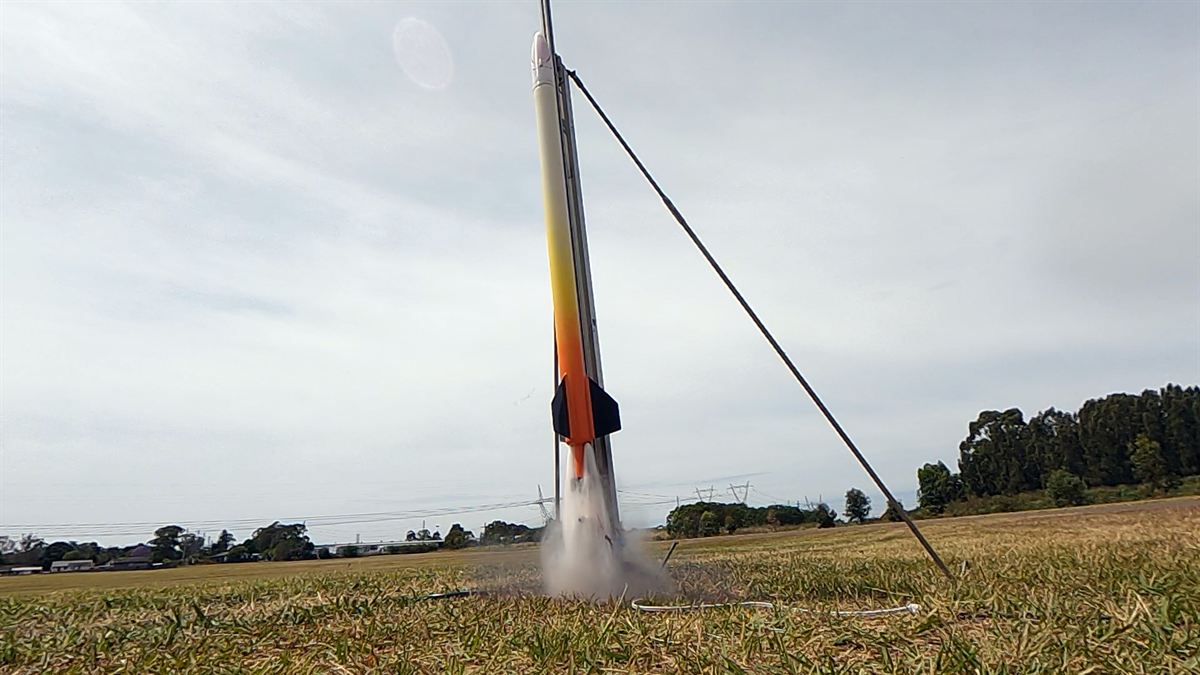
We pressurised the rocket to 300psi (~20.5 bar) and gave a nod to the LCO to remotely fire the igniter. The rocket took off nice and quiet, and instantly I knew that the motor had not ignited. The rocket still flew beautifully on it's twin nozzles and the parachute opened right near apogee. It still looked like the rocket perhaps reached around 500-600 feet. Later on watching the closeup video you could see that the motor almost lit, and burned enough to melt the fishing line to launch the rocket. I suspect the igniter may have pulled out a little bit with the weight of the igniter wire cables and so wasn't lighting the motor from the top of the grain. In any case we learned that the rocket will still fly well without the motor igniting.
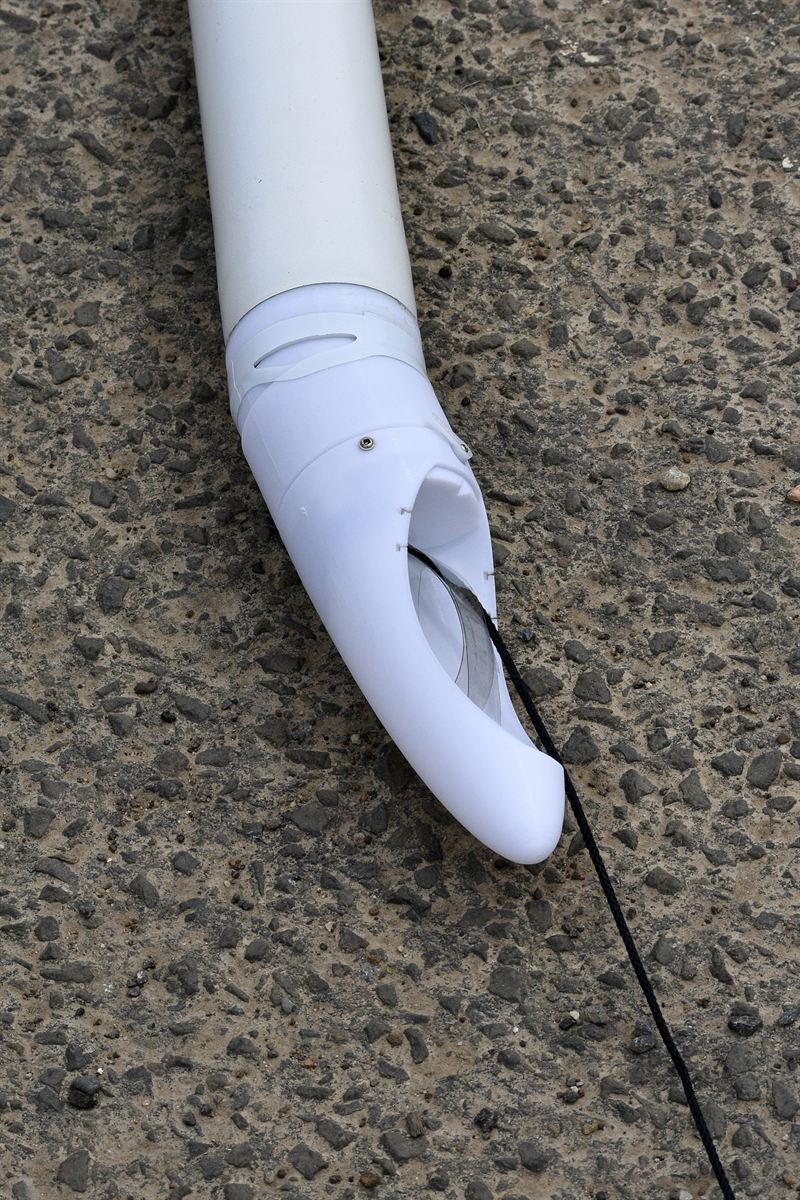
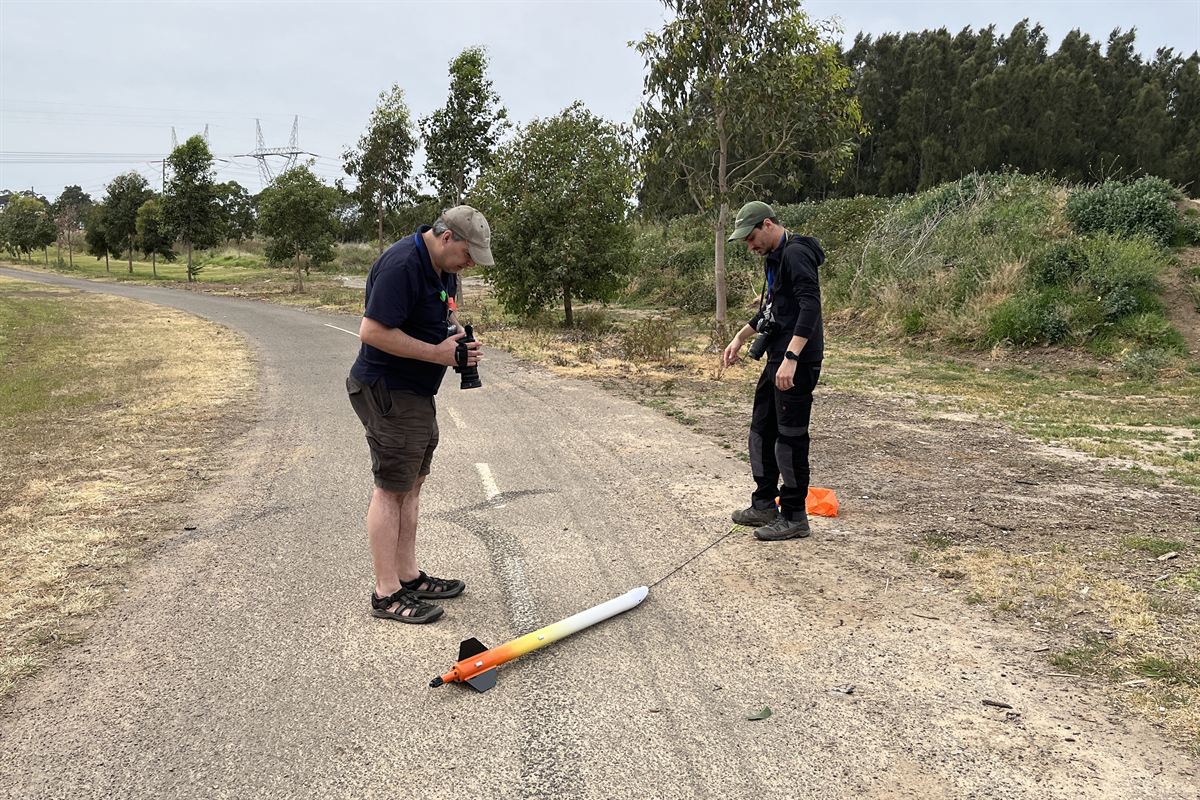
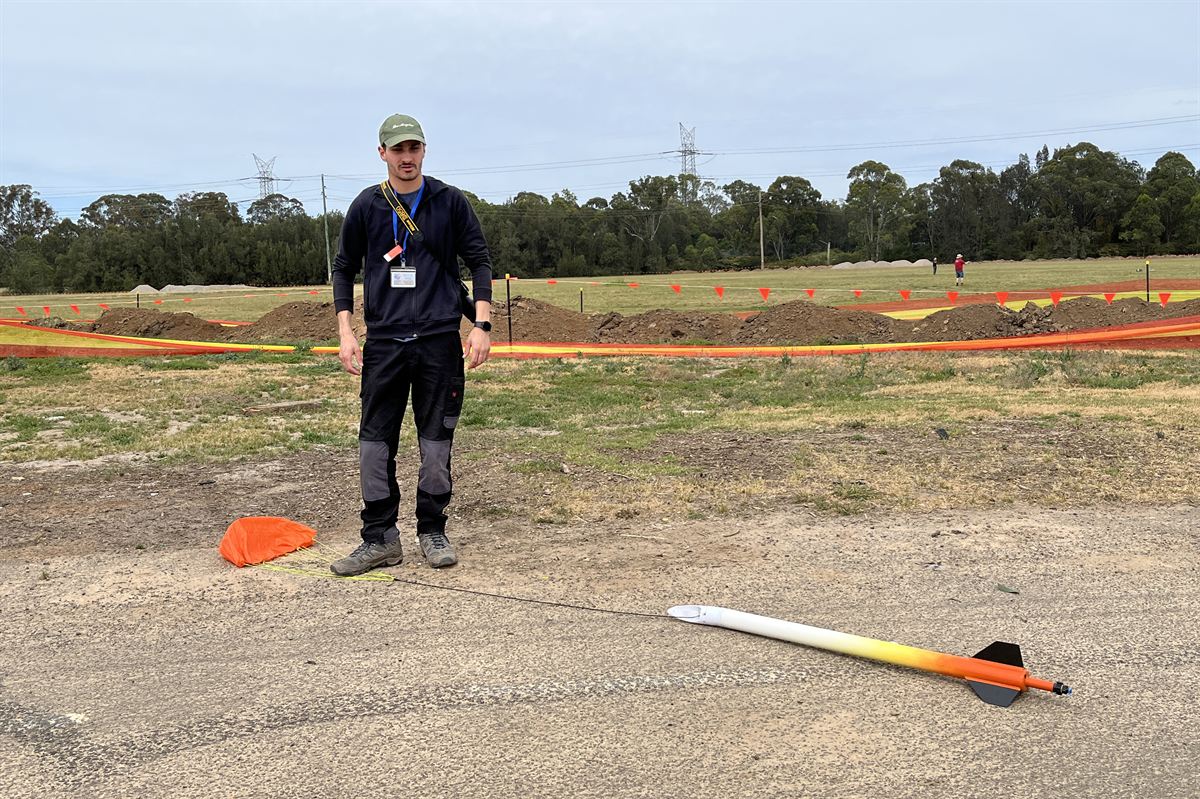
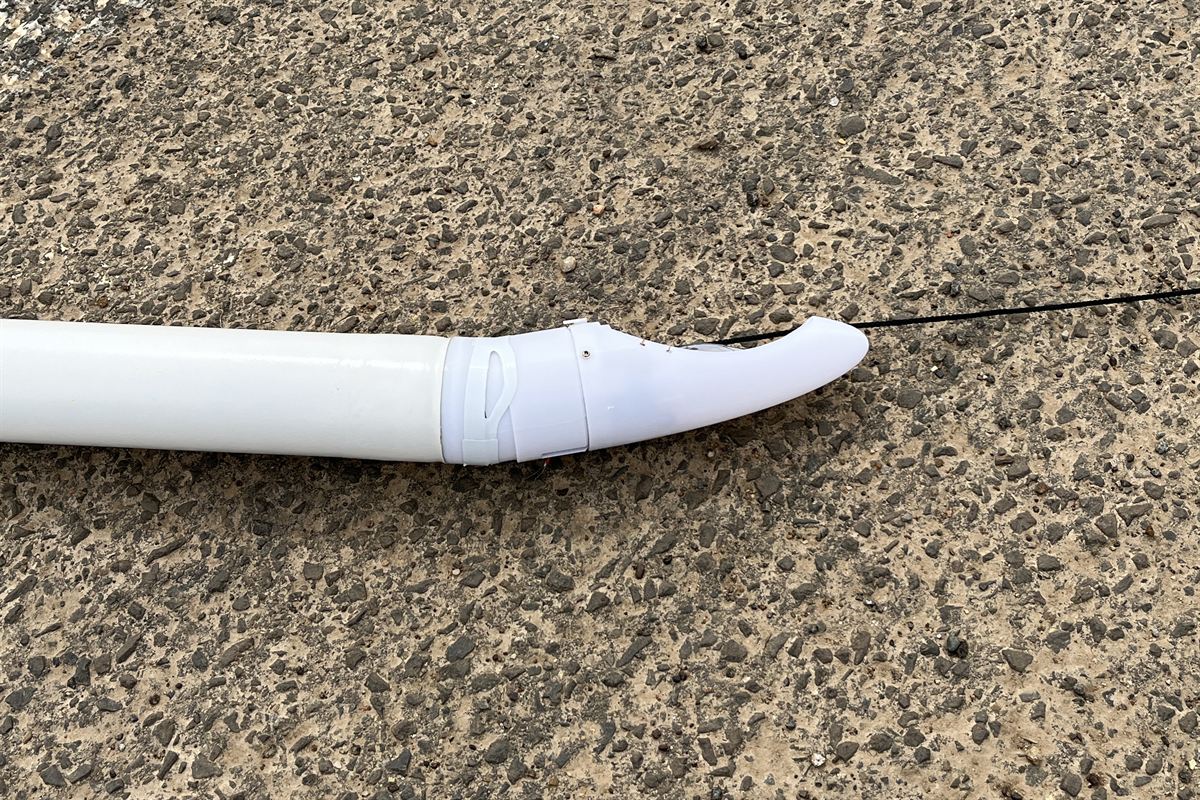
The rocket landed on the path and it looked like it broke the 3D printed nosecone. But it was just bumped loose and broke the tape holding it on. We now tape the nosecone to the top of the rocket for exactly this reason, as last time the print had failed right at the screws. I just removed the tape and popped the nosecone back on. There was no damage.
When I was reviewing the flight on the go-pro that was supposed to film the launch in high speed, I noticed that I had accidentally bumped it and instead it recorded the flight in time-lapse. So we had 2 seconds of video. Oh well a few things went wrong on this flight.
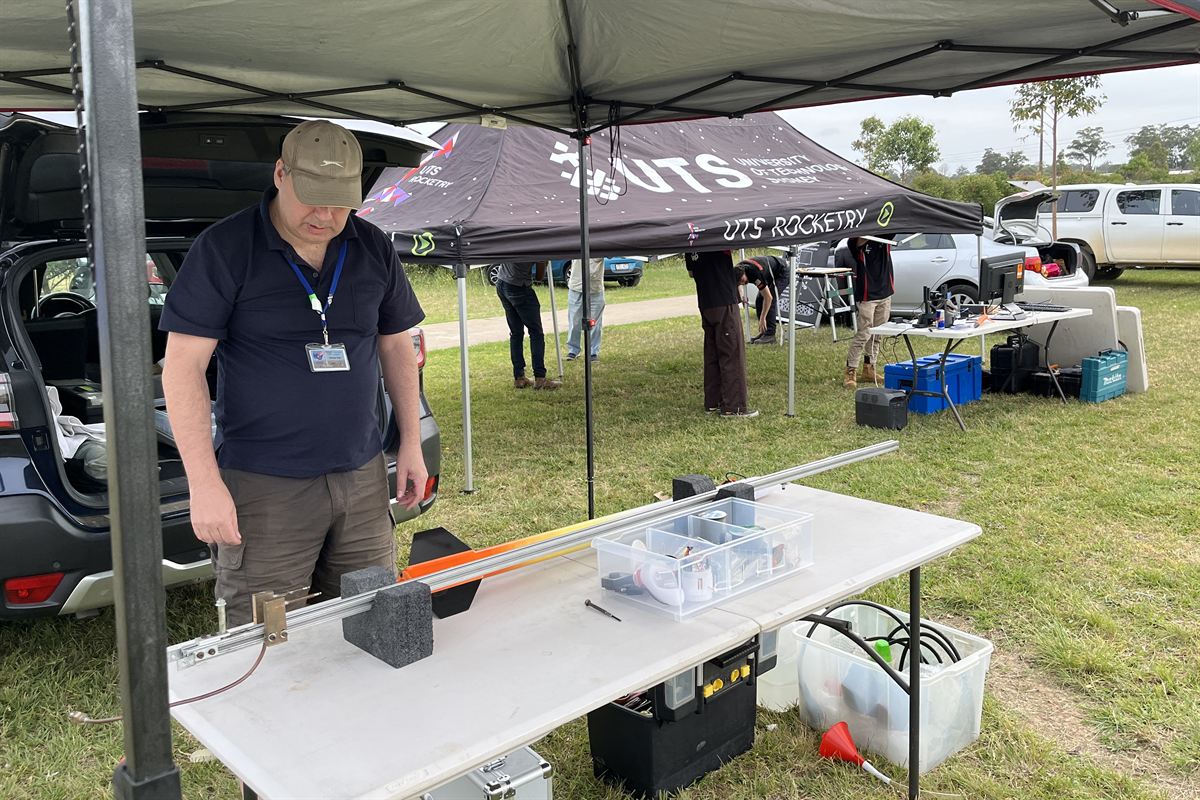
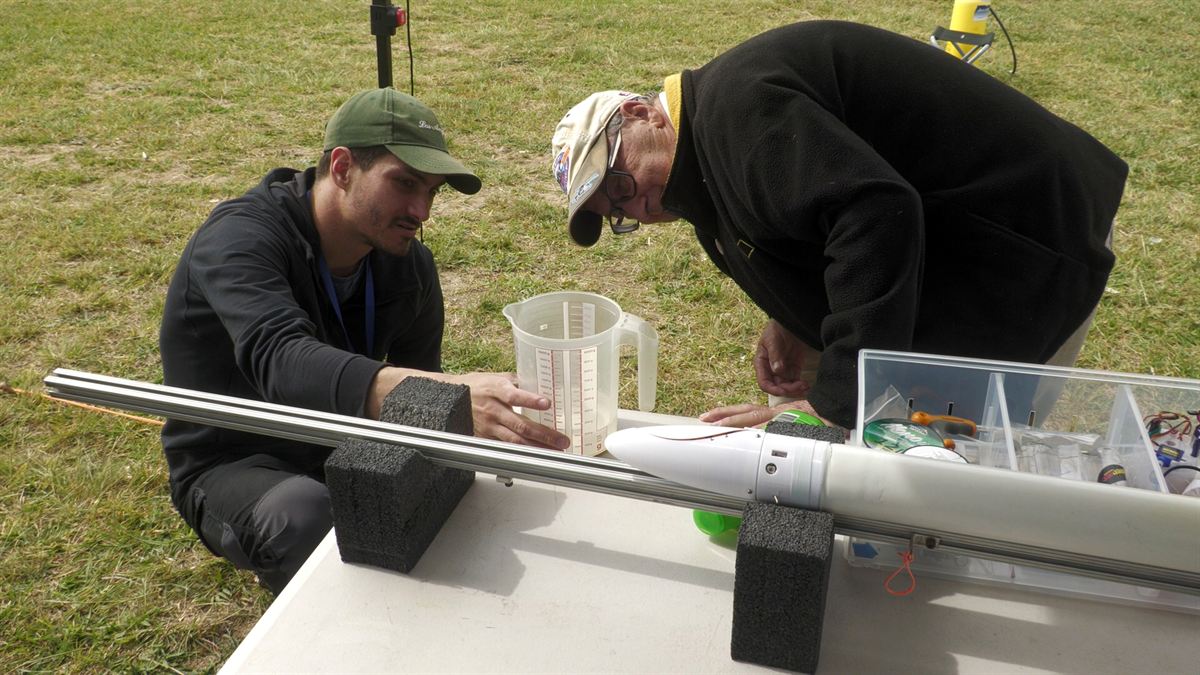
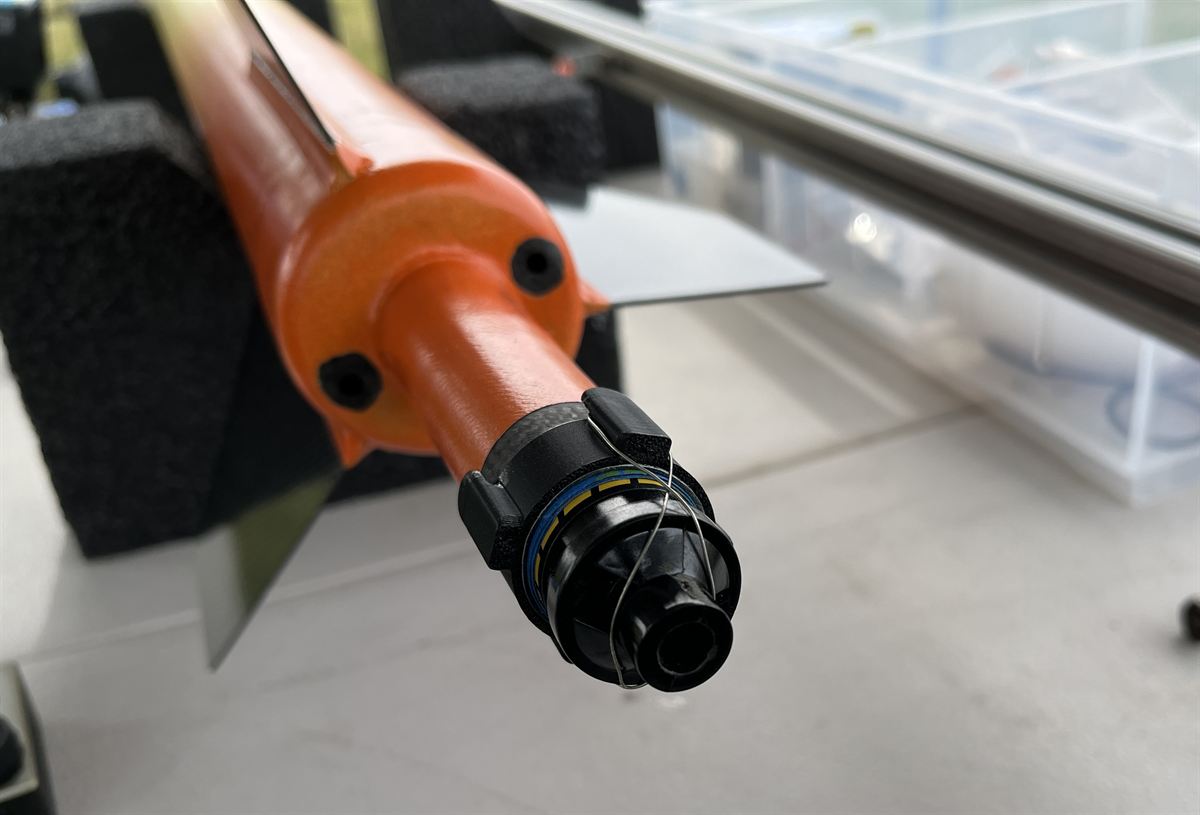
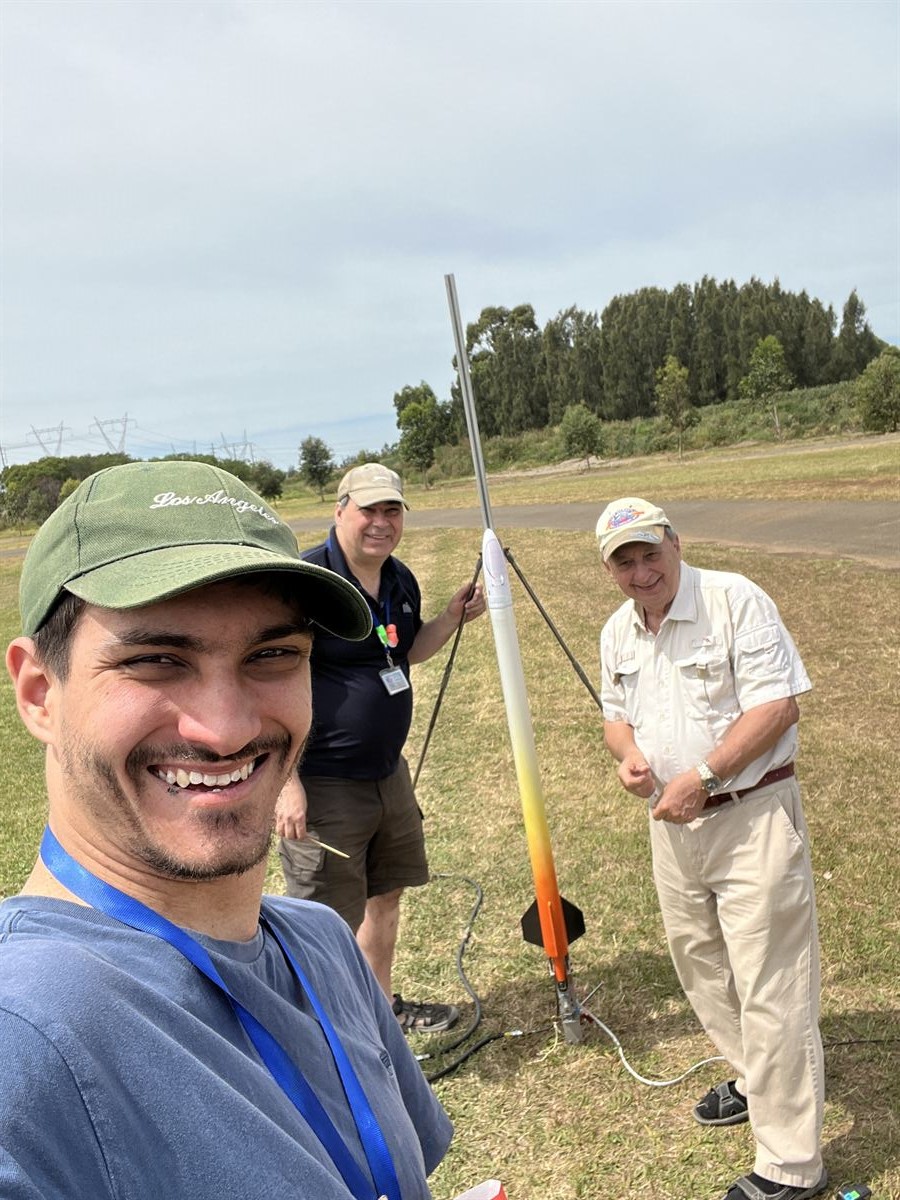
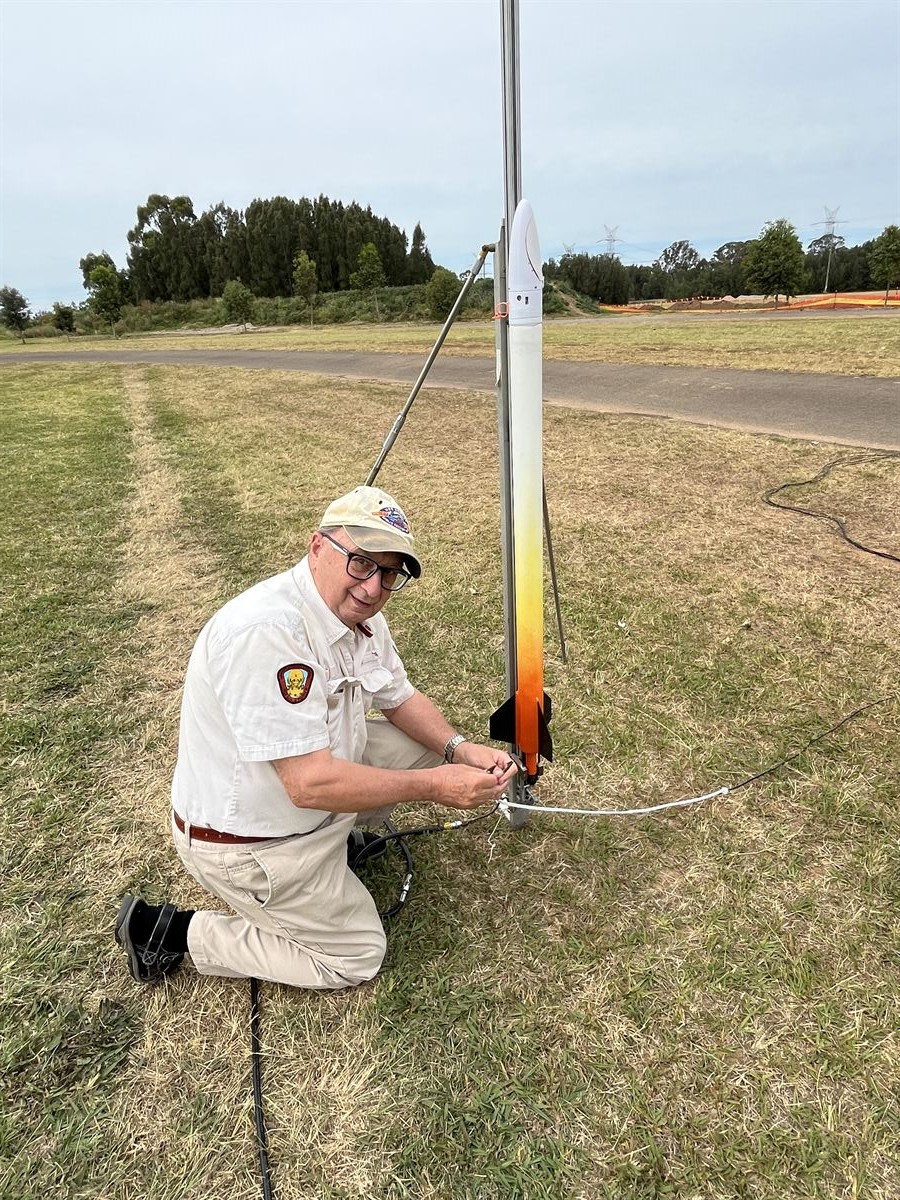
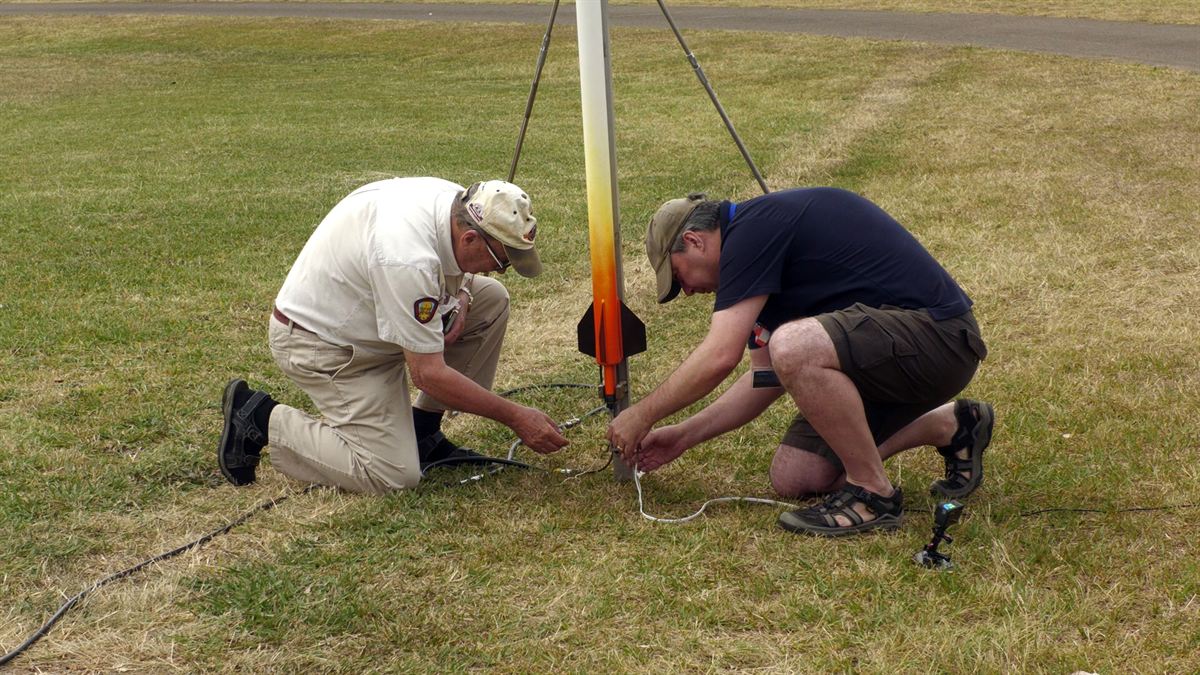
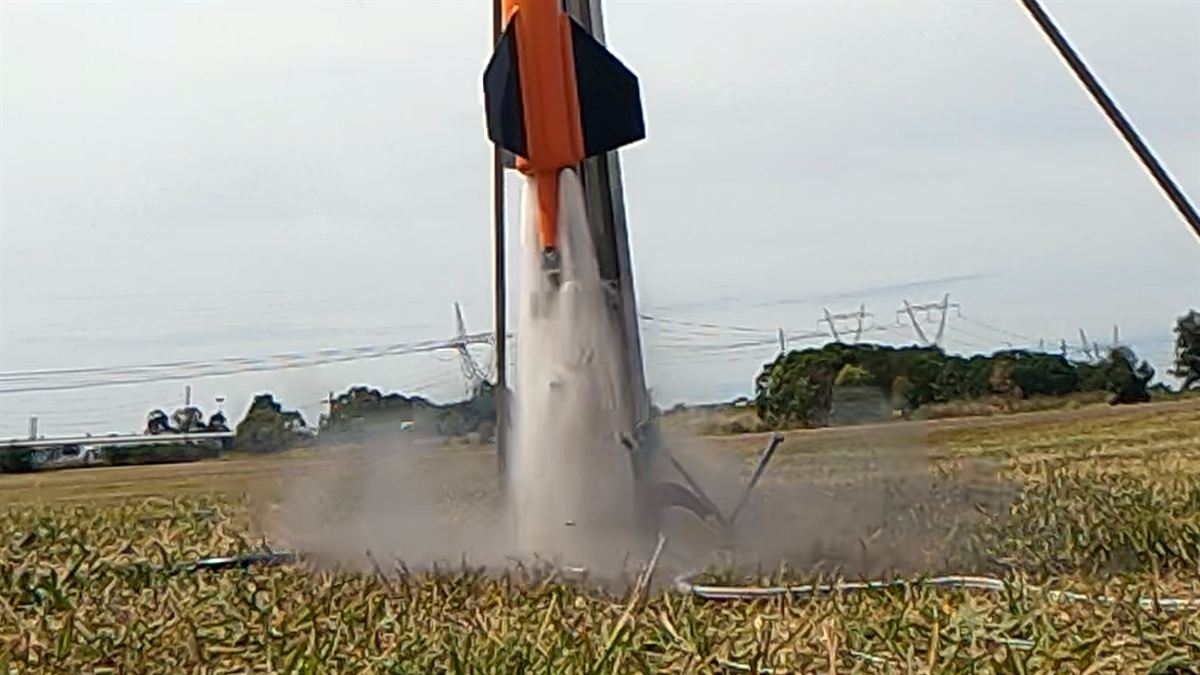
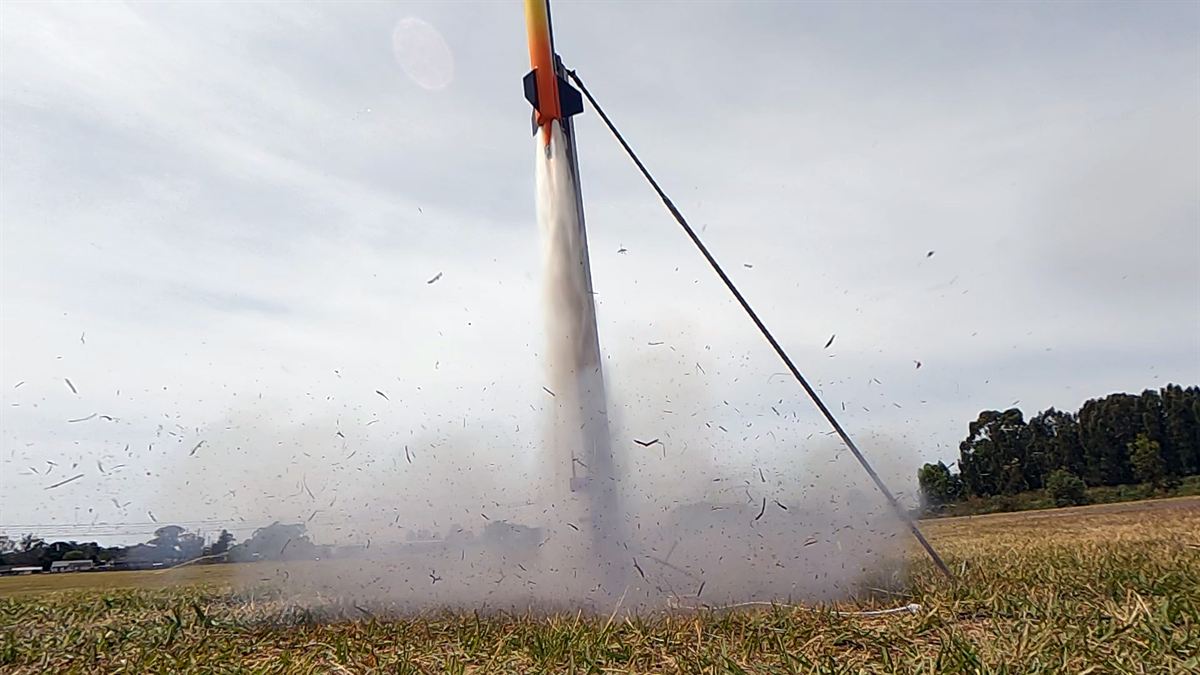
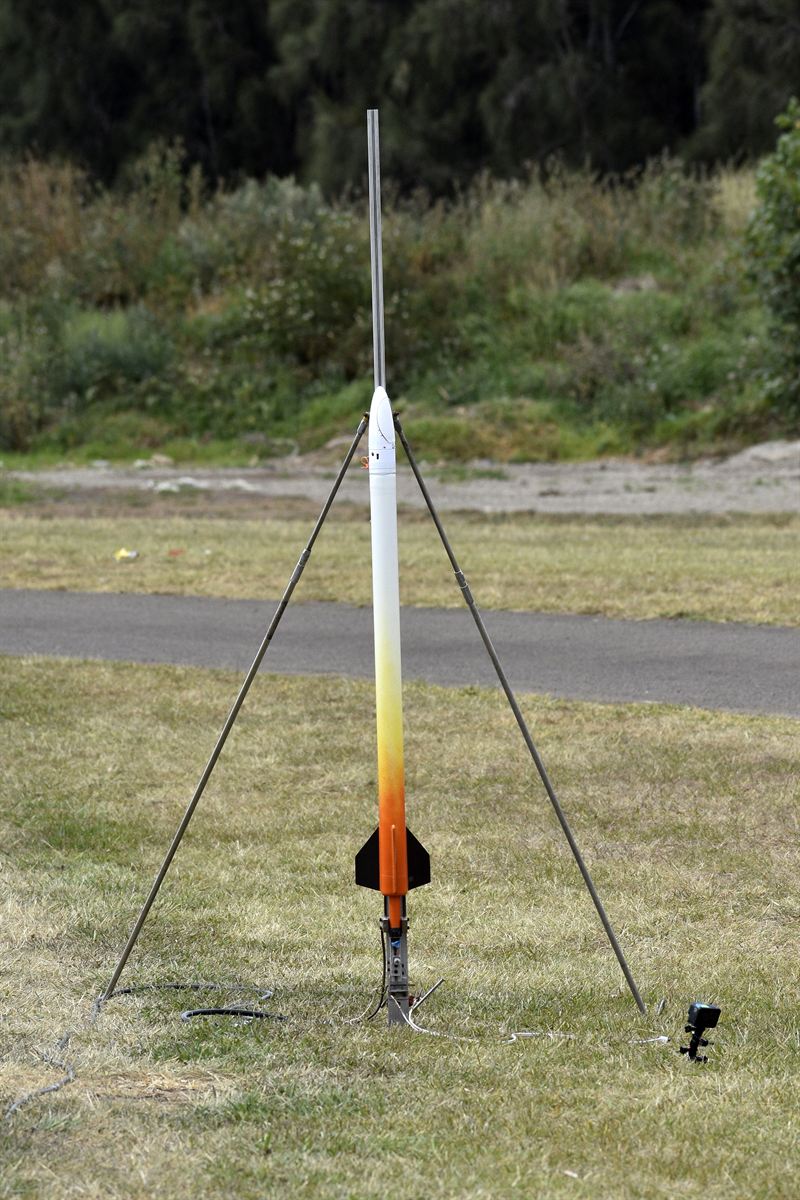
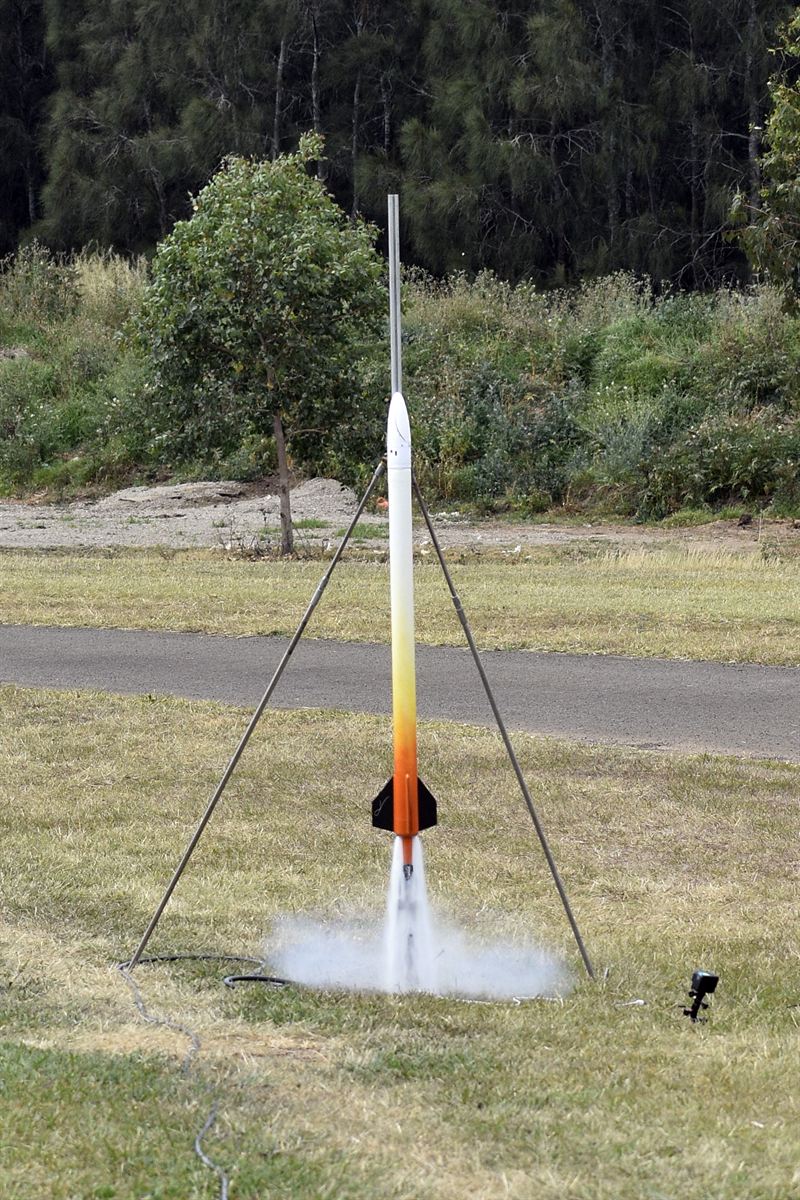
So now we had a motor that didn't fire but was exposed to the elements especially the spray of water from launch. It is unlikely water made it inside of the motor, but we didn't want to risk flying it. Luckily the motor vendor was on site and I was able to buy a pair of E30 motors. We were going to have another go with a fresh Motor. This time I made sure the igniter was all the way at the top and properly taped down so it couldn't pull out.
I replaced the altimeter with one that looked like it was holding its charge, repacked the parachute and inserted the new motor, mounted it on the launch pad, attached the fishing line, and realised I didn't take out the ejection charge. So I pulled it all apart again, and removed the charge. We could have left it in, as we do have a port on the side where it can vent, but it was just better to not have it there at all if it was not needed.
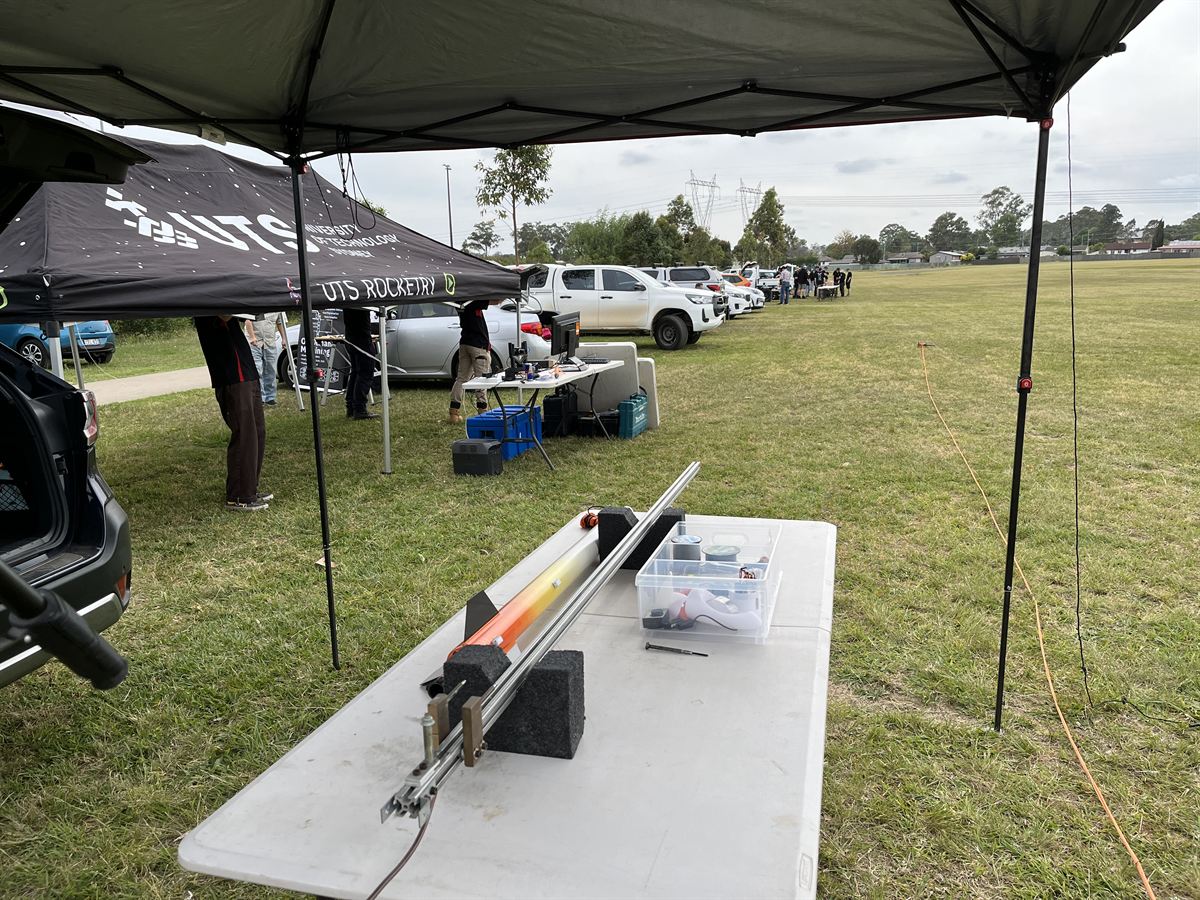
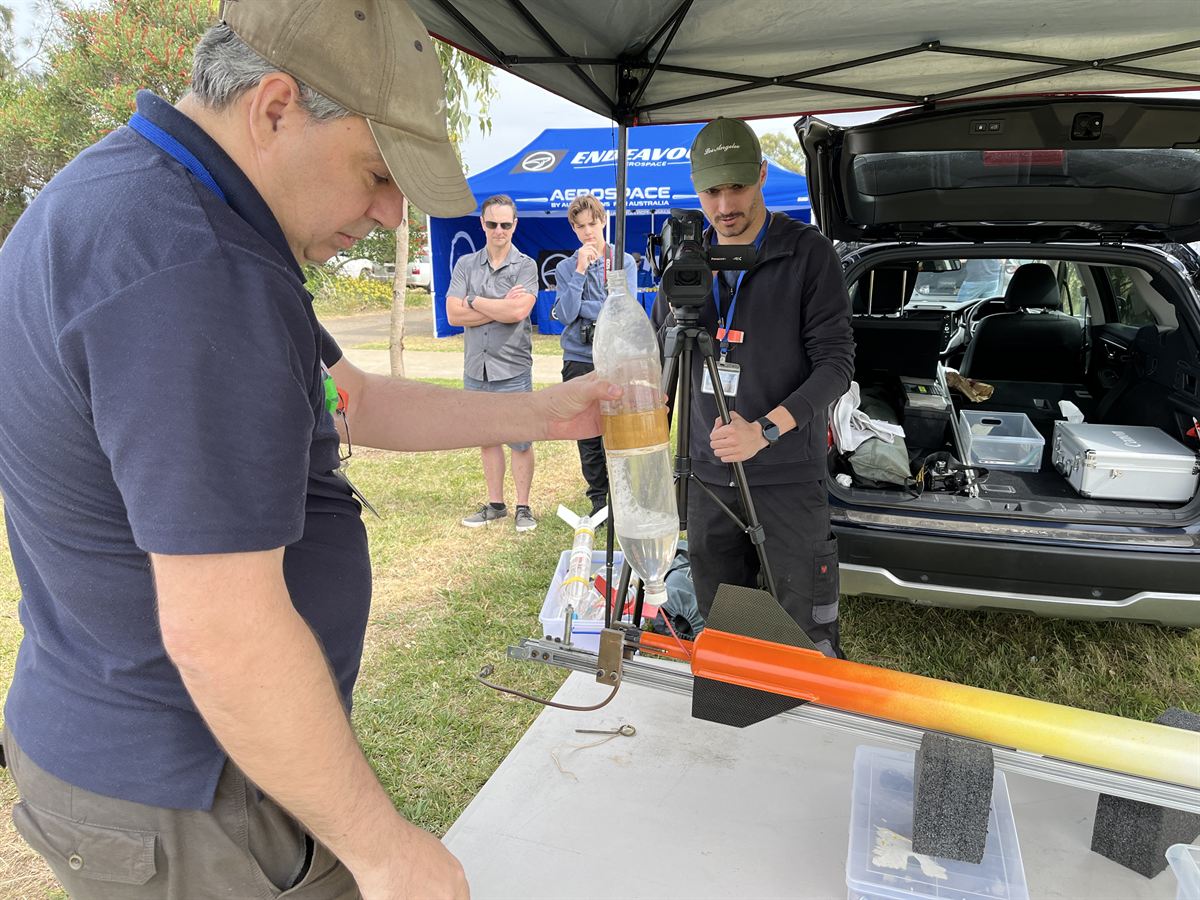
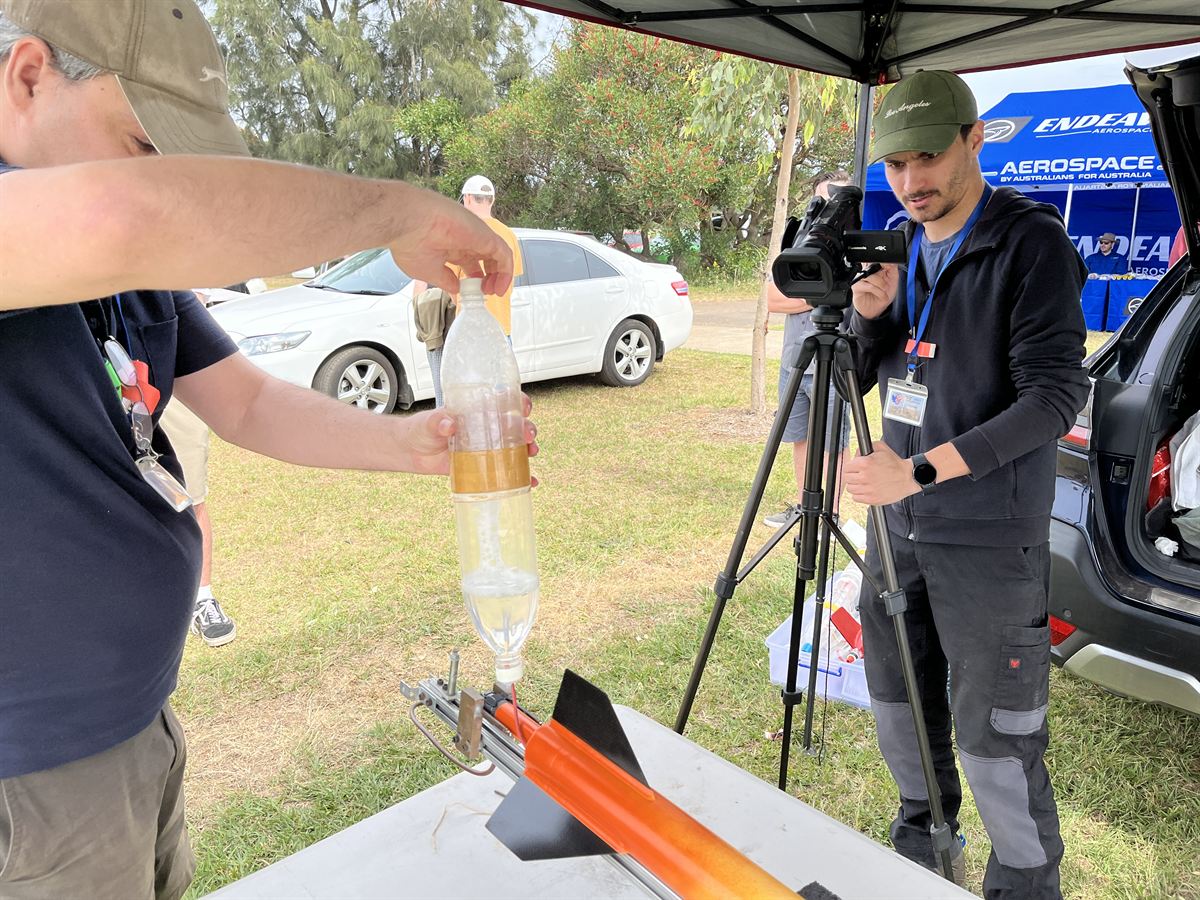
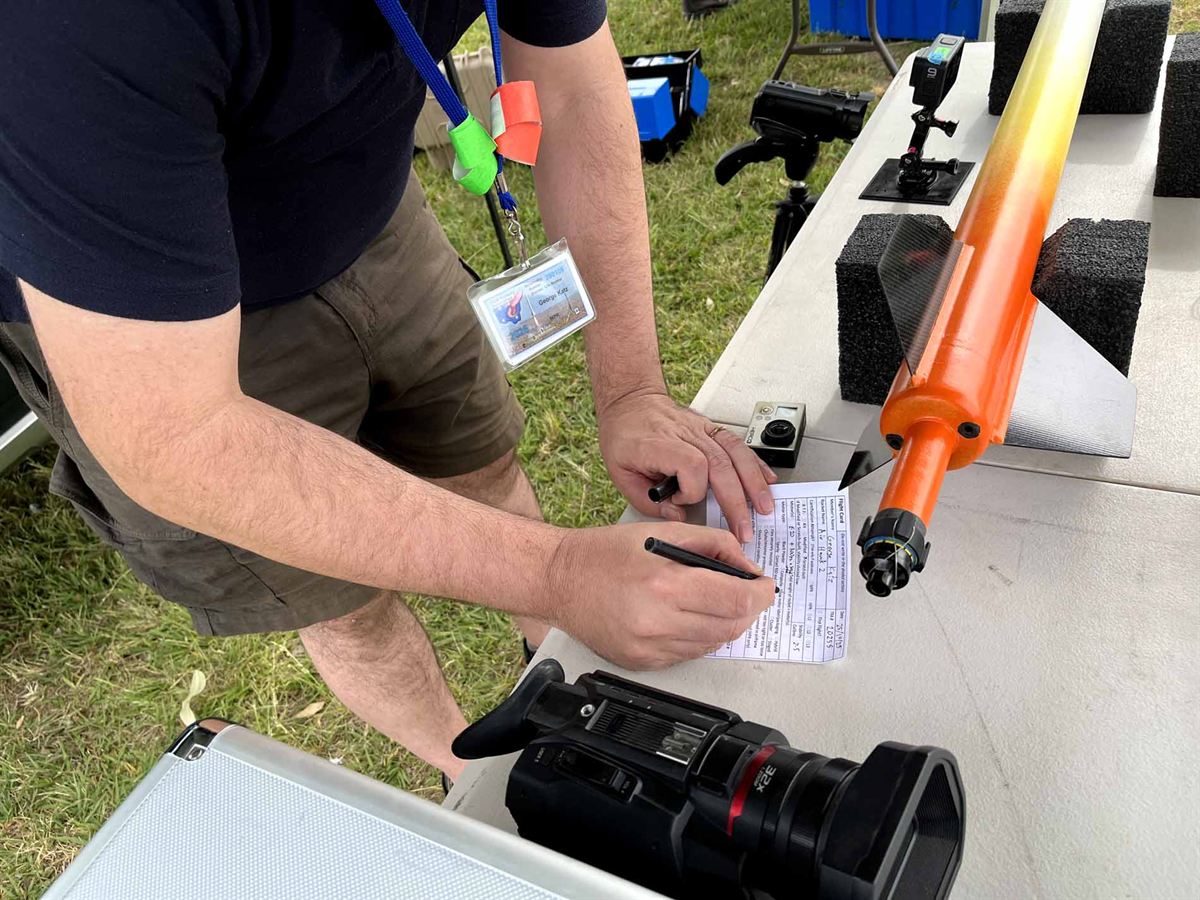
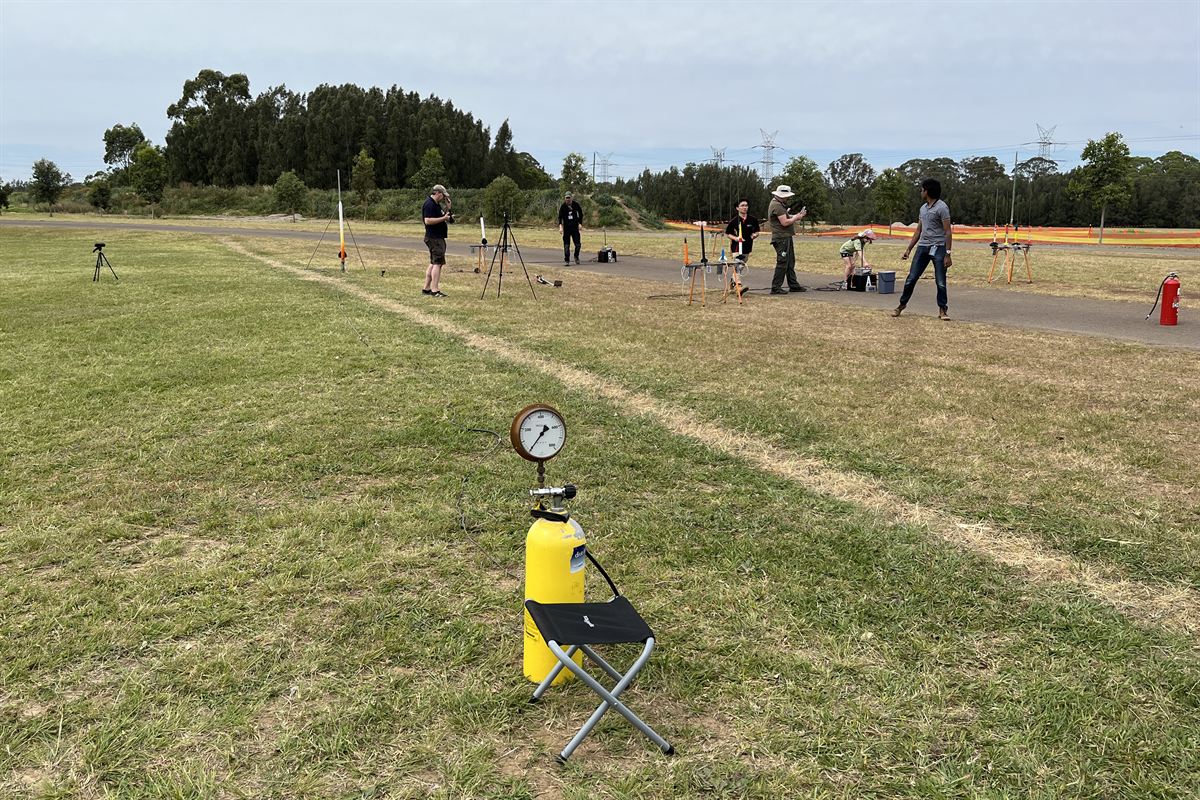
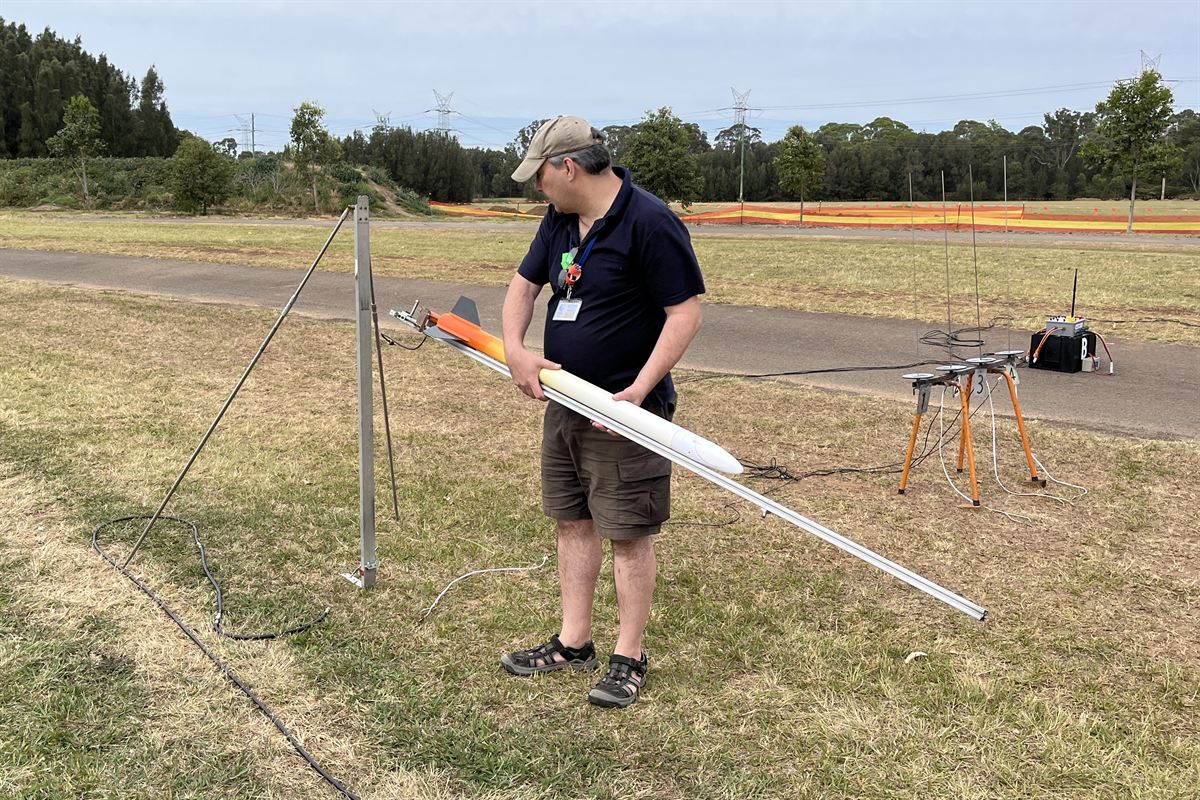
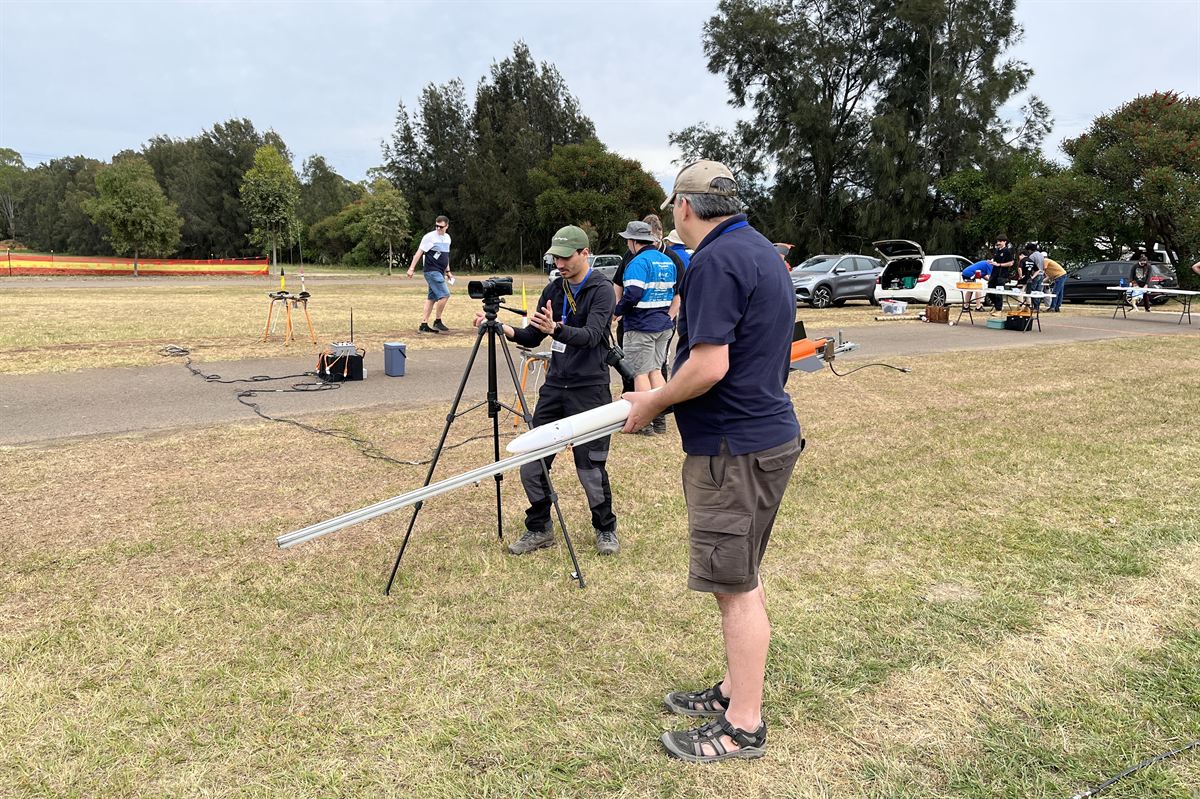
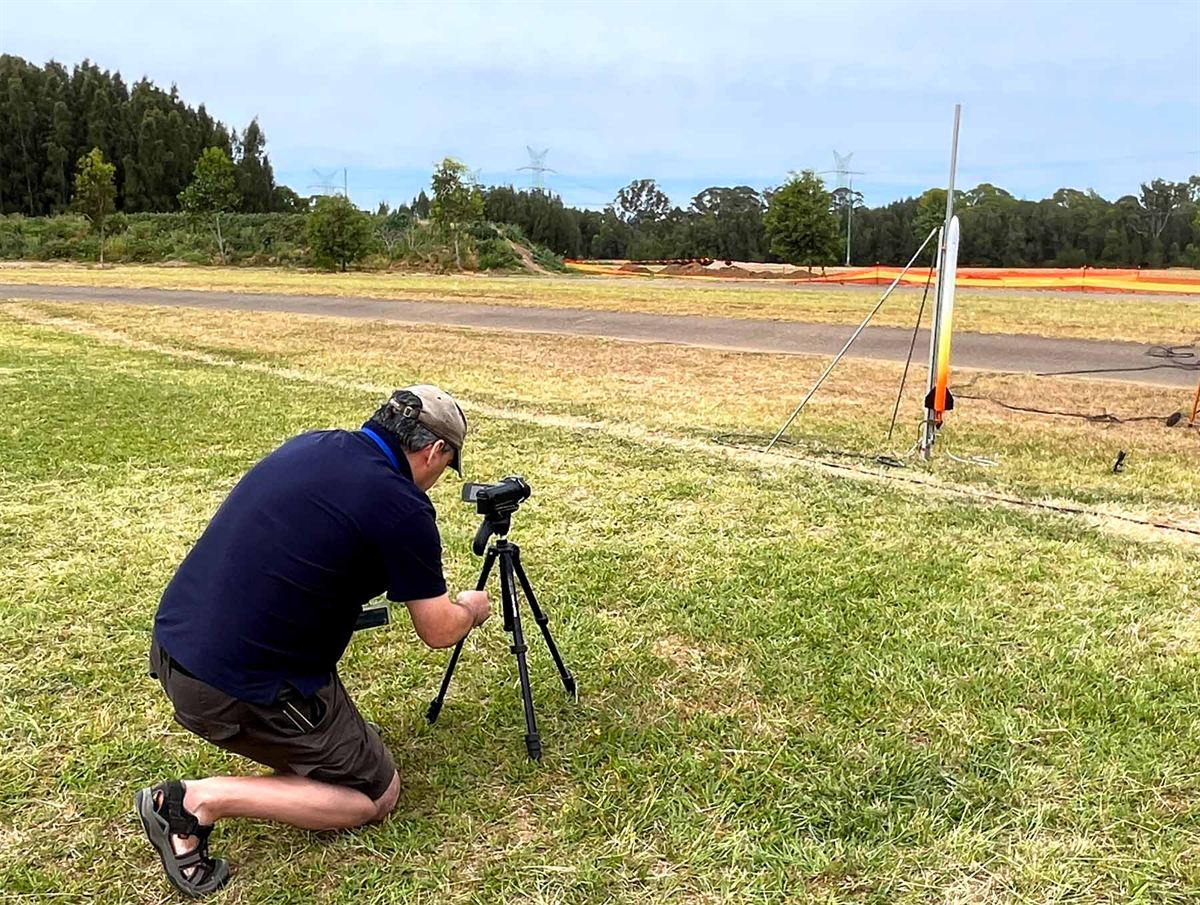
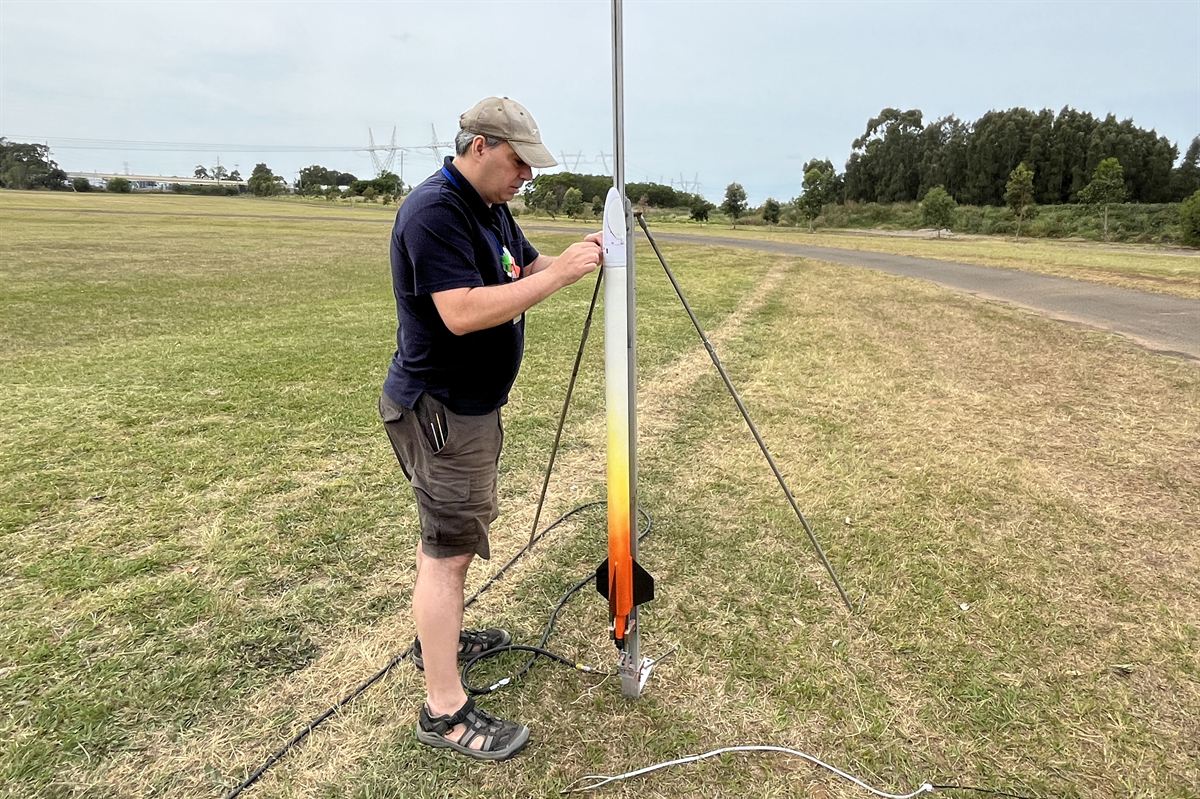
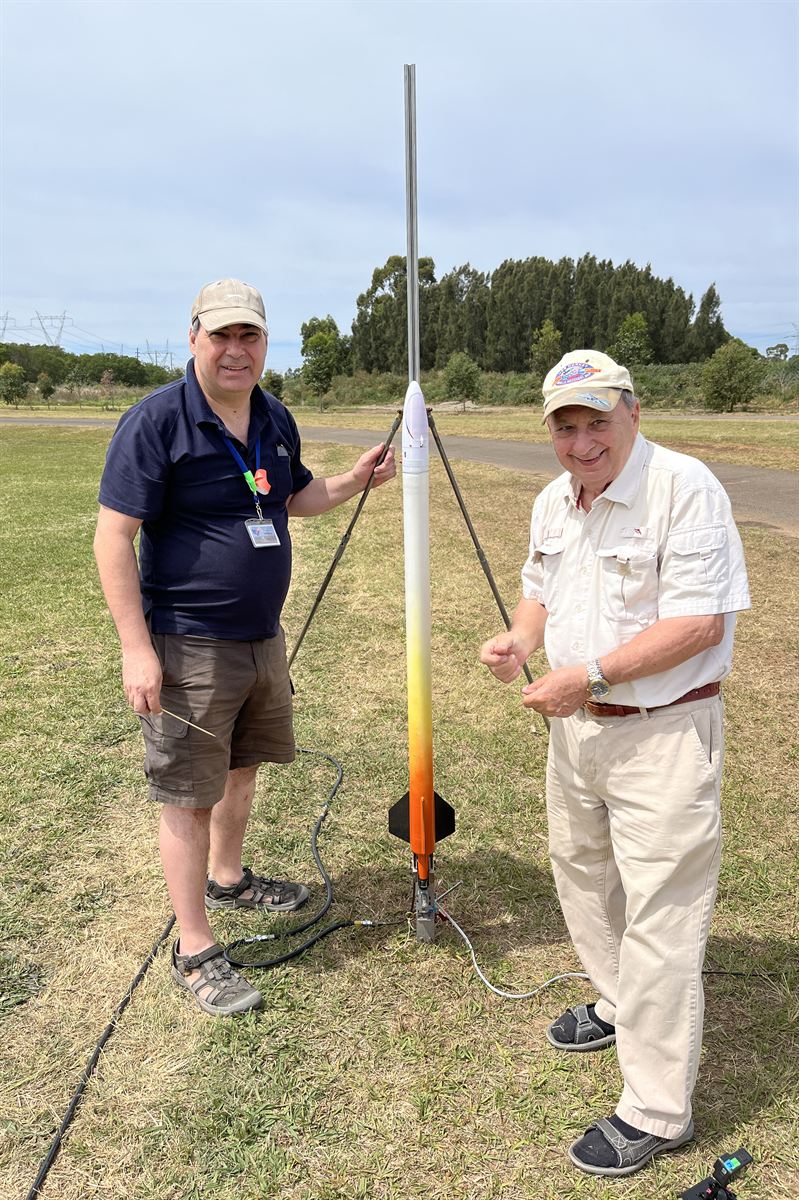
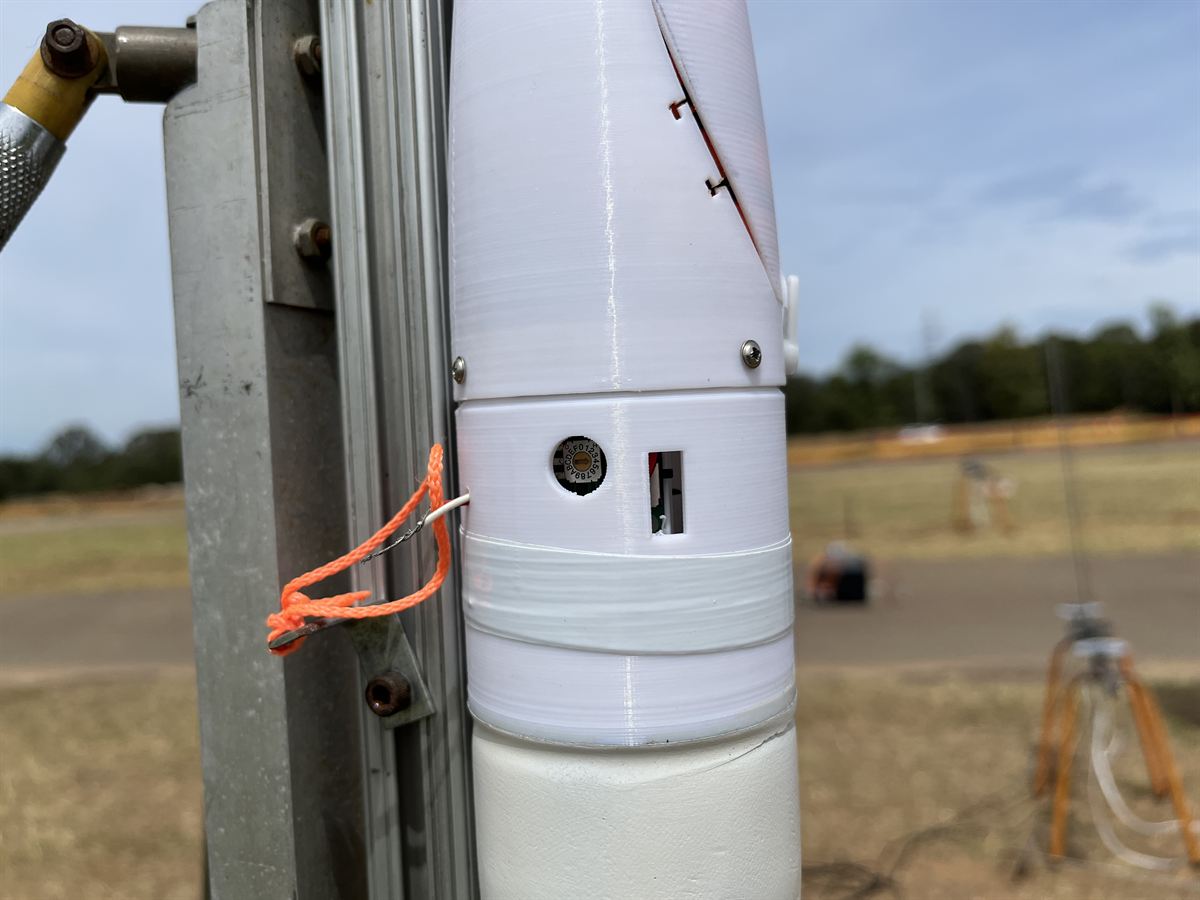
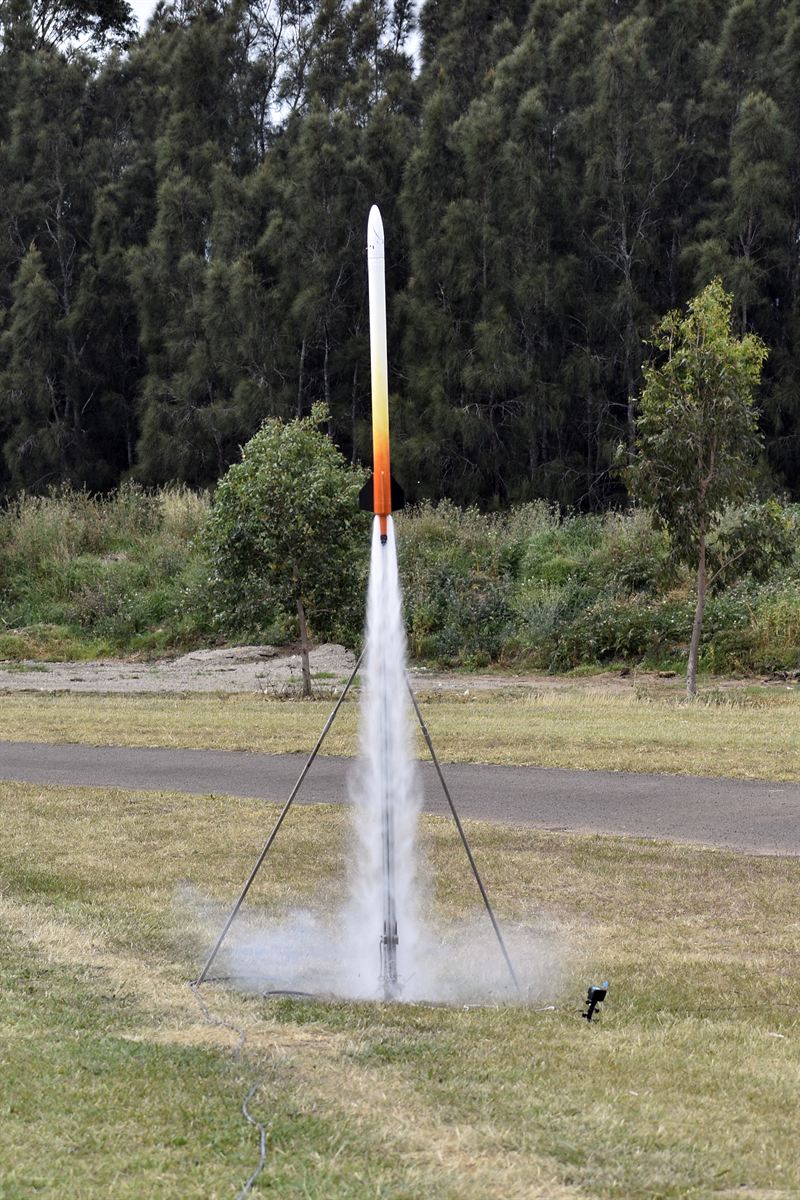
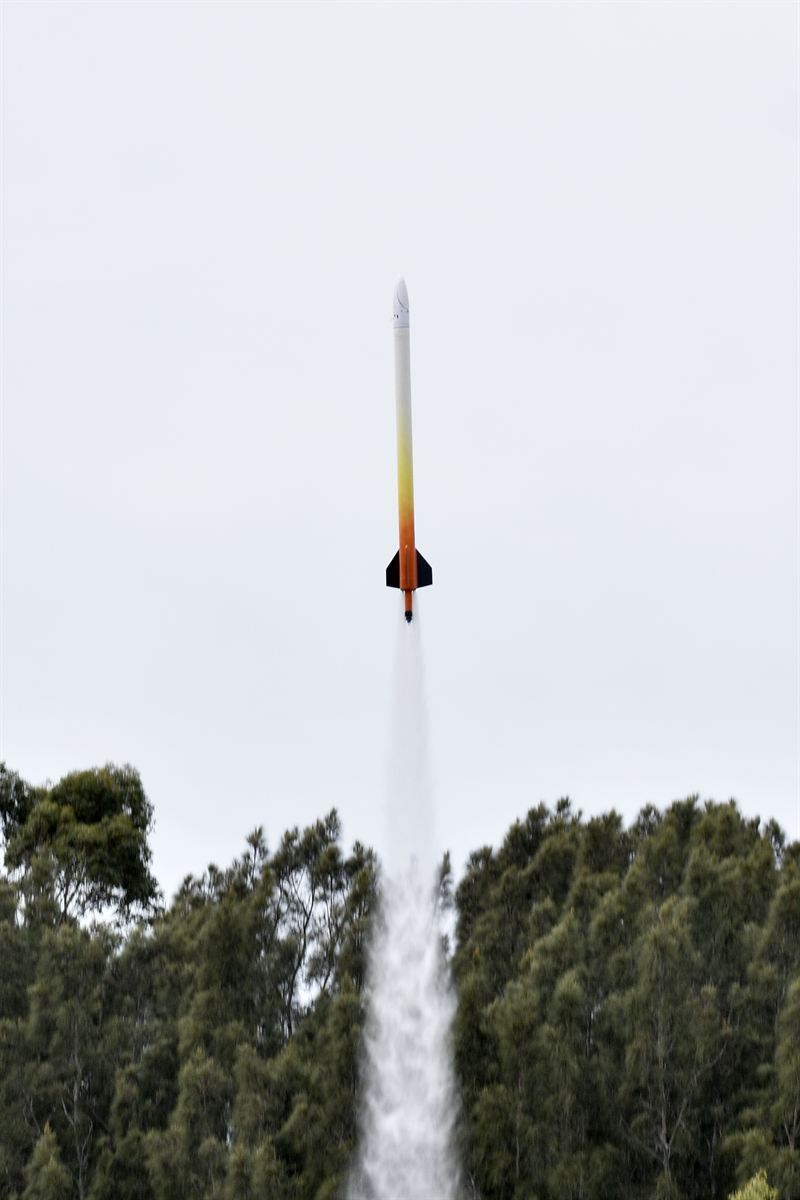
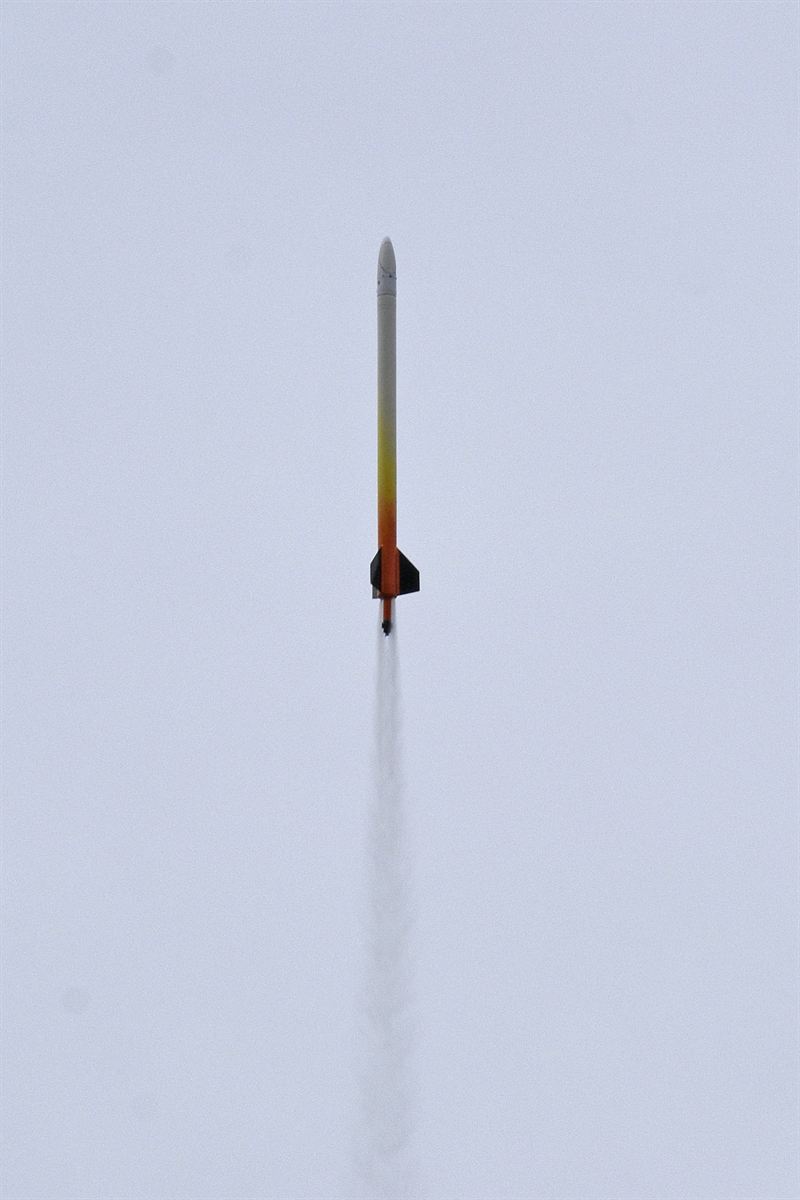
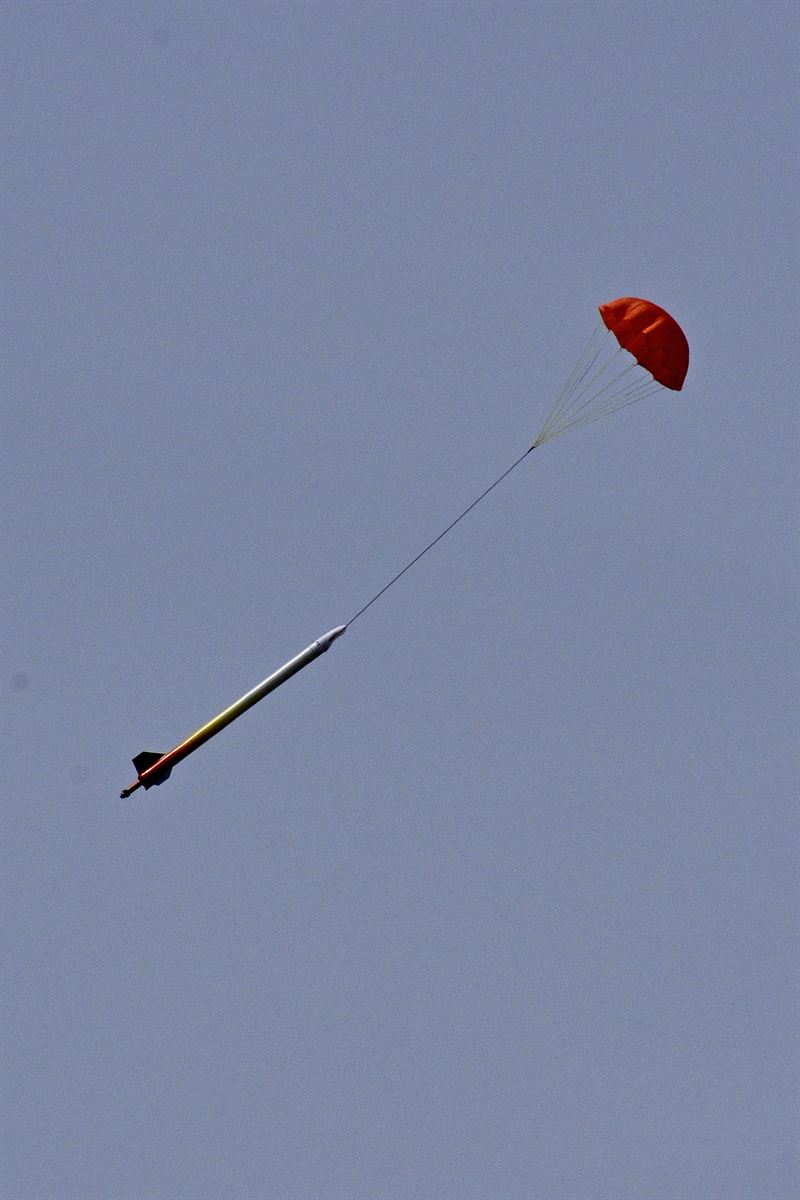
We set it up again on the pad and pressurised it to 290psi (20 bar). We again gave a nod to the LCO and he counted down and pressed the button. This time the rocket took off visibly faster and you could tell that the motor had ignited. The rocket flew nice and straight up, the thrust vectors from the motor and the water nozzles were well aligned. The parachute opened a little bit past apogee. I was getting a little worried, as the delay was set to 4 seconds, and it was perhaps 6 seconds before it opened.
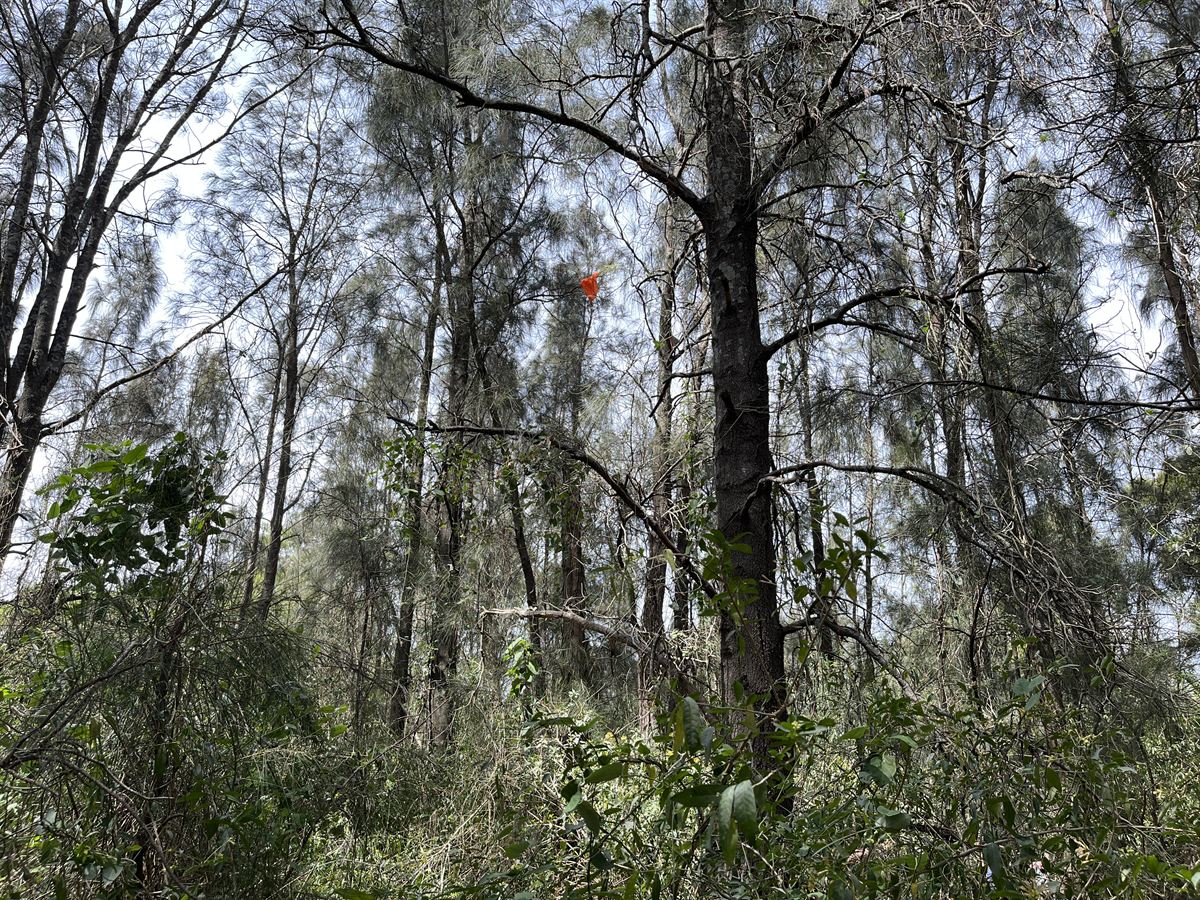
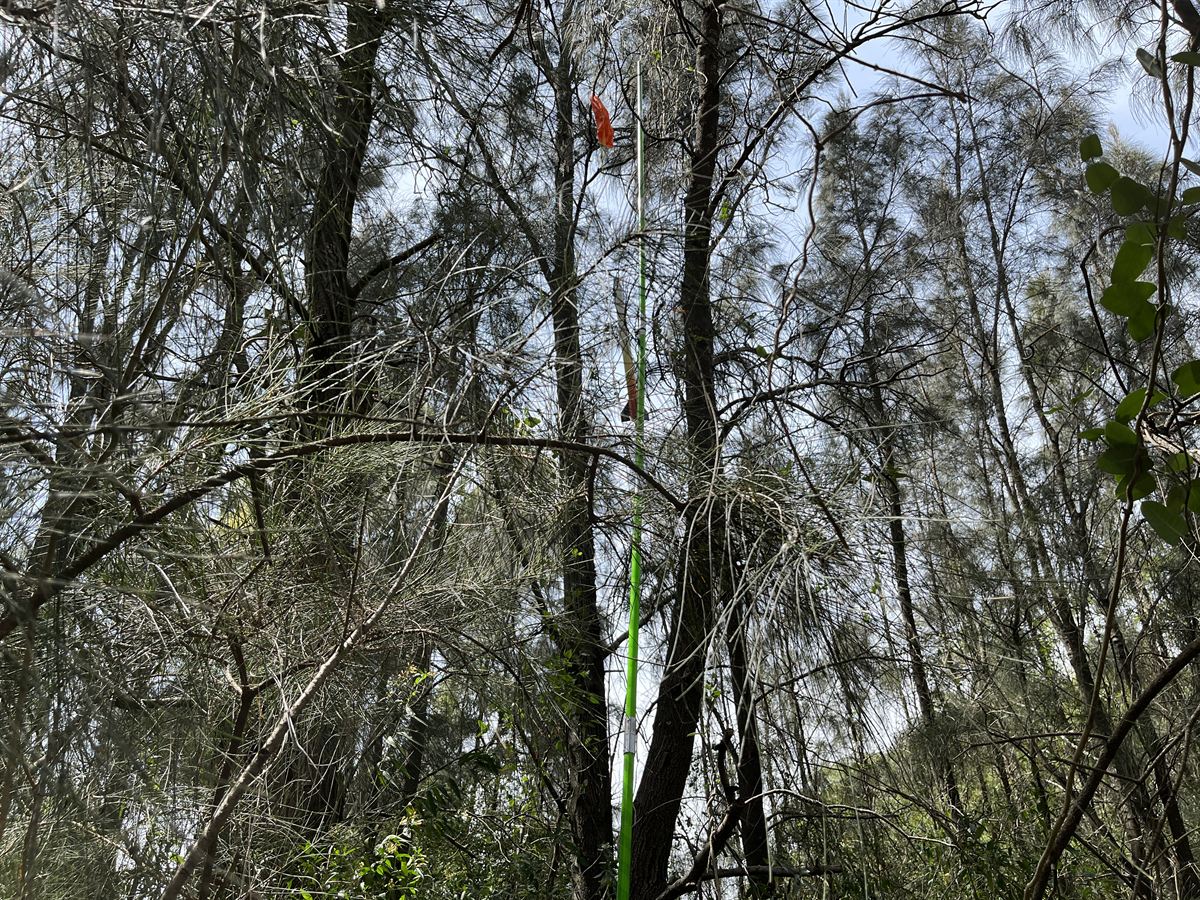
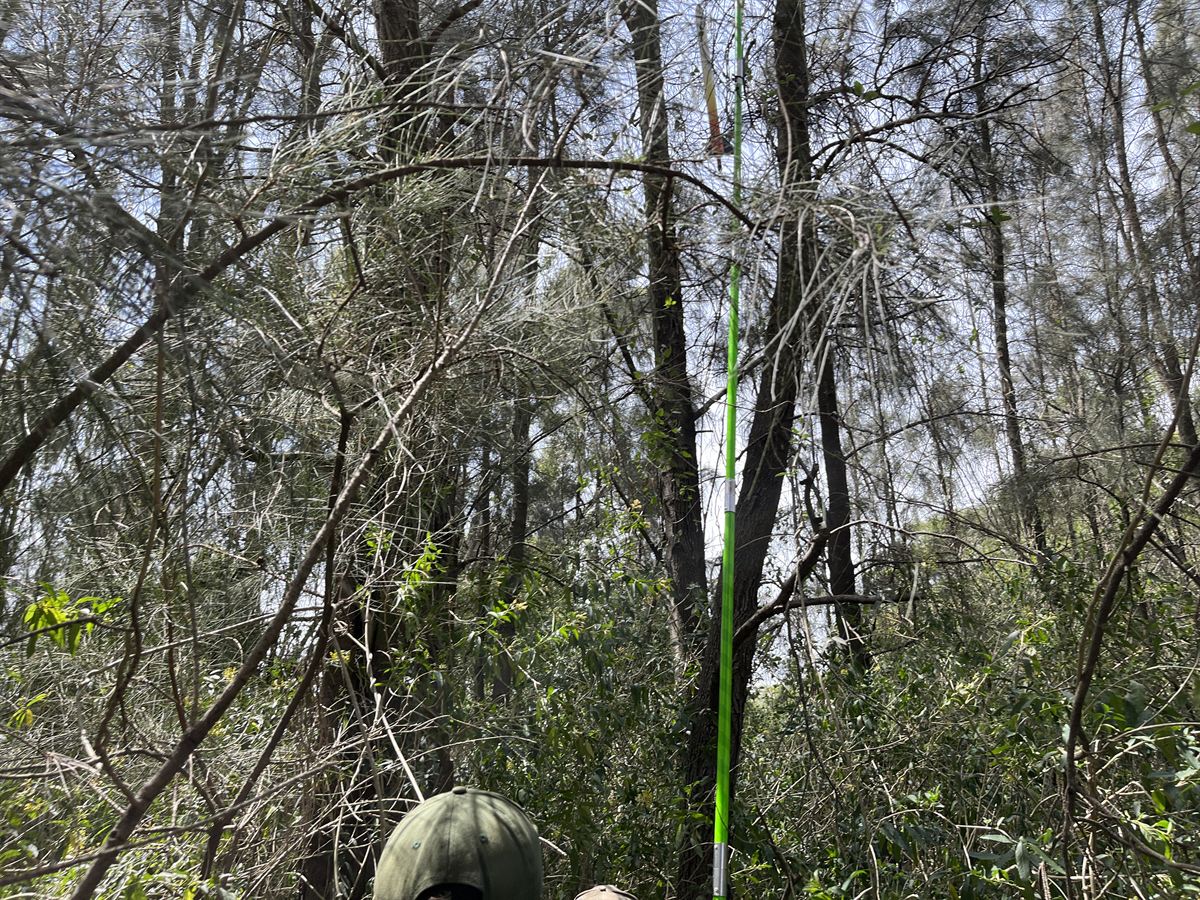
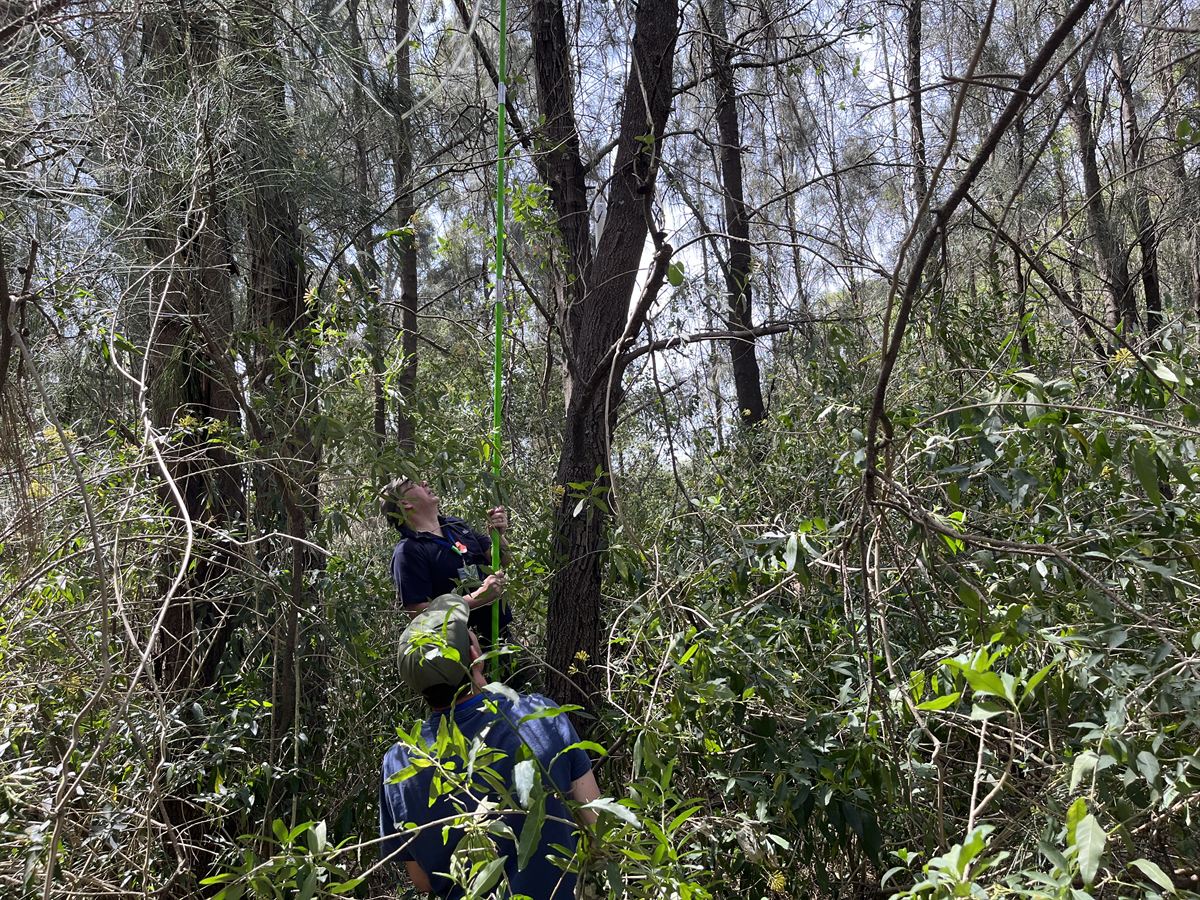
The rocket drifted down well, but under the strong cross breeze, it sailed right in the middle of the trees and hung up about 8 meter above the ground. Luckily we had our 9m retrieval pole with a hook and so we were able to get the rocket down fairly easily without damage.
The altimeter read out 1,006 feet (~306 m).
We were pretty happy with the performance of the rocket, and finally had a data point at how effective the rocket was. The second flight also had used only 300mL of water, but because of the shampoo it still produced a nice long trail.
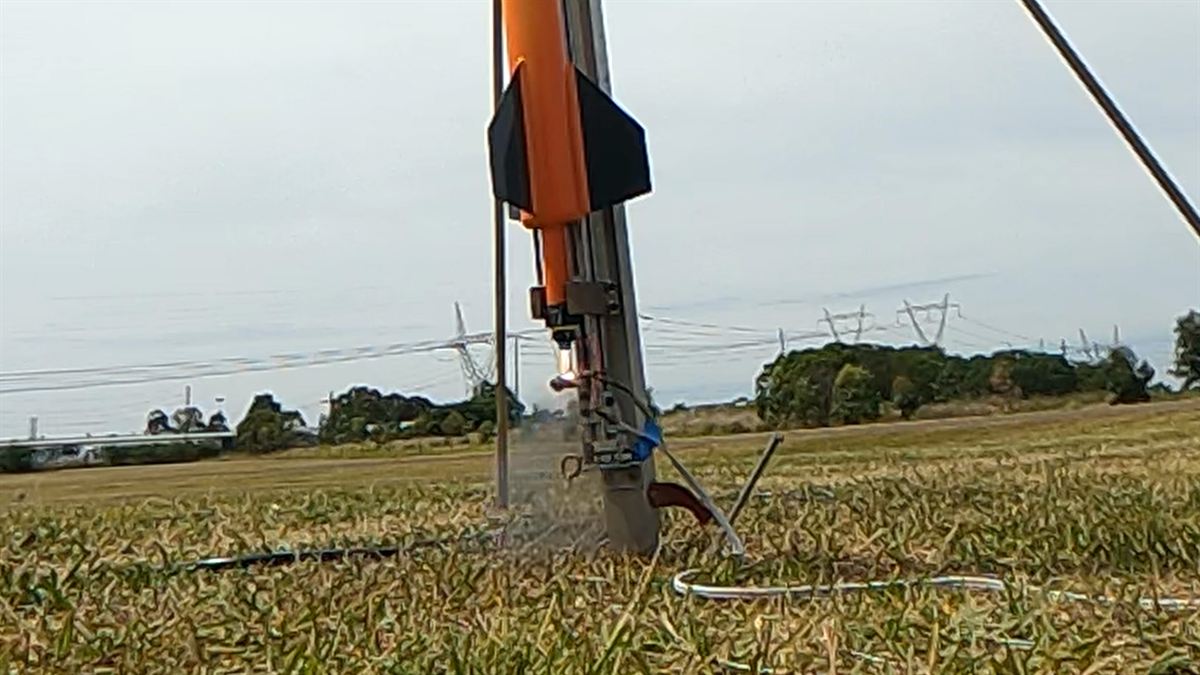
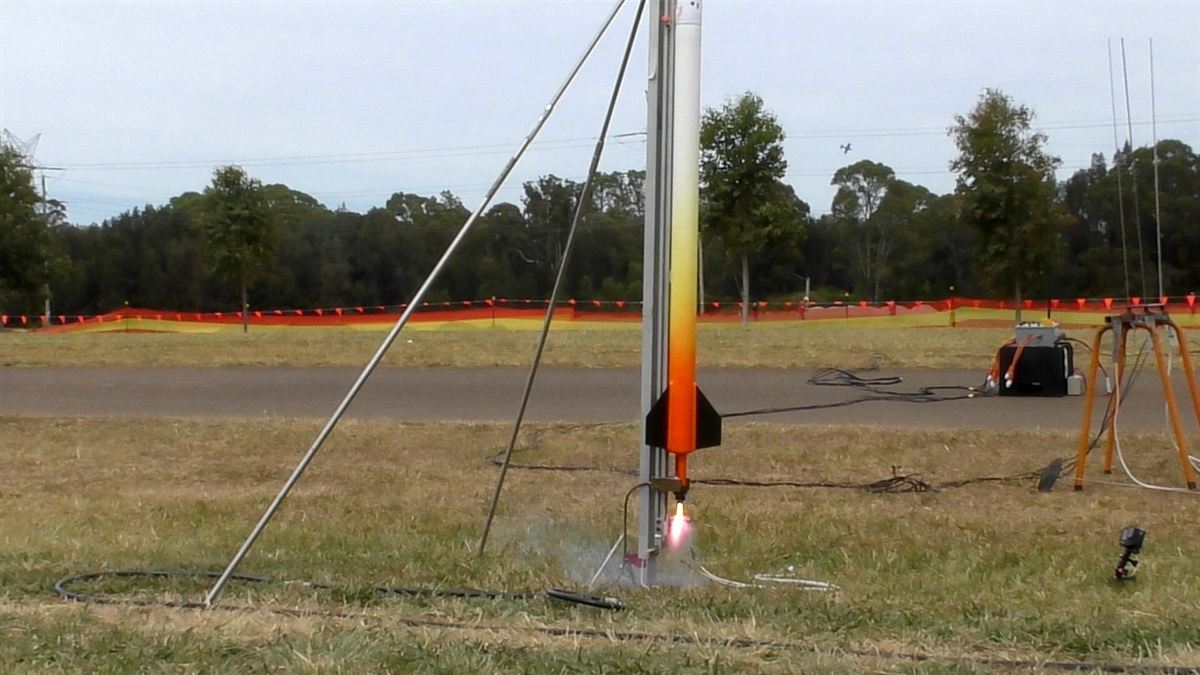
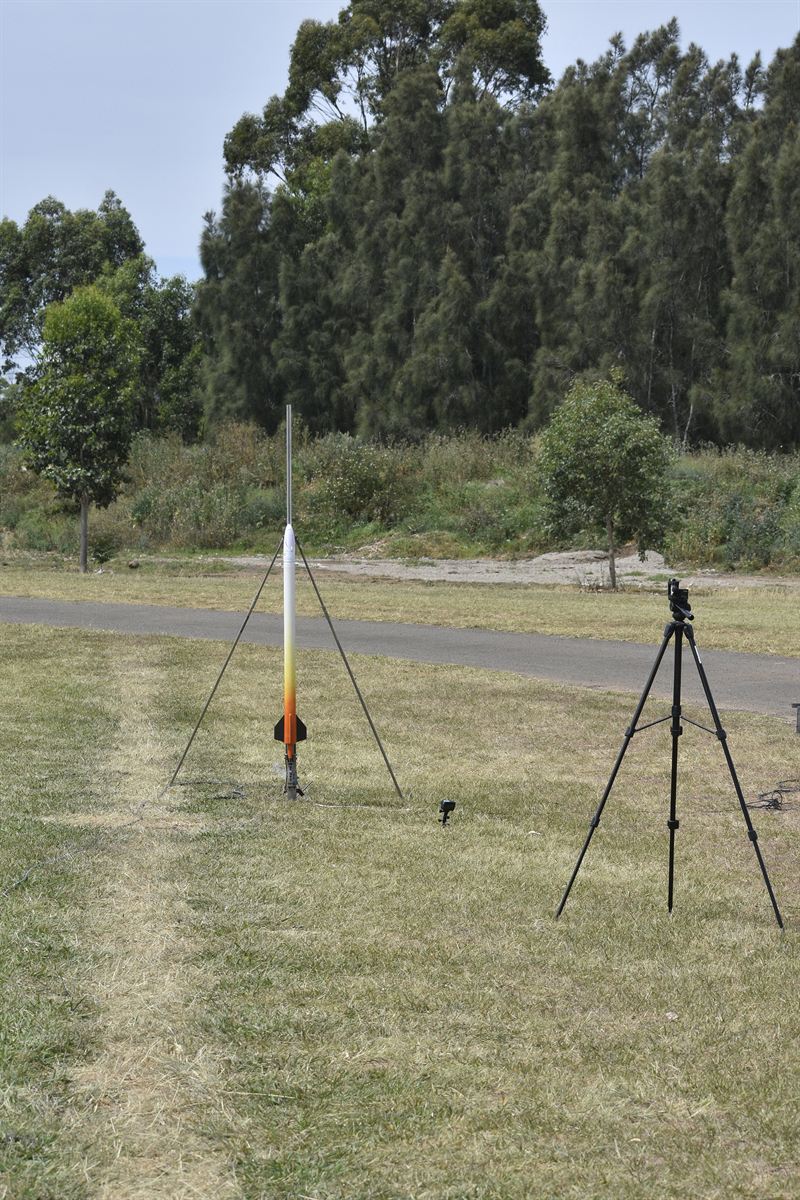
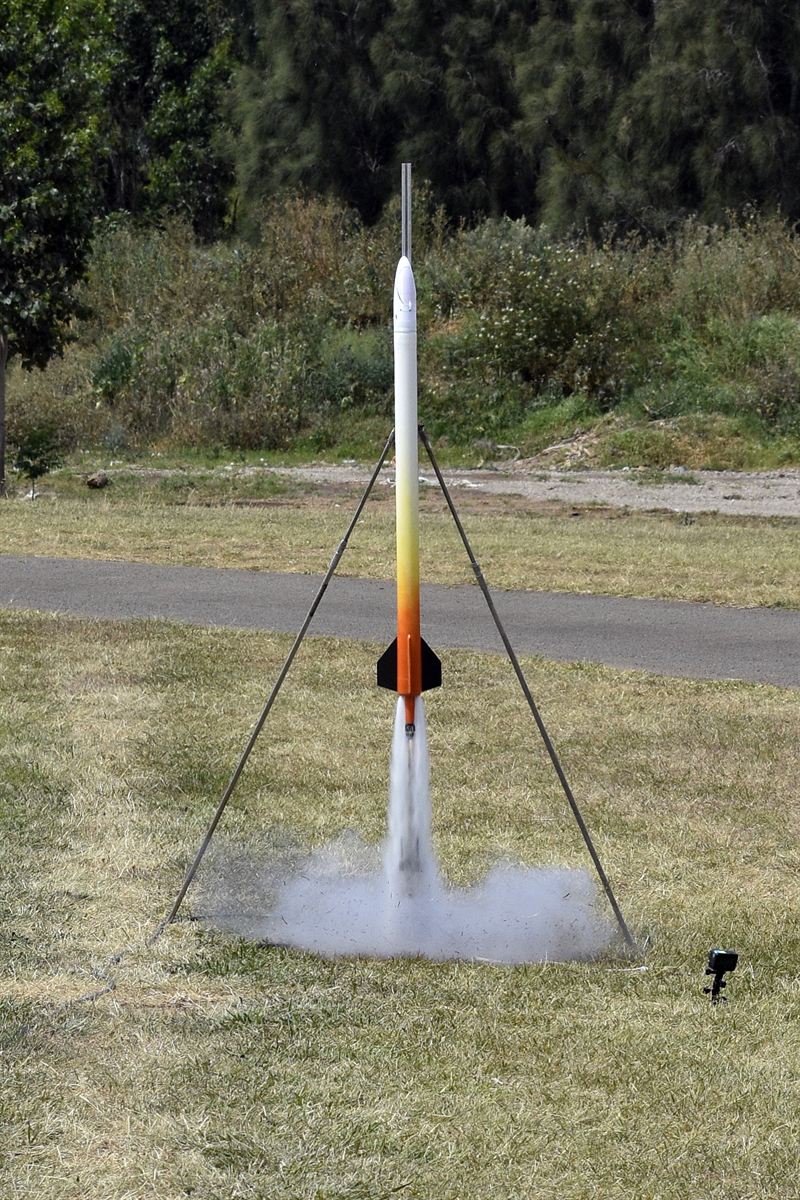
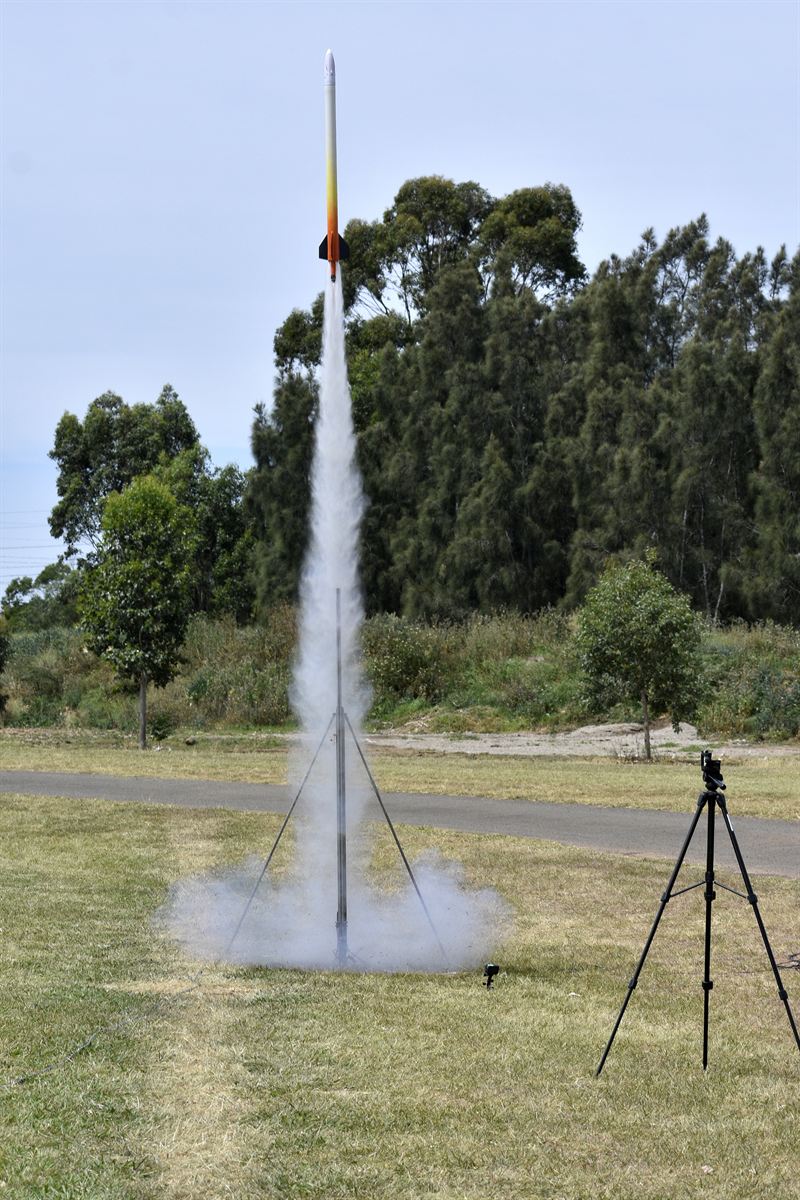
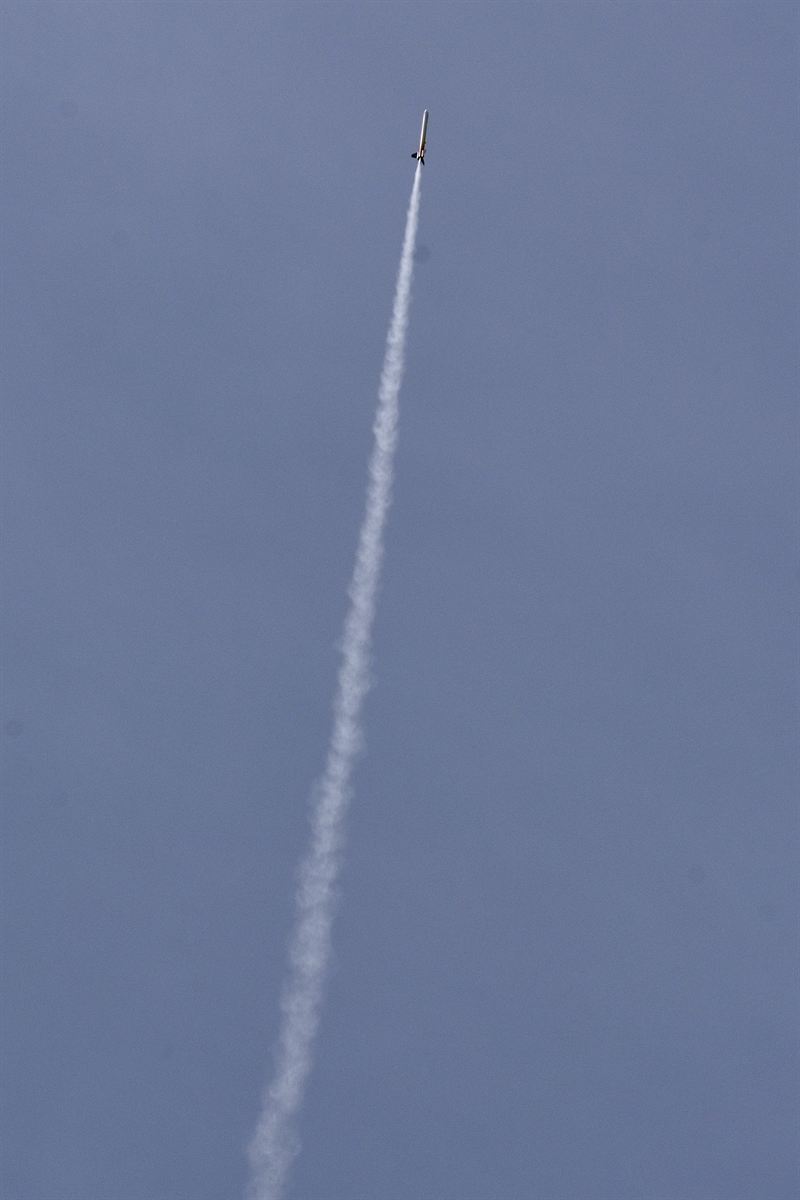
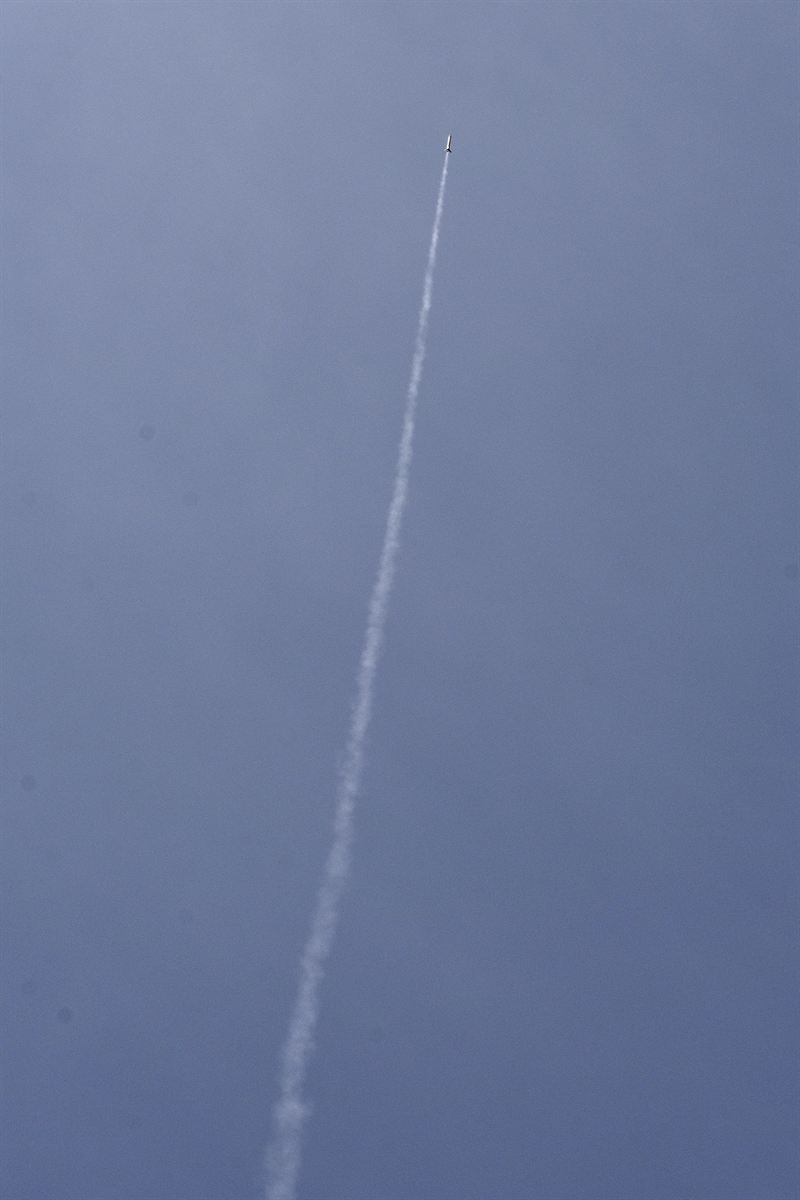
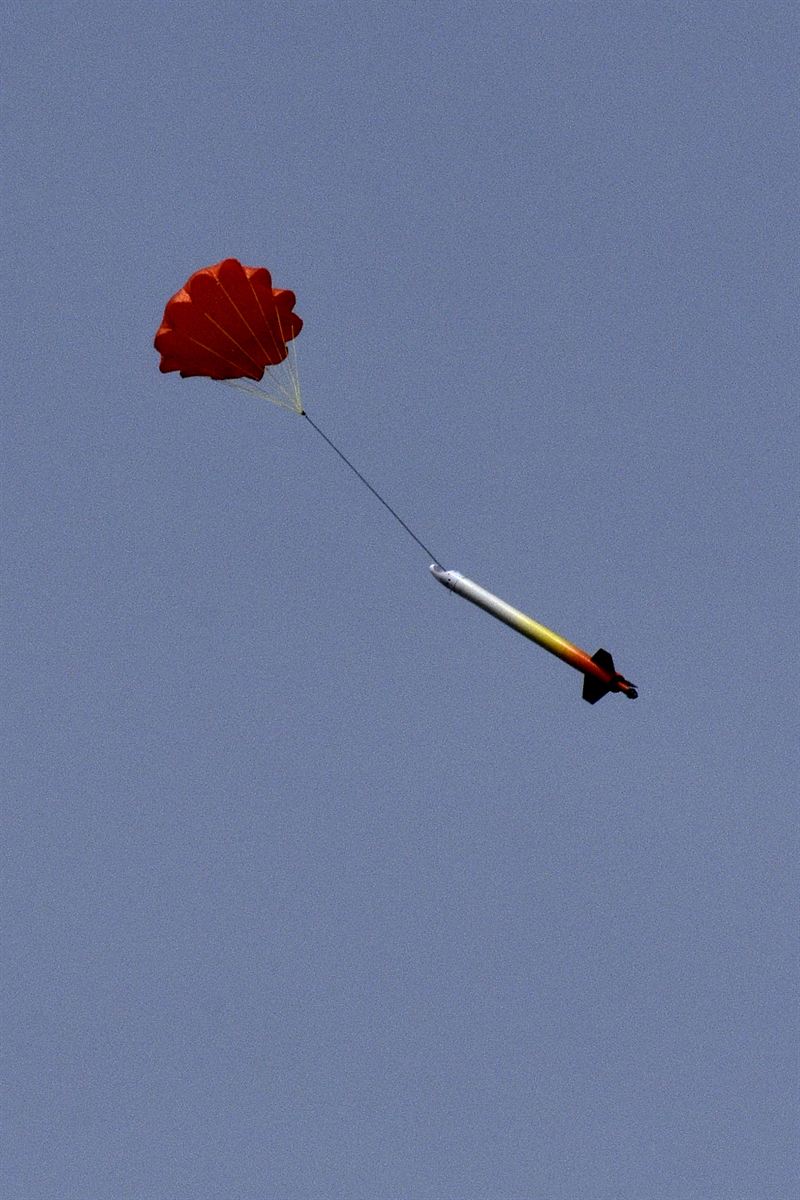
In the video it was interesting to see the flame of the motor almost completely enveloped by the spray from the nozzles. That would certainly make it difficult for a heat seeker missile to chase this rocket.
Now that we've had a chance to fly this higher power rocket 3 times, I think there is some merit in flying a rocket like this where you can tune your total impulse. Although the launcher setup is a little more complex, it wasn't difficult to build the launcher. It was definitely a fun experiment to work on. The fishing line method of synchronizing the launch was also very effective. Probably the next configuration would be to have one central water rocket nozzle, and then a cluster of solid motors around that, perhaps 2 or 3.
| Launch | Details | ||||||||||||||||||||||||
| 1 |
|
||||||||||||||||||||||||
| 2 |
|