


| Date: | 13 December 2025 |
| Location: | Whalan Reserve, Australia |
| Conditions: | Mostly sunny, 27C, wind 5-10km/h |
| Members: | GK, Paul K and PK |
This week we wanted to capture data on the AirHawk 2 flight without a rocket motor to compare it to the previous flight with a motor.
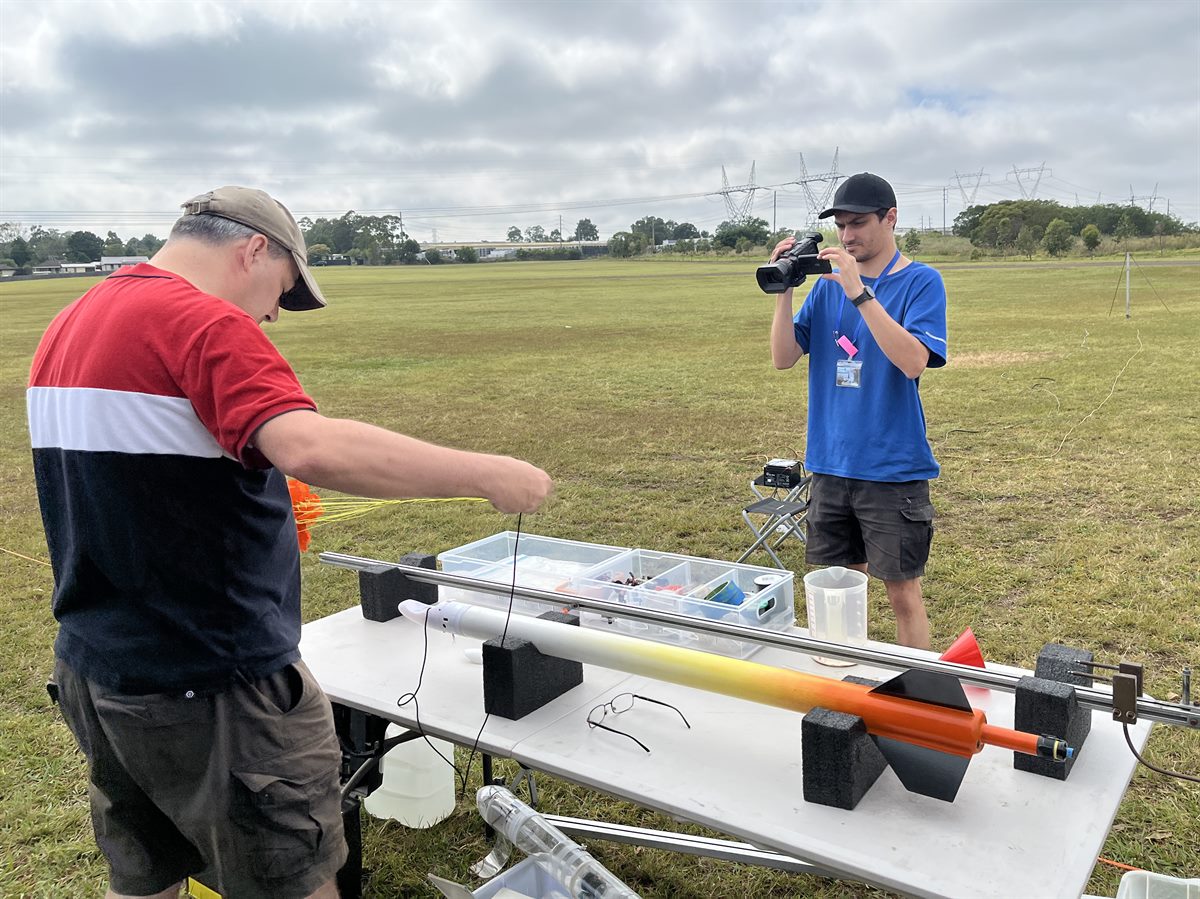
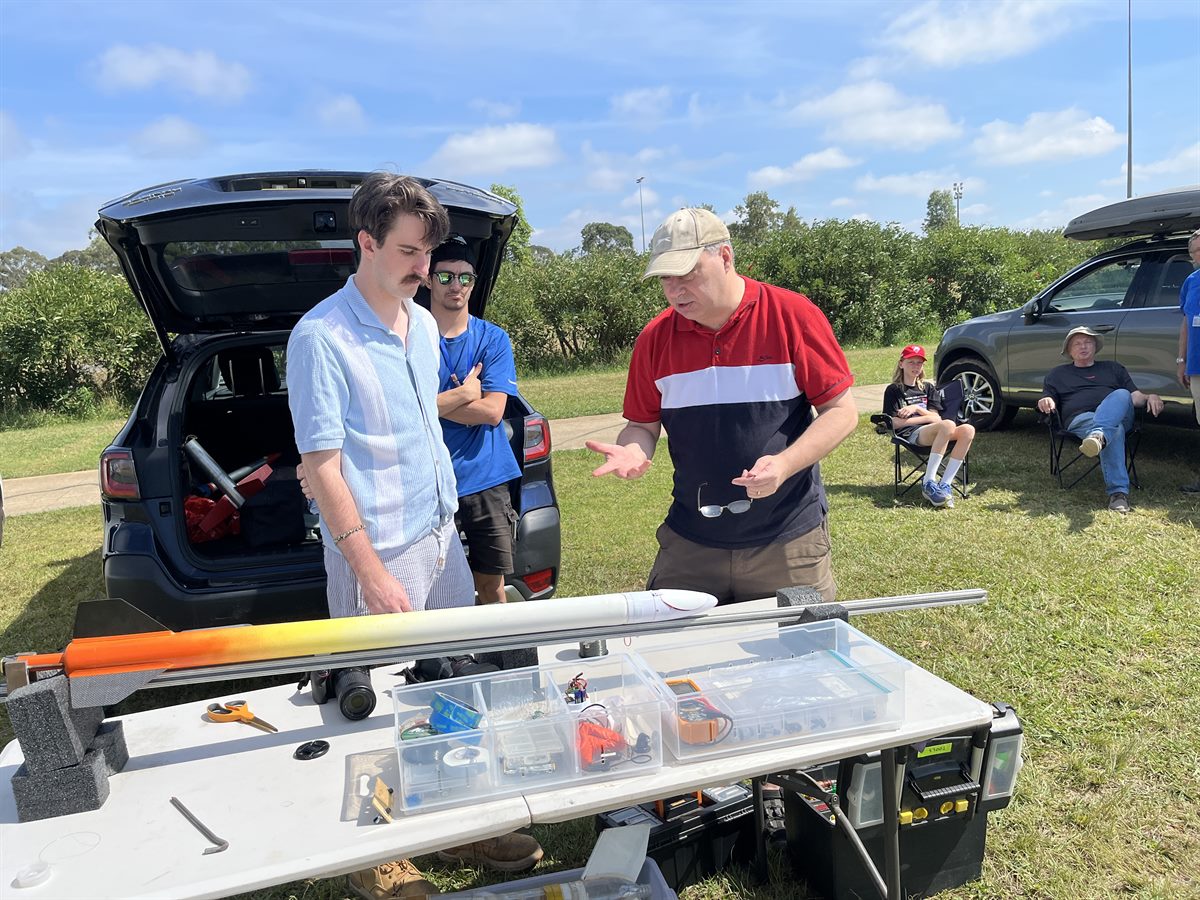
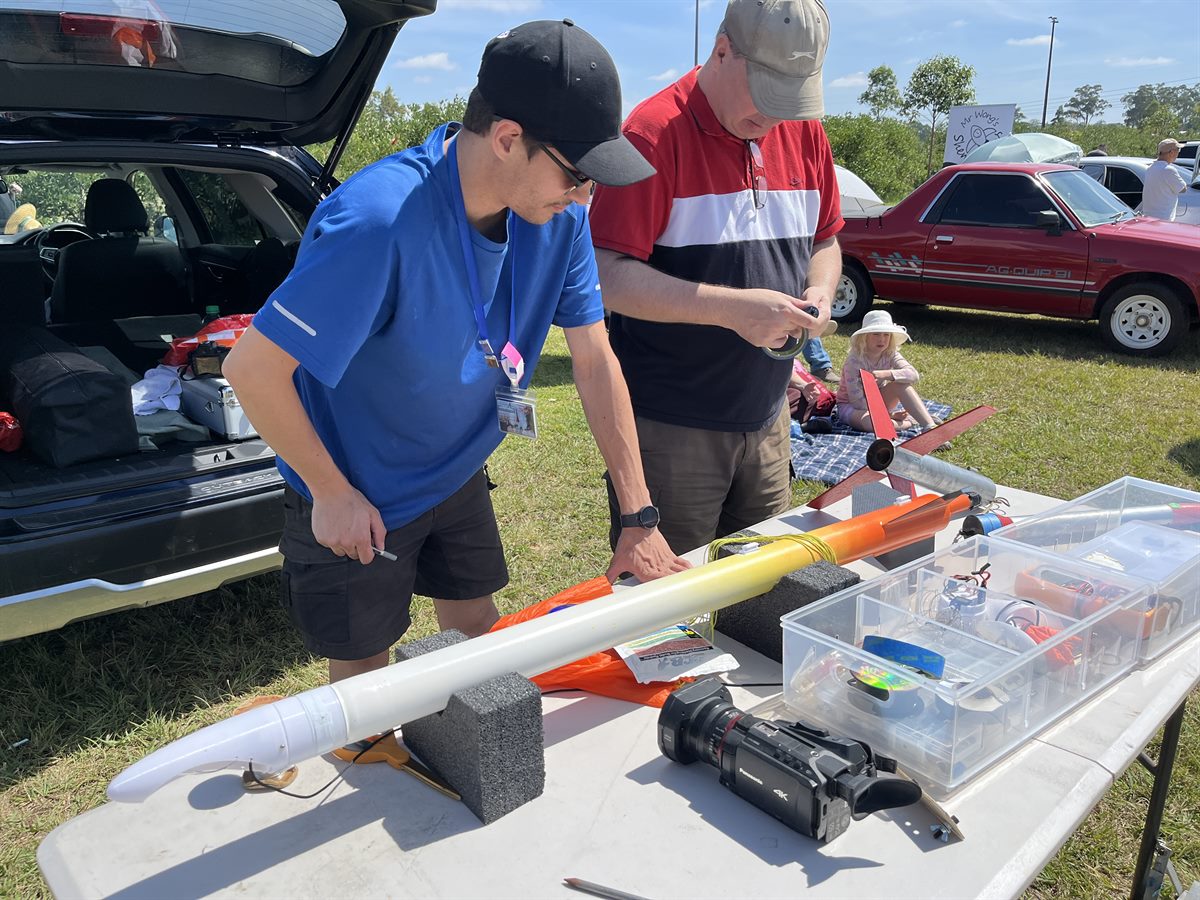
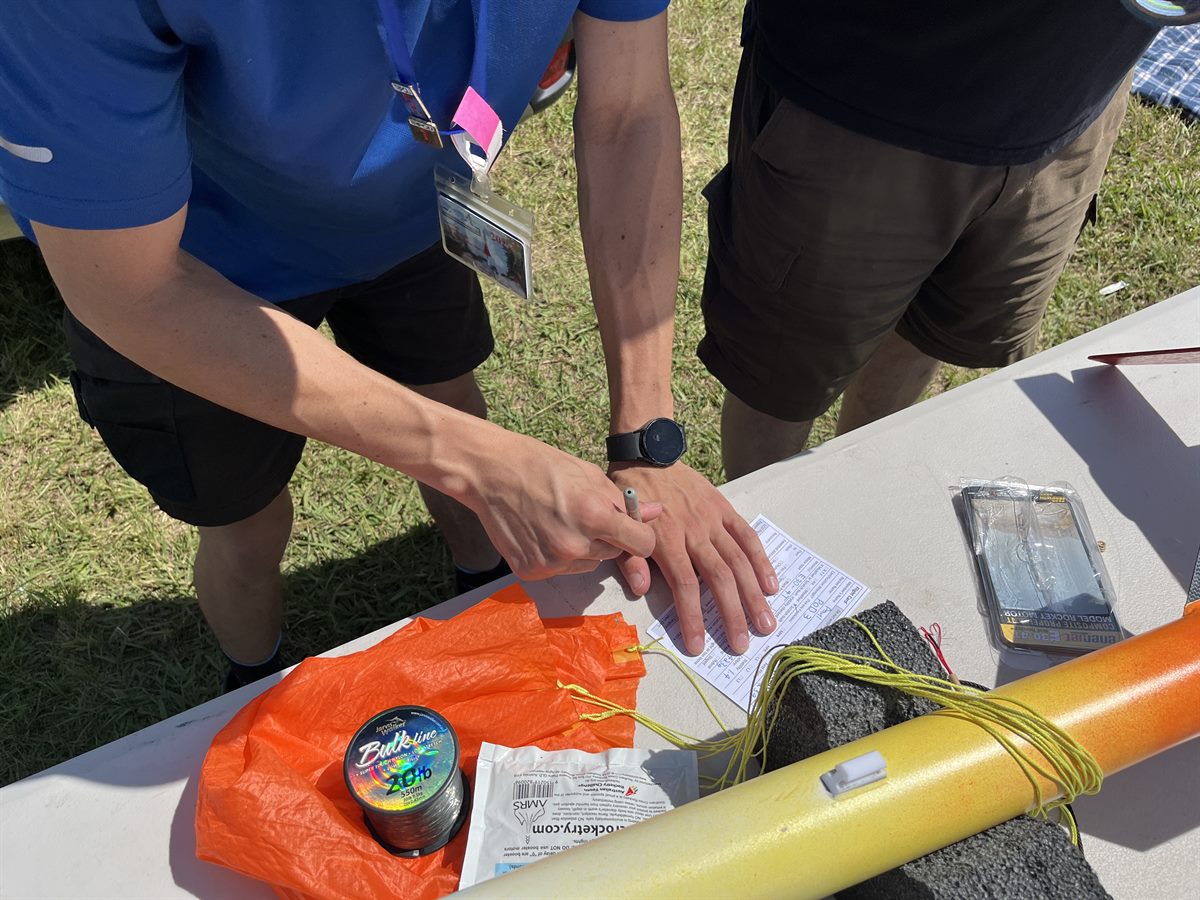
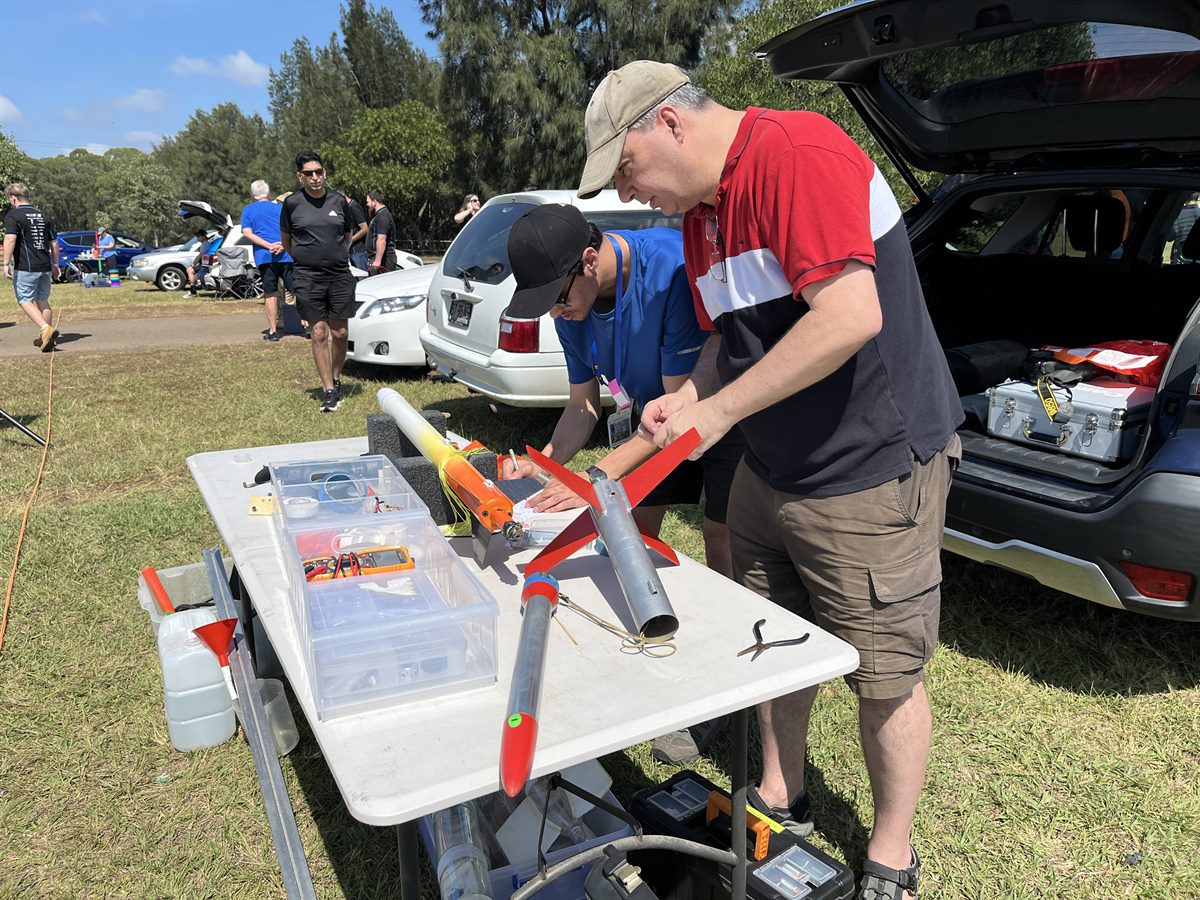
The prep was the same as last time, but we set the time delay on the timer to be about 4 seconds. We again used 300mL of water and shampoo which was the same as the previous flight. We left the burned out motor in the rocket for the added weight so that we were comparing the right things. We also noted that during the previous launch the pressure was only around 290 psi rather than 300, so we wanted to match that as well.
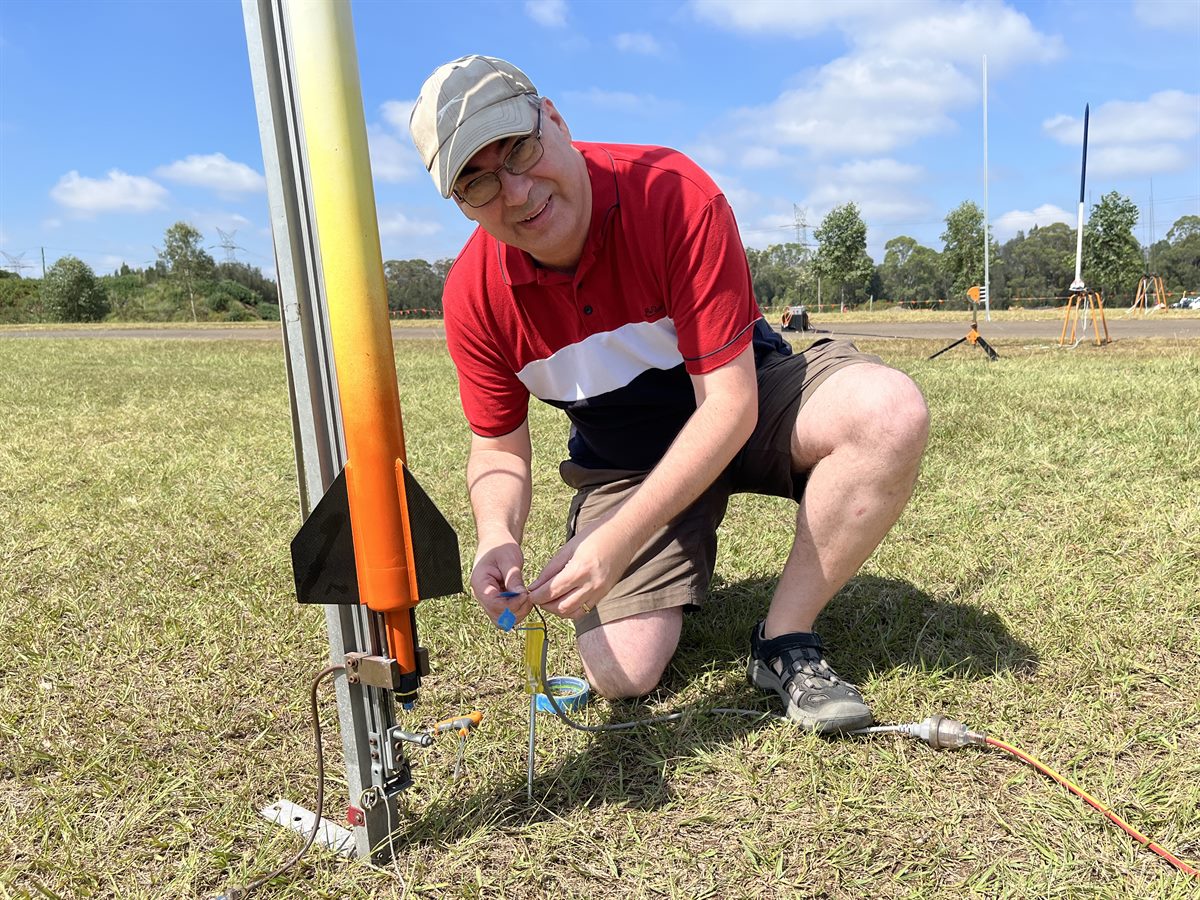
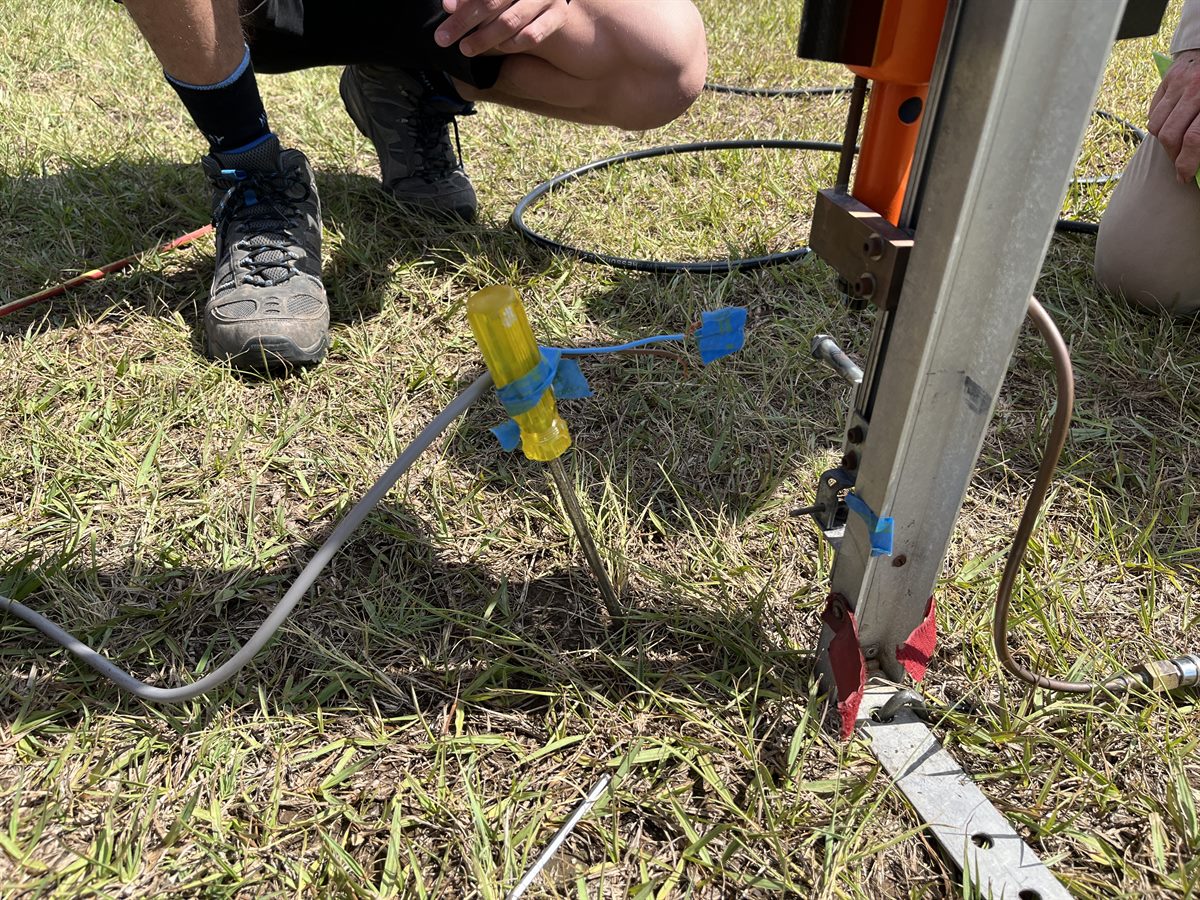
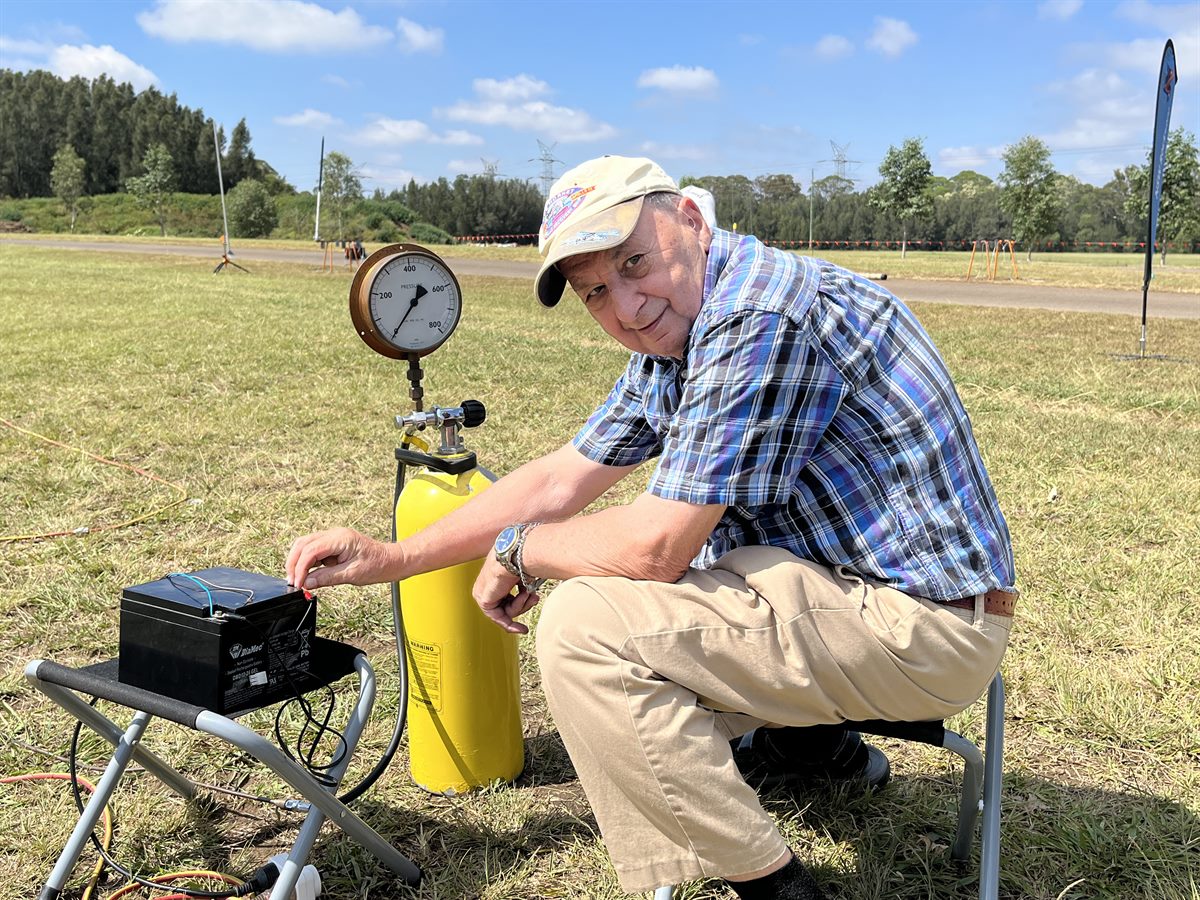
Because the motor was not going to be burning through the fishing line, we decided to cut the fishing line electrically using a long extension lead, a big 12V battery and a piece of 20cm long nichrome wire. This should pass about 3 amps through it and get it hot enough to cut through the fishing line. This was the first time we were going to attempt this.
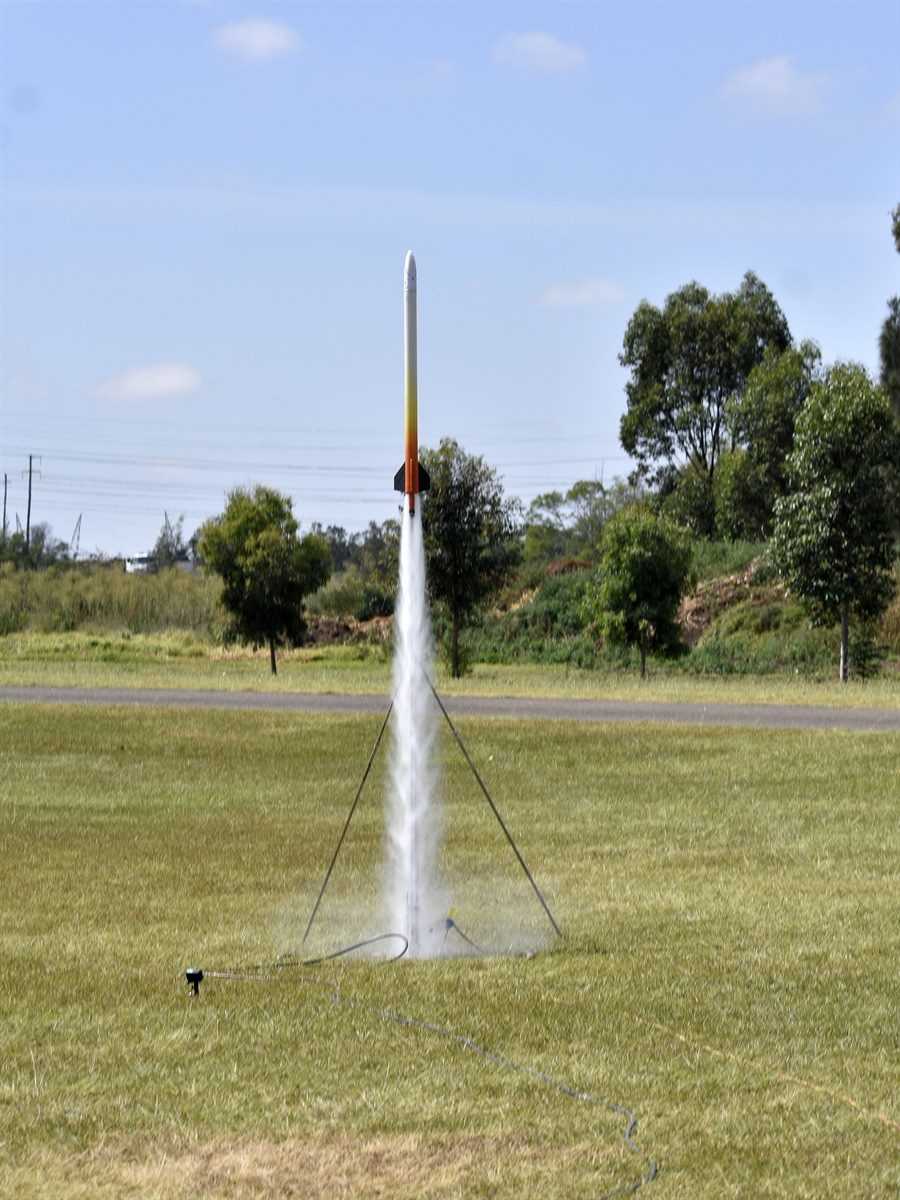
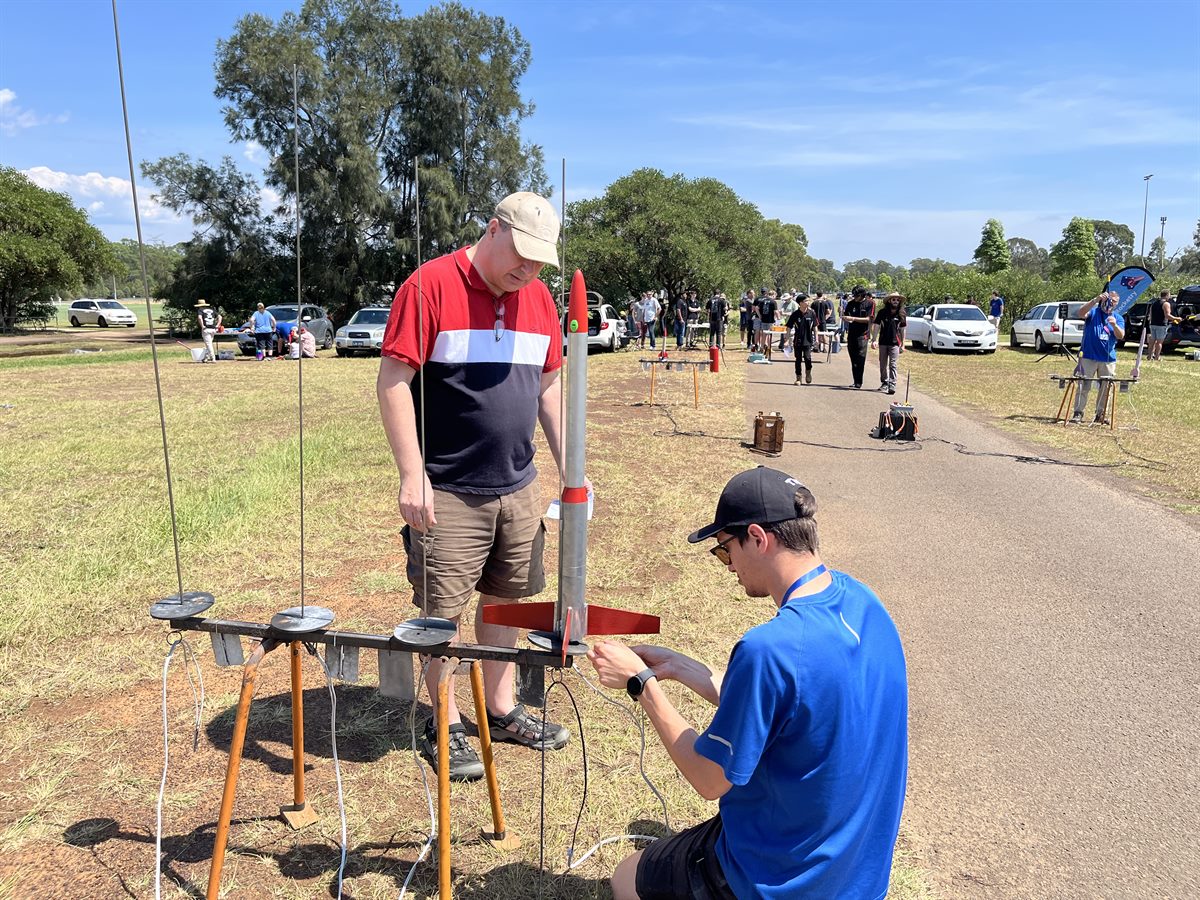
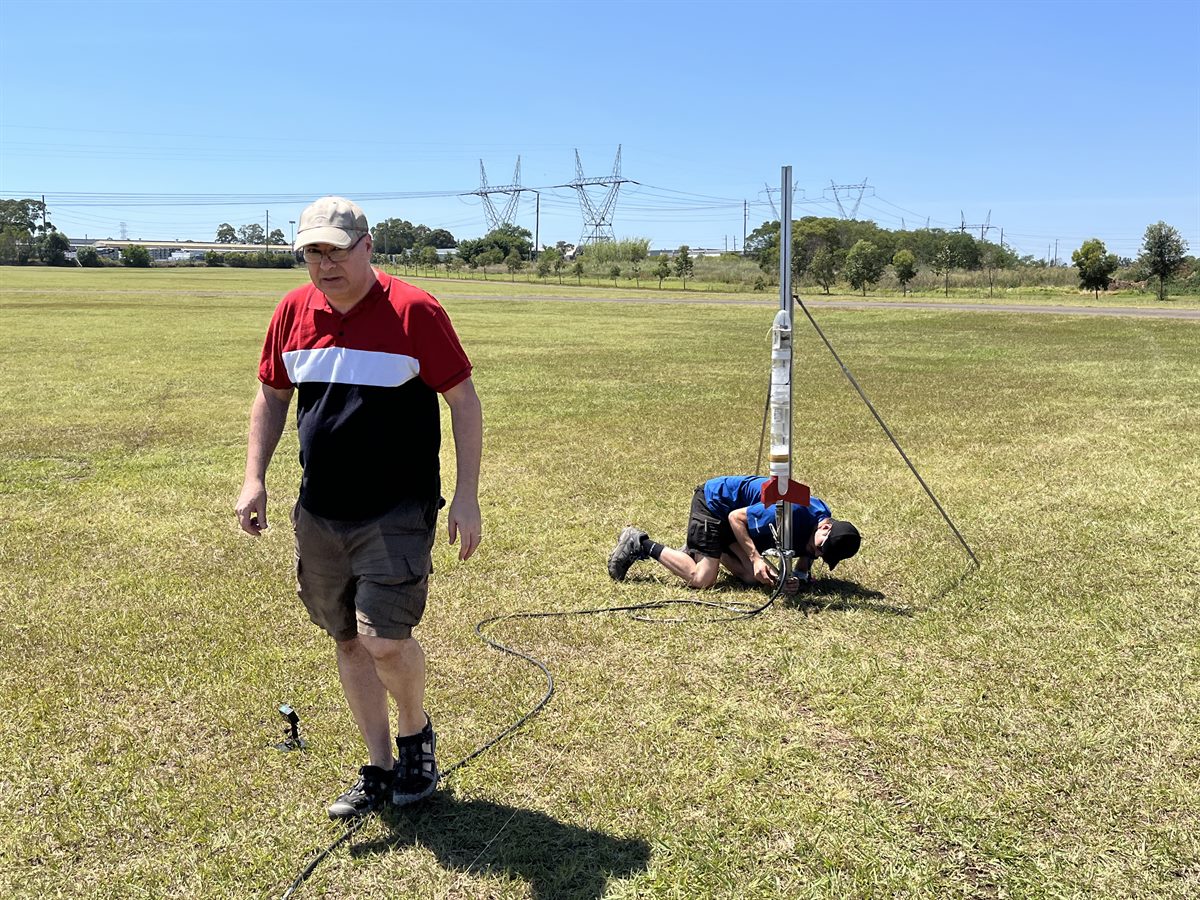
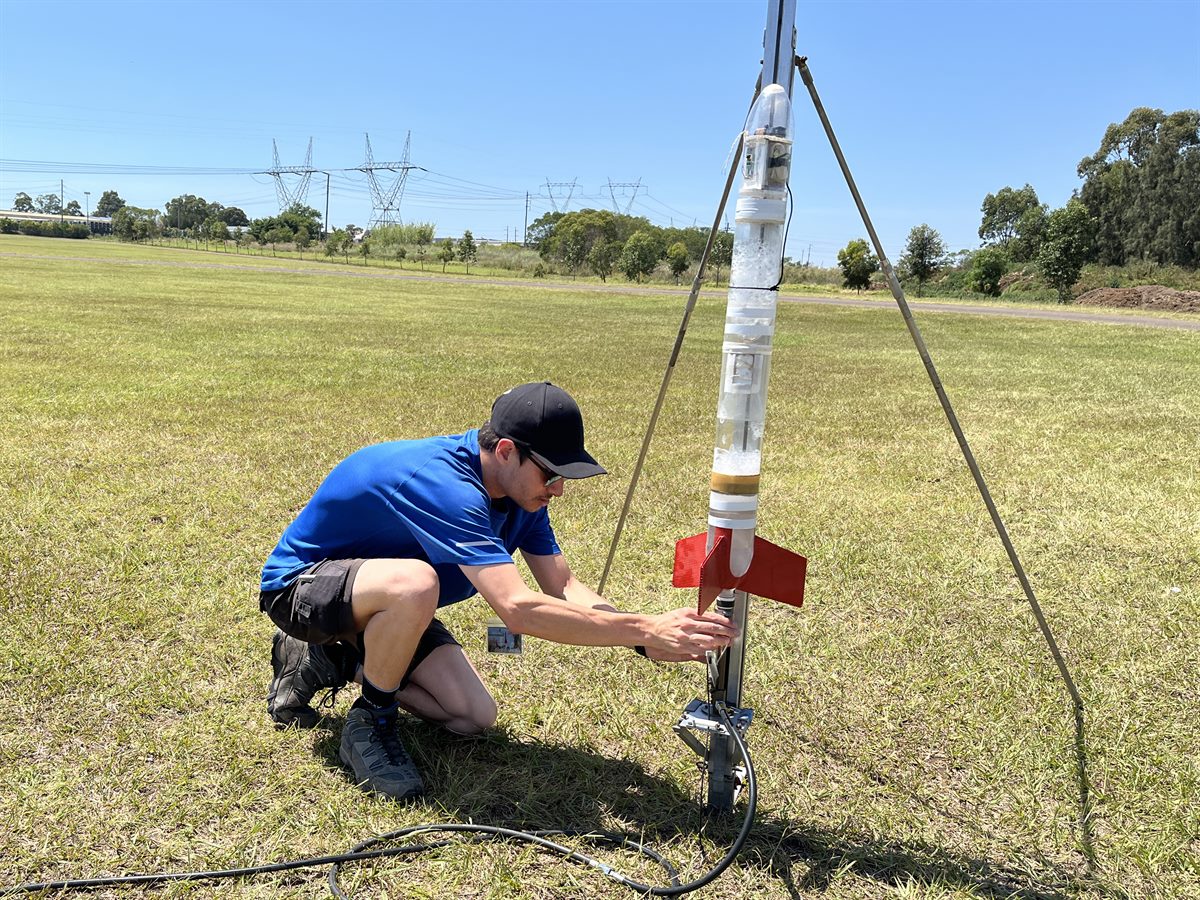
We pressurised the rocket to ~295psi and dad touched the contact on the battery and within about a second or two, the line was cut and it released the rocket.
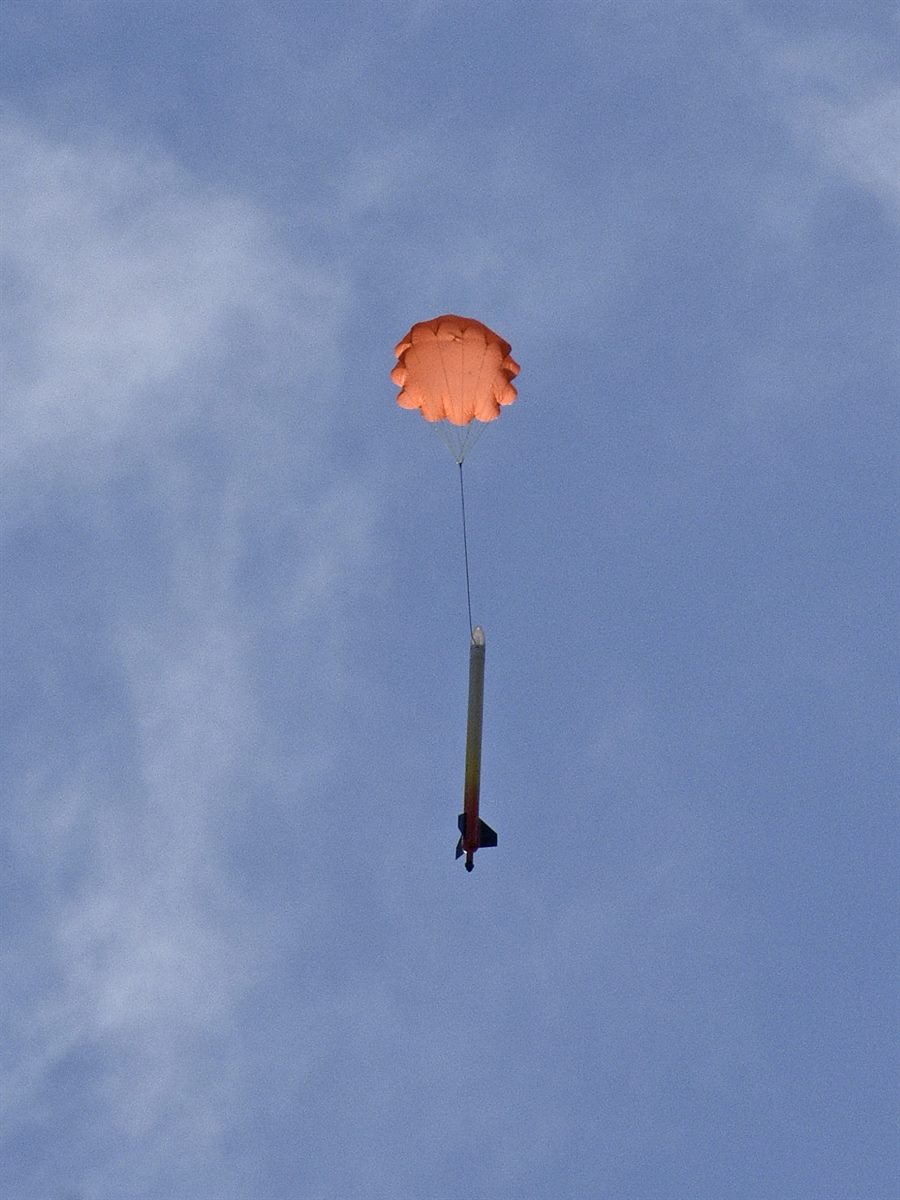
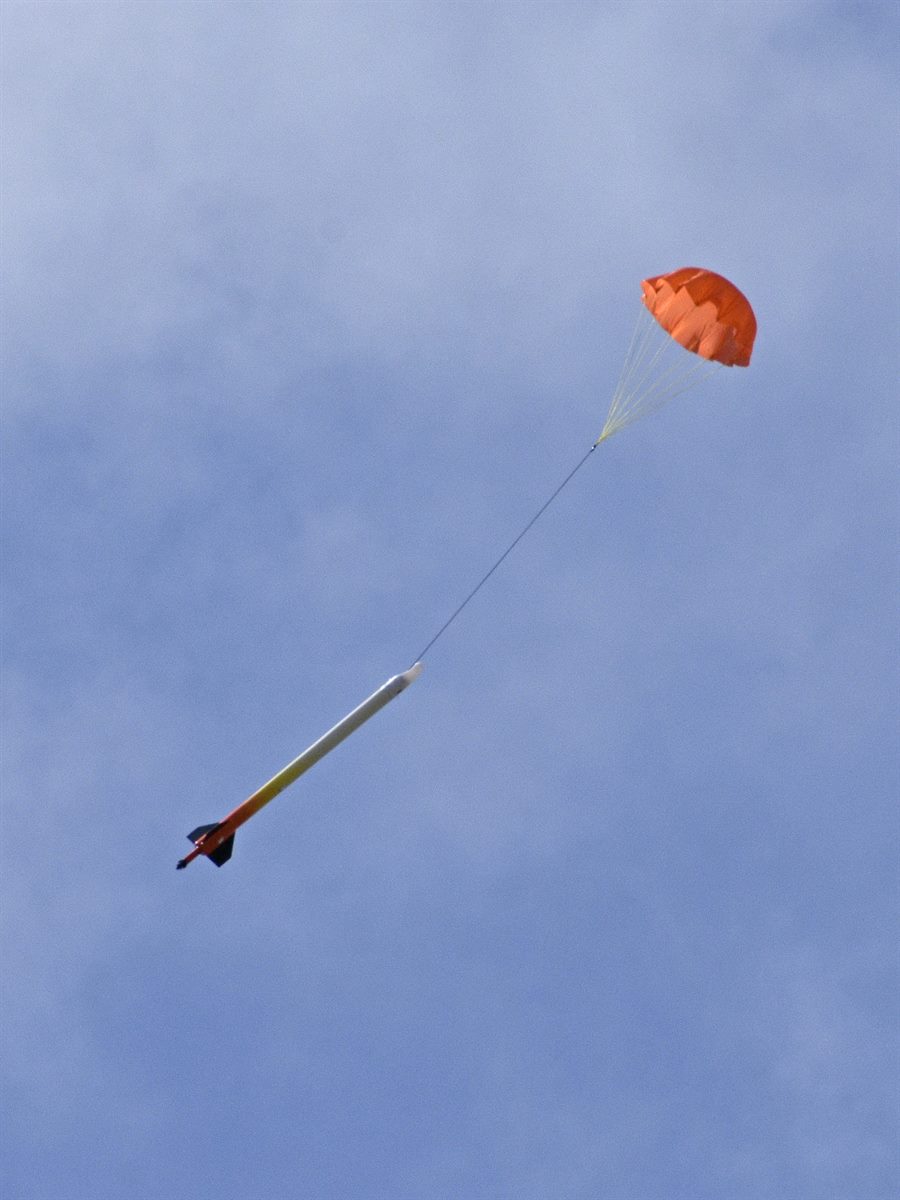
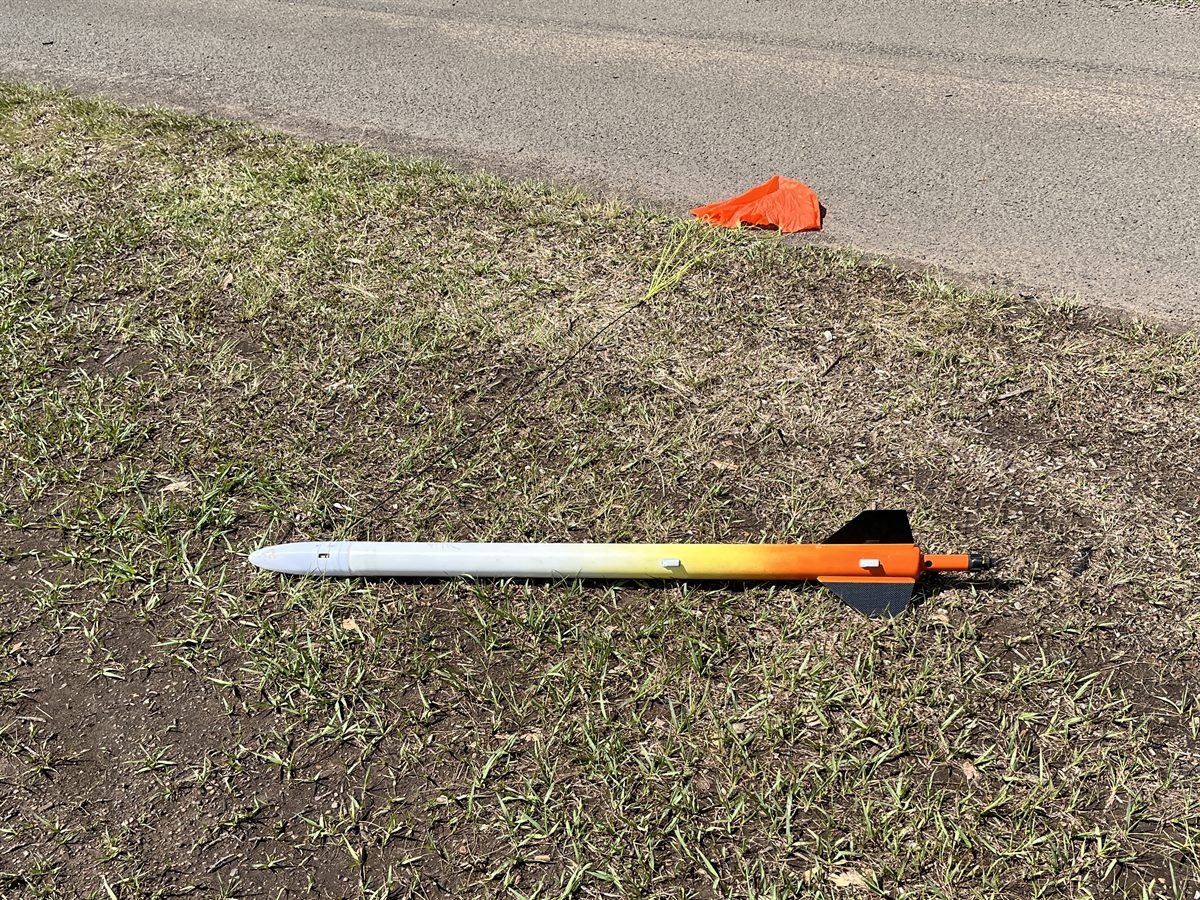
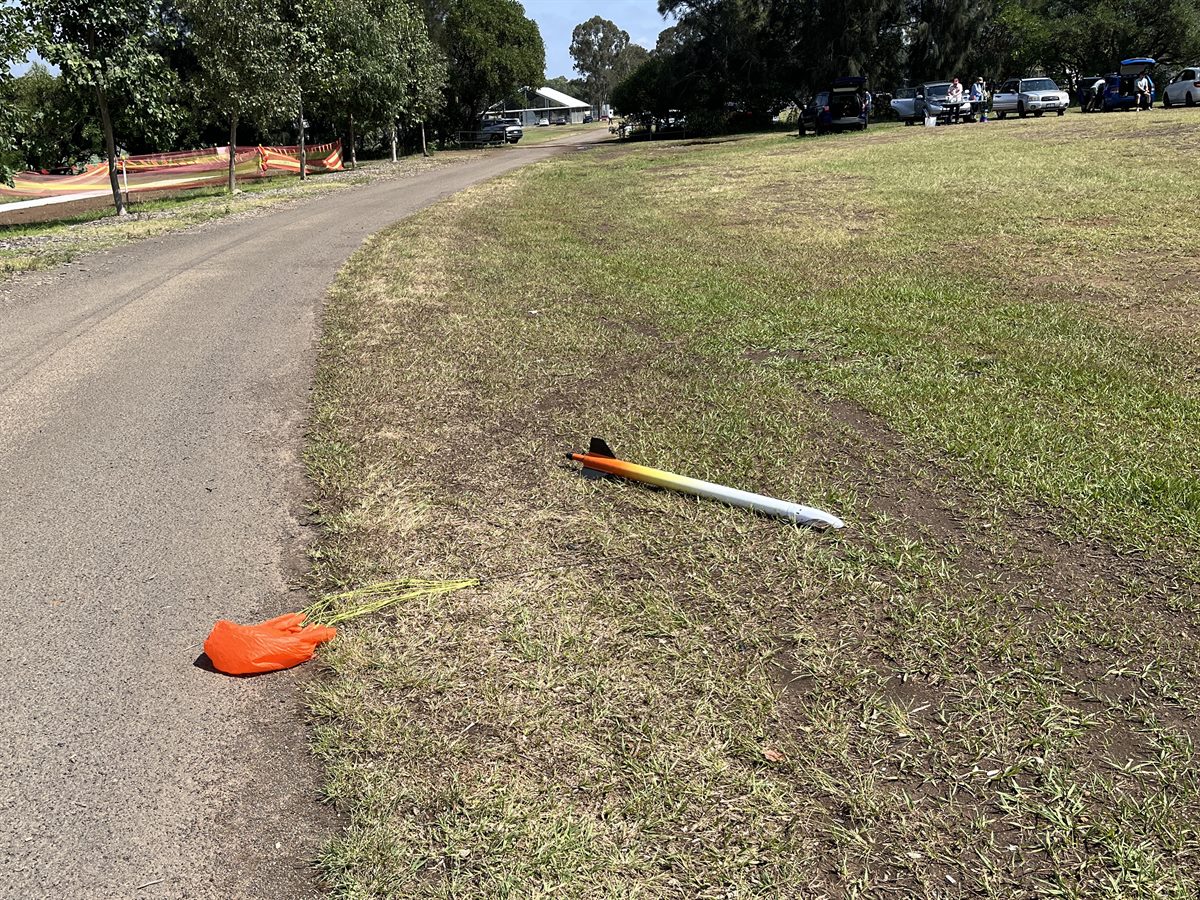
The parachute deployed right around apogee and the rocket drifted to a soft landing.
The altimeter read out 459 feet (140m). This was lower than I was expecting because the similarly sized Nova rocket got close to 1000' at a similar pressure though with a larger nozzle. When we later ran the simulator for this rocket using only the 300mL of water, the rocket's predicted altitude was only about 415 feet, so we were actually pretty on target with what the sim predicted. The higher altitude can be attributed to the foam that we added to the water.
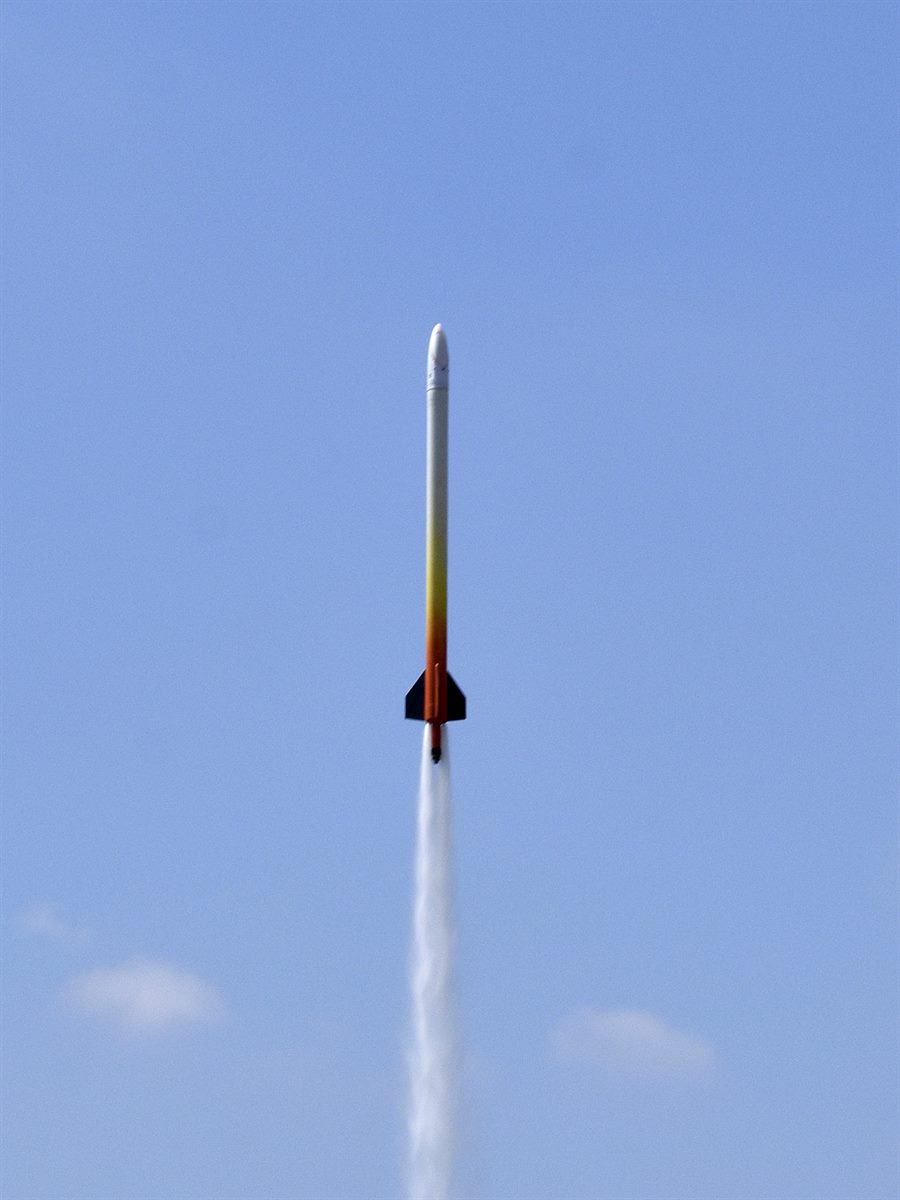
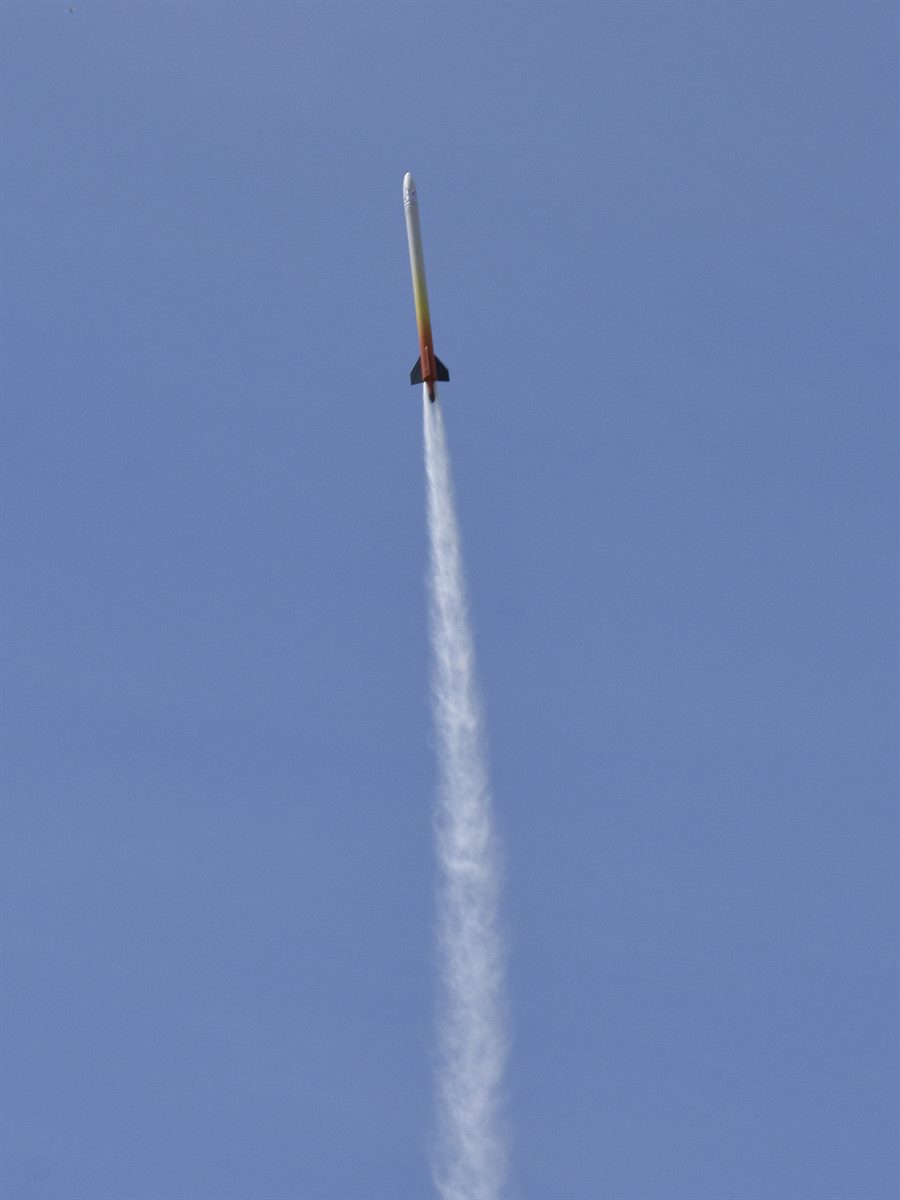
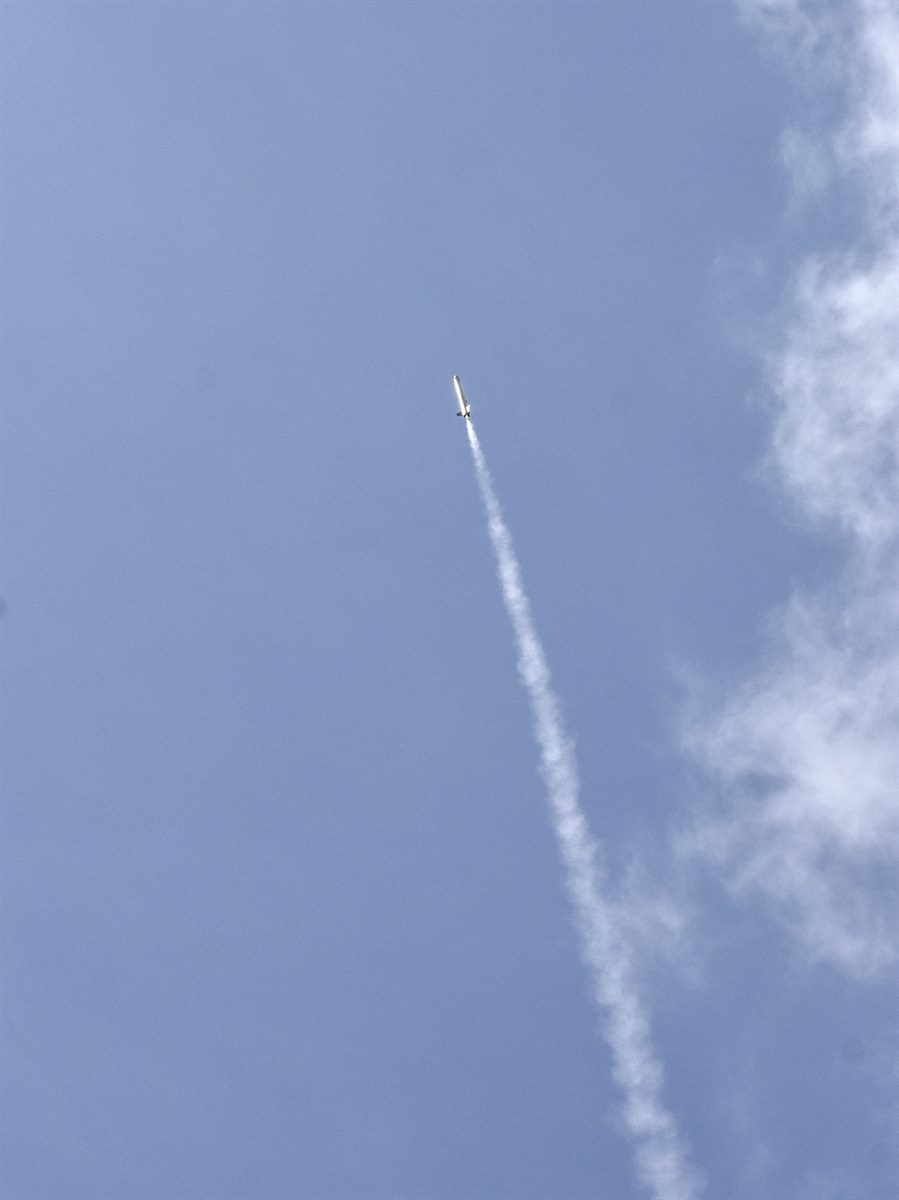
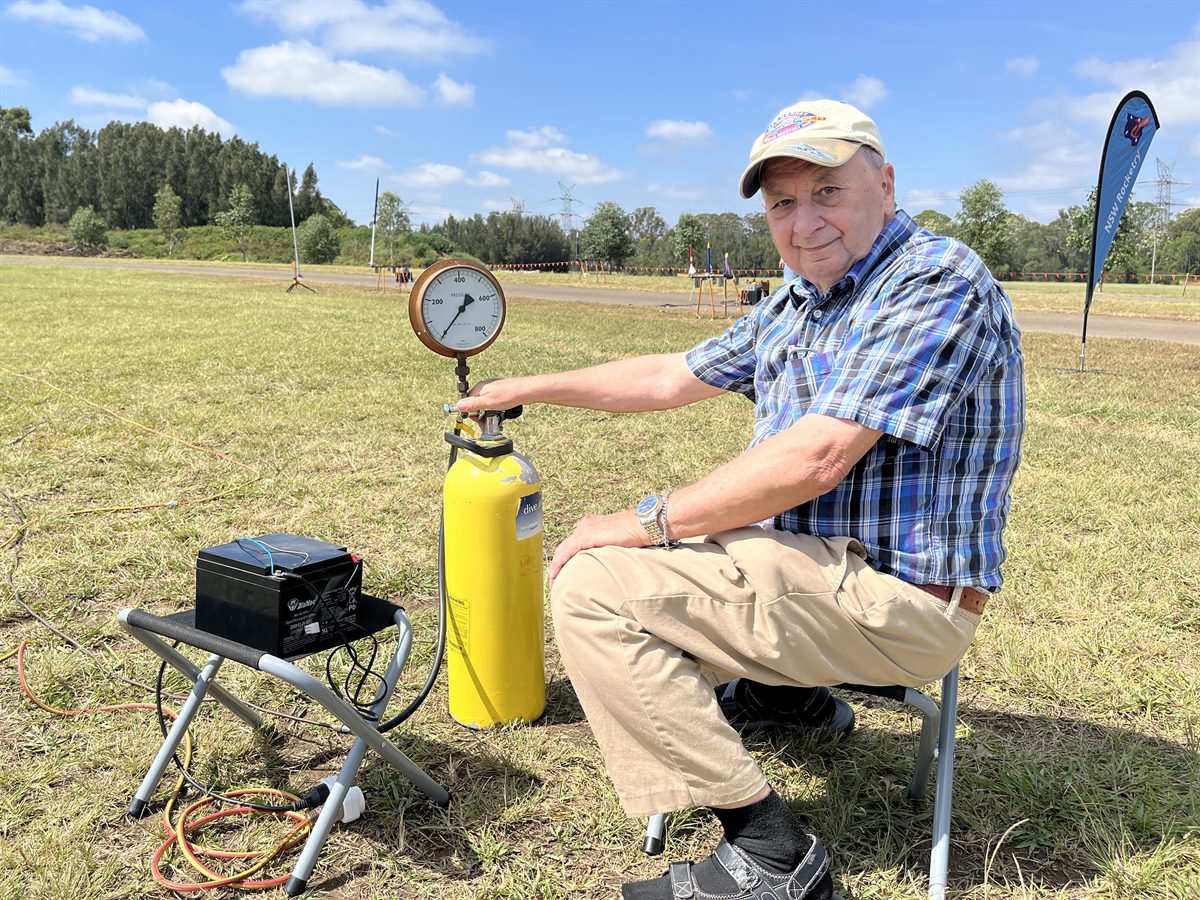
We set it up again on the pad and pressurised it to 290psi (20 bar). We again gave a nod to the LCO and he counted down and pressed the button. This time the rocket took off visibly faster and you could tell that the motor had ignited. The rocket flew nice and straight up, the thrust vectors from the motor and the water nozzles were well aligned. The parachute opened a little bit past apogee. I was getting a little worried, as the delay was set to 4 seconds, and it was perhaps 6 seconds before it opened.
The rocket drifted down well, but under the strong cross breeze, it sailed right in the middle of the trees and hung up about 8 meter above the ground. Luckily we had our 9m retrieval pole with a hook and so we were able to get the rocket down fairly easily without damage.
The altimeter read out 1,006 feet (~306 m).
We were pretty happy with the performance of the rocket, and finally had a data point at how effective the rocket was. The second flight also had used only 300mL of water, but because of the shampoo it still produced a nice long trail.
In the video it was interesting to see the flame of the motor almost completely enveloped by the spray from the nozzles. That would certainly make it difficult for a heat seeker missile to chase this rocket.
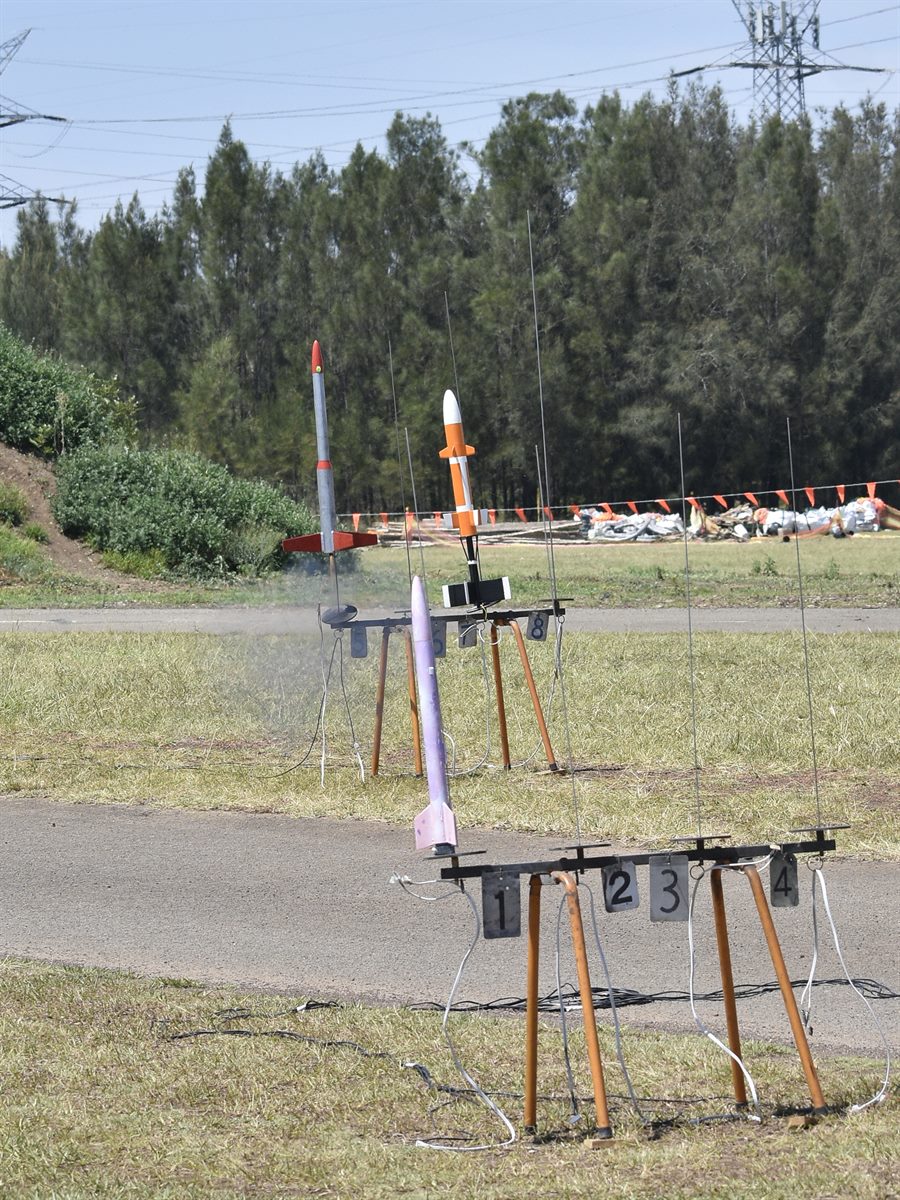
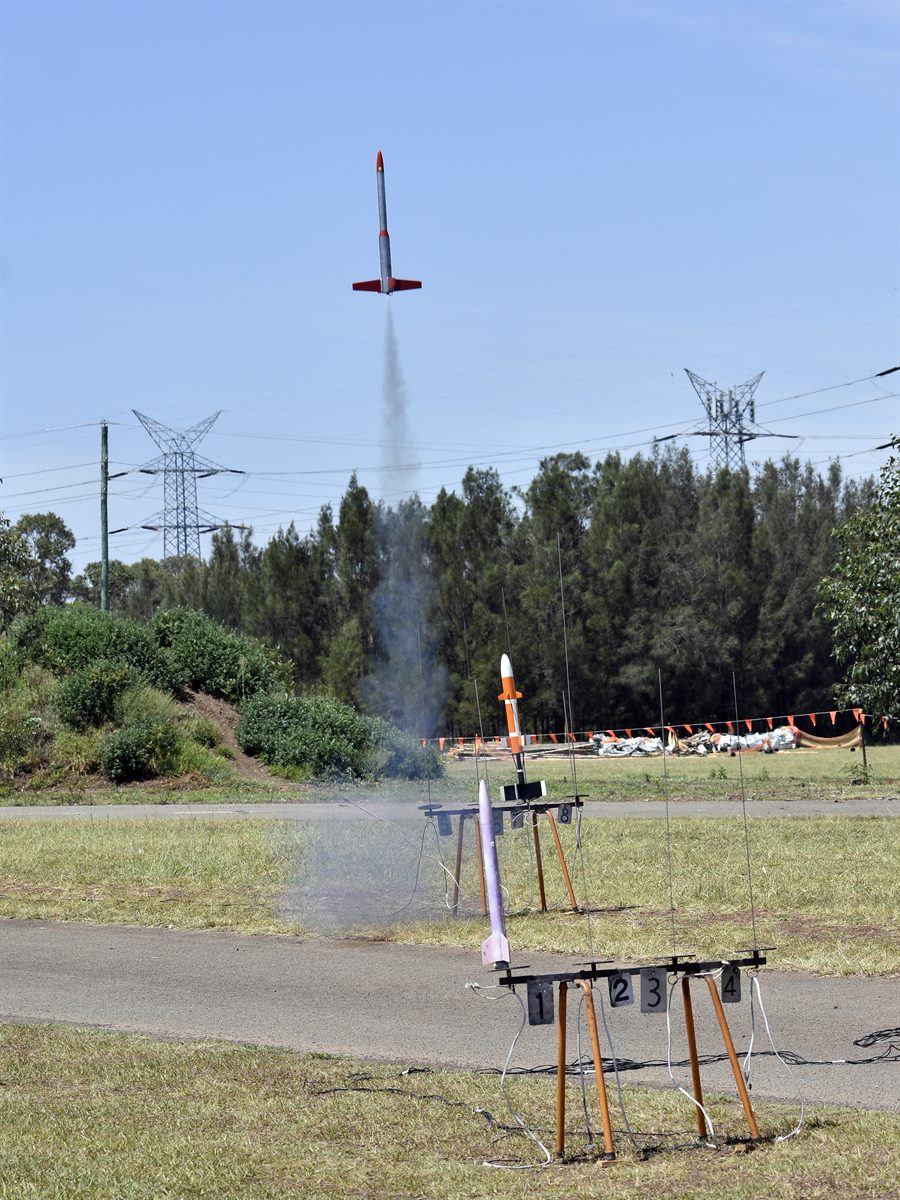
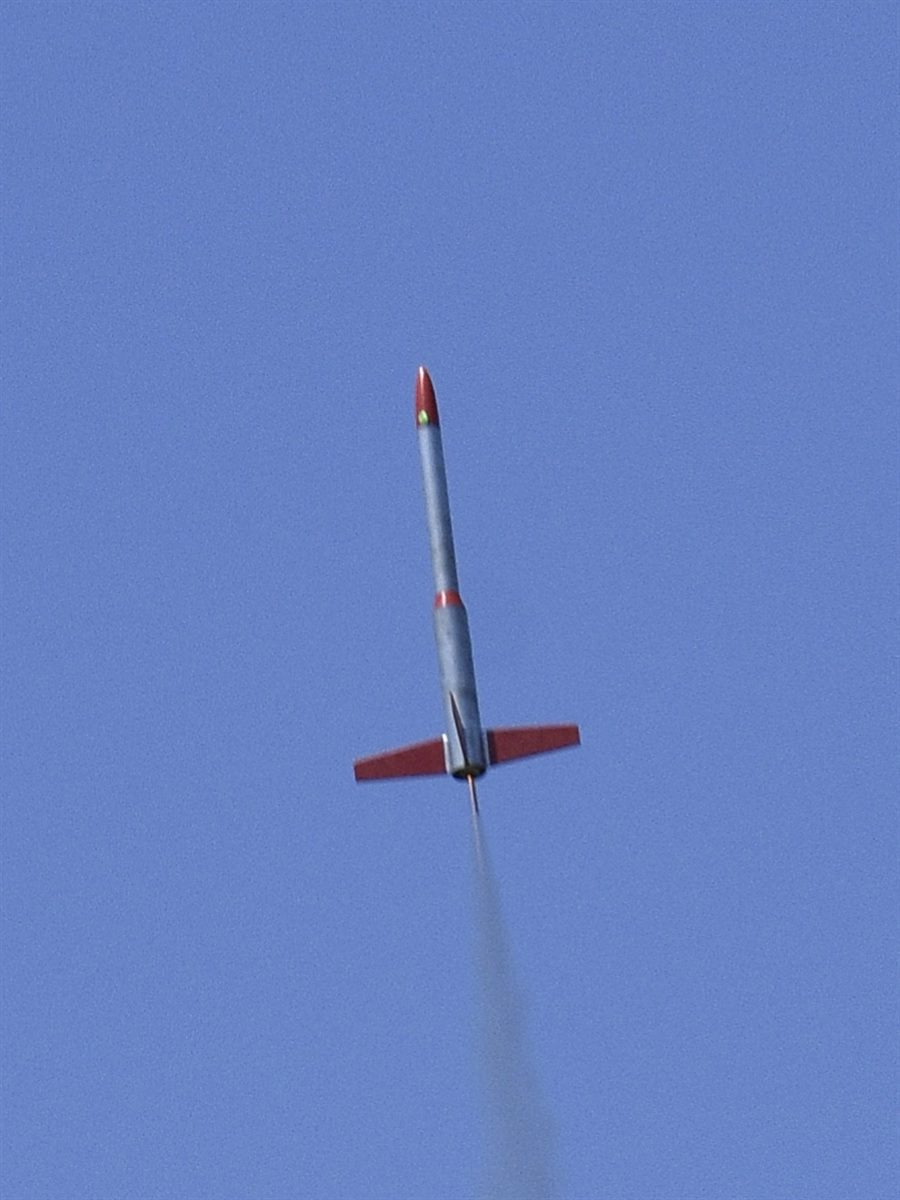
| Launch | Details | ||||||||||||||||||||||||
| 1 |
|
||||||||||||||||||||||||
| 2 |
|
||||||||||||||||||||||||
| 3 |
|